
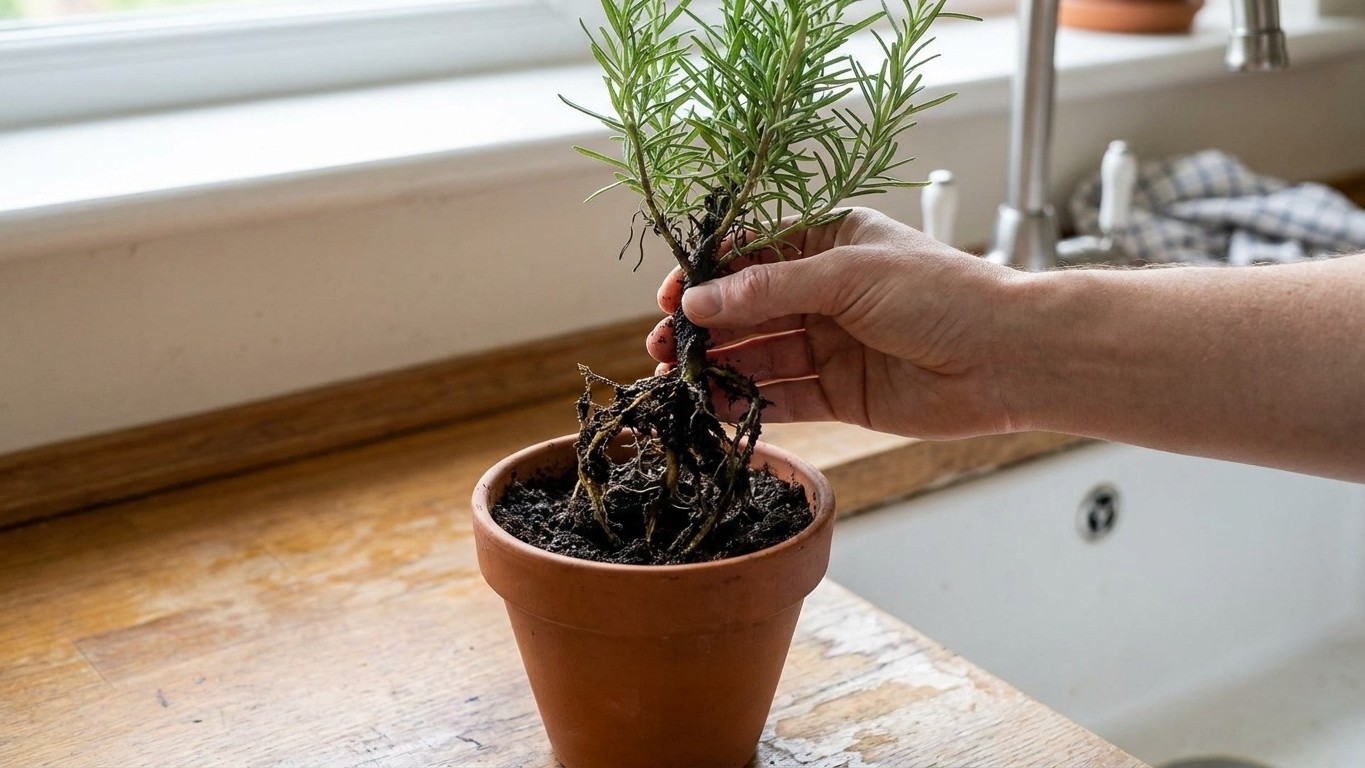
Three weeks. That’s all it took to turn two healthy pots of thyme and rosemary from countertop centerpieces into a soggy, blackened mess sitting above the kitchen sink. The routine seemed harmless enough: bring the herbs indoors for the cold months, water them on the same schedule as the pothos and peace lily nearby, and let the sunny spot above the faucet do the rest. Lifting the stems after three weeks revealed the real story: mushy, blackened bases where healthy woody stems used to be, and roots that had gone from firm and pale to slimy and dark. That’s root rot, and it’s one of the most predictable ways to kill a Mediterranean herb indoors.
Key takeaways
- What gardeners see on the surface (wilting, yellowing leaves) is actually the opposite of what’s happening in the soil
- The damage happens faster than you’d expect—fungal pathogens can devastate roots in just three weeks
- The counterintuitive solution involves doing the opposite of what your instincts tell you when a plant looks stressed
Why Kitchen Herbs Aren’t Houseplants
The mistake wasn’t watering. It was watering like a tropical plant lover instead of thinking like the herb itself. Pothos and peace lilies tolerate, even like, consistently damp soil. Rosemary and thyme come from an entirely different world. Many of the herbs we love to grow are mediterranean plants and they tend to grow in rocky soils. That single fact explains almost every case of herb death by kindness.
These herbs evolved in rocky, arid, well-draining Mediterranean environments. They actively despise having “wet feet” (roots sitting in soggy soil). A kitchen windowsill above the sink, ironically, tends to be one of the worst spots for them: steamy from cooking, often shaded by a curtain or cabinet, and right next to the temptation to give the pot a quick splash every time the tap runs. Indoor plants and potted plants usually dry out faster and may need more frequent watering compared to those planted directly in the ground, which sounds like it should make daily watering safer. It doesn’t, not for these two herbs specifically.
What’s Actually Happening at the Base of the Stem
The visual clue is unmistakable once you know what you’re looking at. The first sign of root rot is that the leaves turn a dull, sickly yellow before turning soft brown, and the plant may look wilted, even though the soil is wet. That wilting-while-wet detail throws people off constantly, because instinct says a drooping plant needs more water. Root rot is sneaky because the plant looks thirsty at first, the damaged roots can’t absorb water properly, so the leaves wilt, and most people respond by watering more, which accelerates the problem.
Underneath, the damage is fungal. The roots turn brown and slimy, the stem softens from the base up, and the plant can no longer move water to its leaves, so paradoxically it wilts even though the soil is soaking. There’s often a smell, too, and not a pleasant piney one. A quick check: smell the soil at the drainage hole. Sour, swampy, or sulphurous means rot is active below the surface. The culprits behind that stench are specific soil fungi. Poorly draining soil invites uninvited guests like fungal pathogens, Phytophthora, Pythium, and their pesky pals. Once those pathogens establish themselves in constantly damp potting mix, they spread through the root system fast, which is exactly why three weeks was long enough to do serious damage.
Texture tells the story just as clearly as color. Underwatered rosemary tends to feel very brittle and dry, with stems that easily snap because they’re dehydrated, while overwatered rosemary has soft, very supple stems that may even feel mushy. A mushy stem base isn’t a texture that fixes itself with less water and a little patience. It usually means the damage has already crept upward from the roots.
The Fix, and Why “Neglect” Is the Right Word Here
Reviving a rotted plant starts with an uncomfortable step: stop watering it, even though it looks miserable. Reviving overwatered herbs begins by withholding all water for the time being. If the pot has no drainage hole, or a saucer collecting standing water underneath, that’s the first thing to correct. A pot without a working drainage hole, or a heavy, compacted mix that holds water like a sponge, rots roots even under a careful watering hand, water needs to flow through the pot, not sit in it.
For a plant that’s already showing blackened stems, cosmetic fixes won’t cut it. The recovery process involves snipping off the compromised roots with sterilized shears, then repotting in fresh soil, with a fungicide treatment considered afterward. Going forward, the growing medium matters as much as the watering habit. A homemade mix of one part potting soil, one part perlite or coarse sand, and one part compost gives roots the drainage they’re bred for. Terracotta helps too, since unglazed clay wicks moisture away from the roots between waterings rather than trapping it against the pot walls like plastic or glazed ceramic does.
The watering rhythm itself needs a full reset. The rule with rosemary, thyme, oregano, sage, and lavender is to let the pot dry out almost completely between waterings; when you lift the pot it should feel incredibly light, and when you stick your finger in it should feel bone-dry two inches down before you saturate it again. One gardener who tracks Mediterranean herbs year-round put it bluntly: one summer she accidentally left thyme and oregano without water for two weeks during a vacation, and they looked better than ever when she returned. That’s not an argument for total neglect, but it does capture how differently these plants are wired compared to the average houseplant. More herbs die from overwatering indoors than from underwatering.
Winter light matters as much as winter water. Indoor windowsills, even bright ones, rarely match the intensity these plants get outdoors, and a stressed, low-light herb is more vulnerable to rot in the first place because it’s using water more slowly. Pairing a drier watering schedule with the brightest window in the house, or a supplemental grow light during the shortest days of the year, gives roots a fighting chance to actually use the moisture they get before fungus moves in. Rosemary and thyme aren’t fussy plants, they’re just not tropical ones. Water them like they grew up on a sunbaked hillside, because they did.
Sources : truleaf.org | mgnv.org