
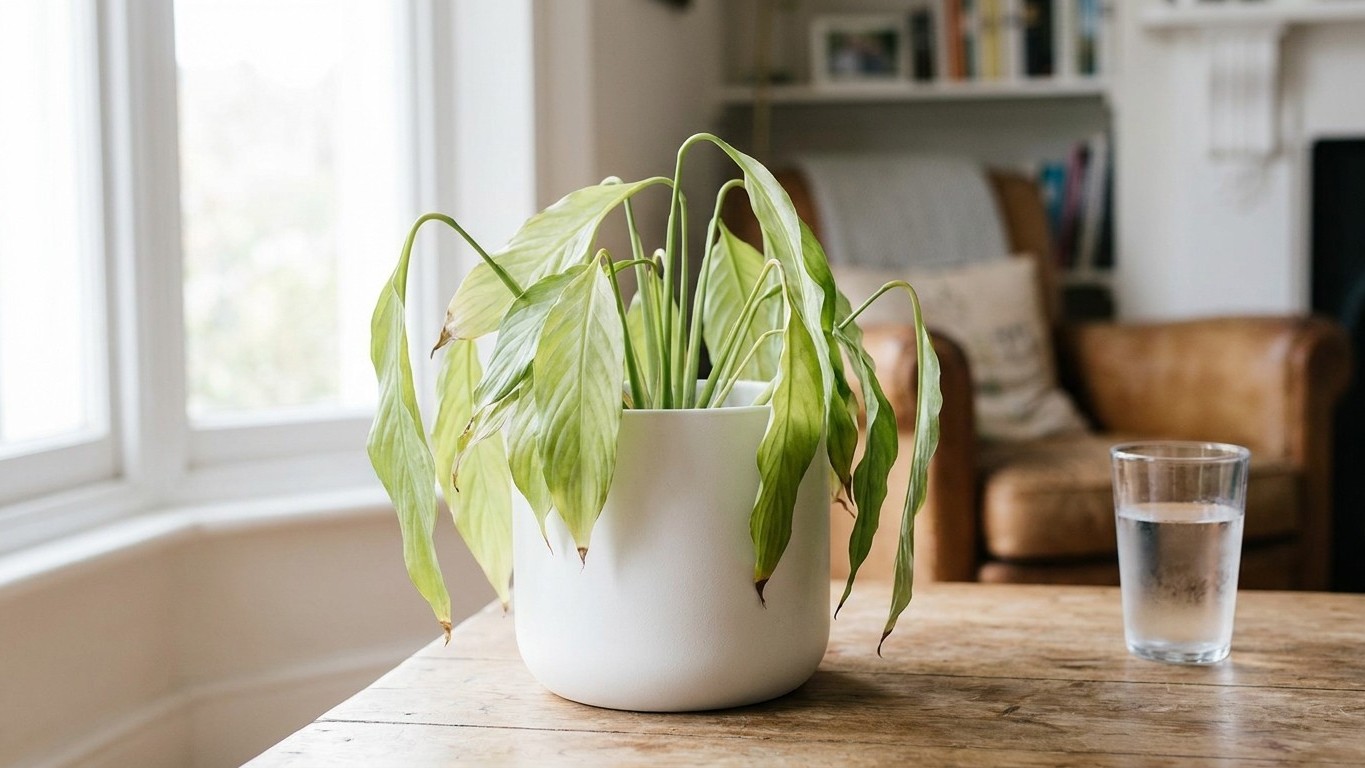
Root shock. That’s What Happens When tropical roots meet water fresh from a winter pipe, and it’s exactly what turned a healthy peace lily into a puddle of limp foliage within a few hours. No pests, no missed watering, no drafty window. Just a moment of impatience with the faucet.
Spathiphyllum, the plant most people simply call a peace lily, comes from the humid understory of Central and South American rainforests, where rainfall is warm, not icy. This effect is especially pronounced for houseplants, which are often tropical species living in stable indoor temperatures, and cold tap water can be as low as 40 to 55 degrees Fahrenheit, creating a significant temperature differential upon contact. That gap between what the roots expect and what suddenly floods the pot is where the trouble starts.
Key takeaways
- A peace lily wilted completely within hours after one watering—but the soil was soaked and dripping
- Cold water creates root shock that blocks nutrient absorption before any visible damage appears
- The fix takes 30 seconds and costs nothing, yet most plant owners never hear about it
What actually happens underground
The drama isn’t in the leaves first. It’s in the root zone, invisible and silent, long before anything droops. The most significant harm from cold water is thermal shock, which affects the cellular structure and function of the roots, causing them to constrict and disrupting the delicate balance of ions and water within the root cells. Picture a highway that suddenly narrows from four lanes to one. Water and nutrients back up, and the leaves upstream simply stop receiving their supply.
Membranes are the real casualty here. The cold interferes with the cell membranes’ permeability, which is necessary for the proper movement of water and dissolved minerals, and the drop in temperature also dramatically slows down the plant’s metabolic activity at the root level. A peace lily doesn’t wilt because it lacks water in the pot. It wilts because its own plumbing has been told to shut the valves.
Compare that to a bathtub scenario a horticulture writer once used to explain the same mechanism: if your plant’s soil is at 70 degrees and you water it with 40-degree water, that’s a significant temperature shock, like jumping into a really cold bathtub when your home is at 65 to 75 degrees. Nobody enjoys that jump. Neither do roots.
Why the leaves fold within hours, not days
The speed of the collapse is what throws people off. Overwatering symptoms build over a week or two. Cold shock, by contrast, moves fast because watering with cold water can shock plant roots, causing ice crystals to form and rupture cell membranes, and this damage often occurs before you notice wilting aboveground. By the time the leaves are hanging, the cellular damage already happened hours earlier, quietly.
One plant owner described the exact scenario that plays out in kitchens everywhere: using cold water straight from the tap, pouring icy water onto a tropical plant that prefers 70°F weather, made the plant react as if thrown in a freezer, drooping instantly, even though it had just been watered, because the roots had been shocked. That’s the paradox that confuses so many people. The soil is soaked, sometimes dripping from the drainage holes, and yet the plant behaves exactly like it’s dehydrated.
It gets more visible over the following days, too. Cold water doesn’t just knock the plant sideways temporarily. Repeated exposure can leave permanent marks: the cold temperature can cause the roots to die back, which may lead to root rot due to excess wet soil, and using cold water can cause brown spotting on the leaves, especially during winter months. So a single cold dousing might bounce back. A habit of it won’t.
The fix costs nothing and takes thirty seconds
There’s no product to buy here, which is almost disappointing given how much of houseplant care gets sold as a gadget problem. The remedy is simply letting water sit. Research indicates that the optimal temperature for roots to efficiently absorb water and nutrients is around 68 degrees Fahrenheit, with a general range of 60 to 75 degrees Fahrenheit safe and effective for most species, matching the conditions they would naturally experience.
Filling a jug or watering can the night before, then leaving it on the counter, solves two problems in one move. The best method for achieving this moderate temperature is to allow tap water to sit out in an open container for 24 hours before use, which permits the water to naturally acclimate to the ambient air temperature of the room, and also provides the secondary benefit of dissipating chlorine, which is often added to municipal water supplies. Two birds, one jug sitting quietly by the sink.
Testing by hand works fine too, no thermometer required. “Make sure to test it on your hand before giving it to your plants to make sure that it’s not extremely hot or cold,” as one plant care specialist put it. If it feels neutral against your skin, roughly like bathwater cooled to a comfortable rinse, it’s safe for the pot.
Reading the recovery correctly
What separates cold shock from a genuinely sick plant is the timeline. A peace lily punished by icy tap water usually perks back up once the soil and surrounding air return to a stable, warmer range, sometimes within a day, sometimes stretching to a week if the shock was severe. The real warning sign to watch for isn’t the first droop. It’s whether the plant droops again at the next watering, which would point toward root damage rather than a one-time chill.
Worth remembering too: hot water isn’t the safer alternative some people assume. Watering plants with hot water will be just as damaging, if not more so, as cold water, because the hot water can very quickly burn the root system, killing the plant. The goal was never extremes in either direction, just water that matches the quiet, steady warmth a tropical plant has known since it first sprouted in the shade of a rainforest canopy.
Sources : livingetc.com | plantingguys.com