
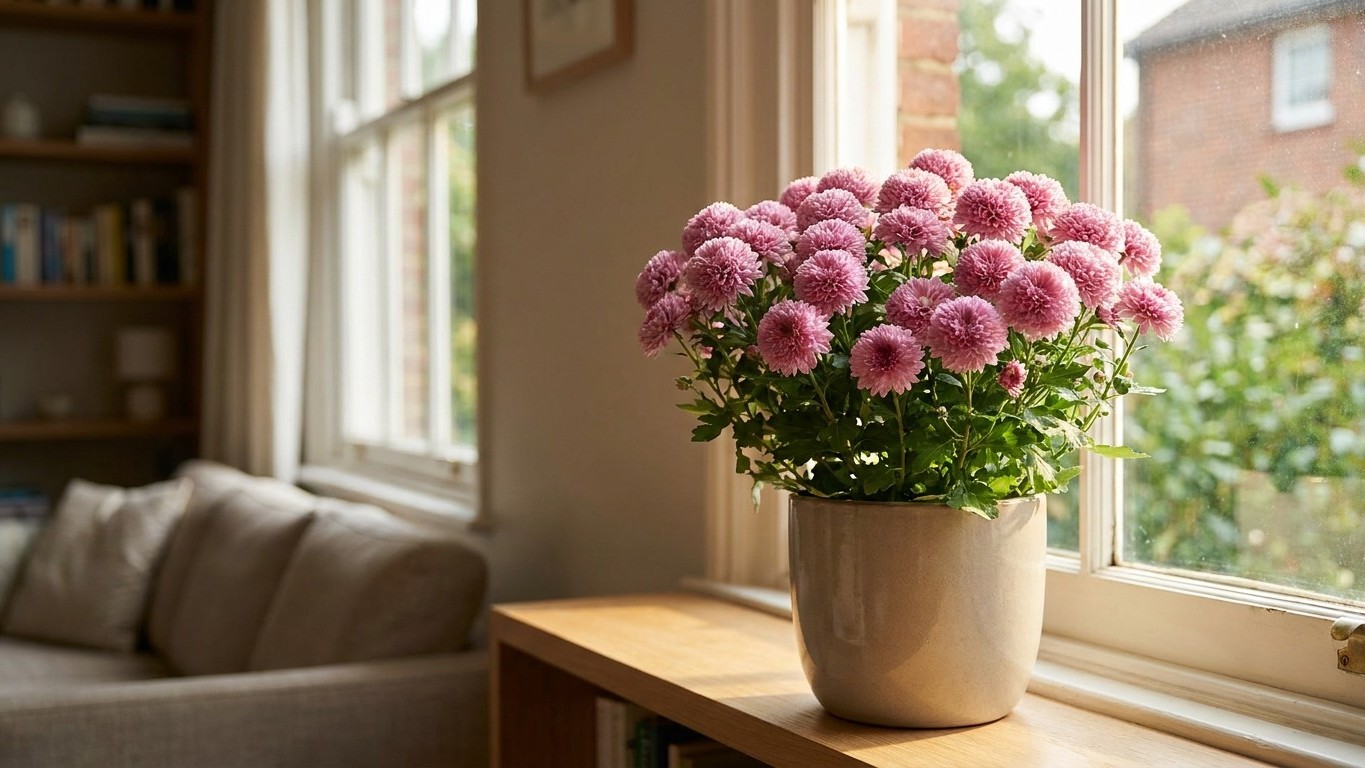
The mystery next door has a simple, practical answer: your neighbor isn’t decluttering his floor. He’s keeping his cats or dog away from a plant that can make them seriously sick. Chrysanthemums, those cheerful pom-pom blooms that show up on every porch and stoop come fall, are actually toxic to pets, and elevation is one of the easiest ways to keep curious paws and noses away from them once the pots move indoors.
Key takeaways
- Chrysanthemums contain toxic compounds that can cause seizures in cats and neurological issues in dogs
- A single high shelf solves two problems: pet safety AND the specific light and temperature needs mums require
- Even skin contact with mum sap can harm pets—elevation is standard veterinary advice, not a quirky habit
The chemistry behind the caution
Mums aren’t just pretty. They’re loaded with compounds that double as natural pest control, which is exactly why they cause trouble for household animals. Pyrethrins are insecticidal compounds that are highly toxic to cats and can cause neurological and gastrointestinal issues. That’s not a minor footnote either. More than 3,500 pesticides currently use pyrethrins or pyrethroids, which are man-made derivatives. Your neighbor’s flowerpot, in a very real sense, contains the same active ingredient found in a can of bug spray.
Cats face the steeper risk. Cats are especially vulnerable to chrysanthemum toxicity, and the pyrethrum and sesquiterpene lactones in chrysanthemums can cause severe neurological symptoms, including tremors and seizures, with extreme cases resulting in coma. Dogs aren’t off the hook either. If a dog ingests parts of the plant, the pyrethrum and sesquiterpene lactones can cause gastrointestinal upset leading to vomiting and diarrhea, and pyrethrum can affect a dog’s nervous system, leading to incoordination, muscle tremors, and in severe cases, seizures. The whole plant is fair game for trouble, not just the flower. All parts of the chrysanthemum plant are potentially harmful if ingested by mammals, especially the flower heads.
What makes mums particularly risky for households with cats is that skin contact alone can cause problems, not just eating the leaves. Cats can be affected by both ingestion and skin contact. A cat that simply brushes against a low-hanging pot and then grooms itself can end up with a mouthful of irritant. That’s a detail most people never consider until a vet mentions it.
A shelf isn’t overkill, it’s standard advice
This isn’t some quirky home remedy your neighbor invented. It’s a recommendation you’ll find in gardening guides written specifically for pet owners. Chrysanthemums are toxic to cats and dogs if ingested and contain pyrethrins, which can cause vomiting or drooling in pets, so if you have curious furry friends, the advice is to place your mums on a high shelf or in a room that is off-limits to pets. Sound familiar? It’s precisely the routine playing out at your neighbor’s place every autumn.
The symptom list backs up why people take this seriously. Beyond drooling and vomiting, exposure can trigger irritation of the eyes, nose and gastrointestinal tract, with livestock exposure sometimes described as “sneezeweed poisoning” or vomiting. Even the sap isn’t harmless to people handling the plant regularly. Some people find the sap can cause mild skin irritation, so washing your hands after handling the plant is a good habit. If it bothers human skin, it’s easy to see why a determined cat gnawing on a stem ends up worse for wear.
There’s a second reason hiding behind the first
Pet safety explains the height, but it doesn’t explain everything about why that particular spot, near a window, on a shelf, matters so much for mums specifically. These plants are notoriously fussy about light once they come indoors. Chrysanthemums are short-day plants, and in autumn, days become shorter, resulting in a change in light that shifts the flowers away from vegetative growth toward blooming. A high shelf near a bright window often delivers exactly the light exposure they crave while keeping them out of paw’s reach at the same time. Two problems, one solution.
Temperature matters just as much as height. Mums brought in too warm will sulk and drop buds early. Tender types or those that are yet to flower should be potted up and moved indoors, into a cool room inside at around 10°C where they should then flower over the winter months. A high shelf, away from a heating vent, often happens to be one of the coolest spots in a living room, which makes the placement doubly practical rather than accidental.
What to actually do if you’re bringing mums inside
If your own porch has a few pots destined for the living room this season, borrow the neighbor’s instinct rather than reinvent it. Keep the plants somewhere elevated, cool, and bright, ideally a windowsill shelf rather than a spot on the floor near a heating vent or a favorite napping corner for the cat. Watch for pests too, since indoor conditions don’t automatically protect the plant. Aphids suck sap from the leaves causing them to curl and yellow, while spider mites are tiny, spider-like pests that cause yellow spots and webbing on the leaves. A weekly check saves you from a much bigger infestation by December.
Deadheading also earns its place in the routine, and not just for looks. Deadheading is one of the best things you can do for your mums to keep them blooming longer, since it encourages the plant to focus energy on new flowers rather than maintaining old ones. Combine that with the cool temperature and the elevated, light-filled perch, and you’ve essentially recreated your neighbor’s setup without ever having asked him why he does it.
One more thing worth knowing before you toss a spent mum in the trash: florist varieties are notoriously reluctant to rebloom indoors. Florist mums are difficult to get to bloom again indoors because they require very specific light cycles, roughly 12 hours of total darkness for several weeks, though it is not impossible. That single detail explains why so many people give up on their mums by January, assuming the plant died when really it was just waiting on a dark closet it never got.
Sources : greenygardener.com | gardeningknowhow.com | quora.com