
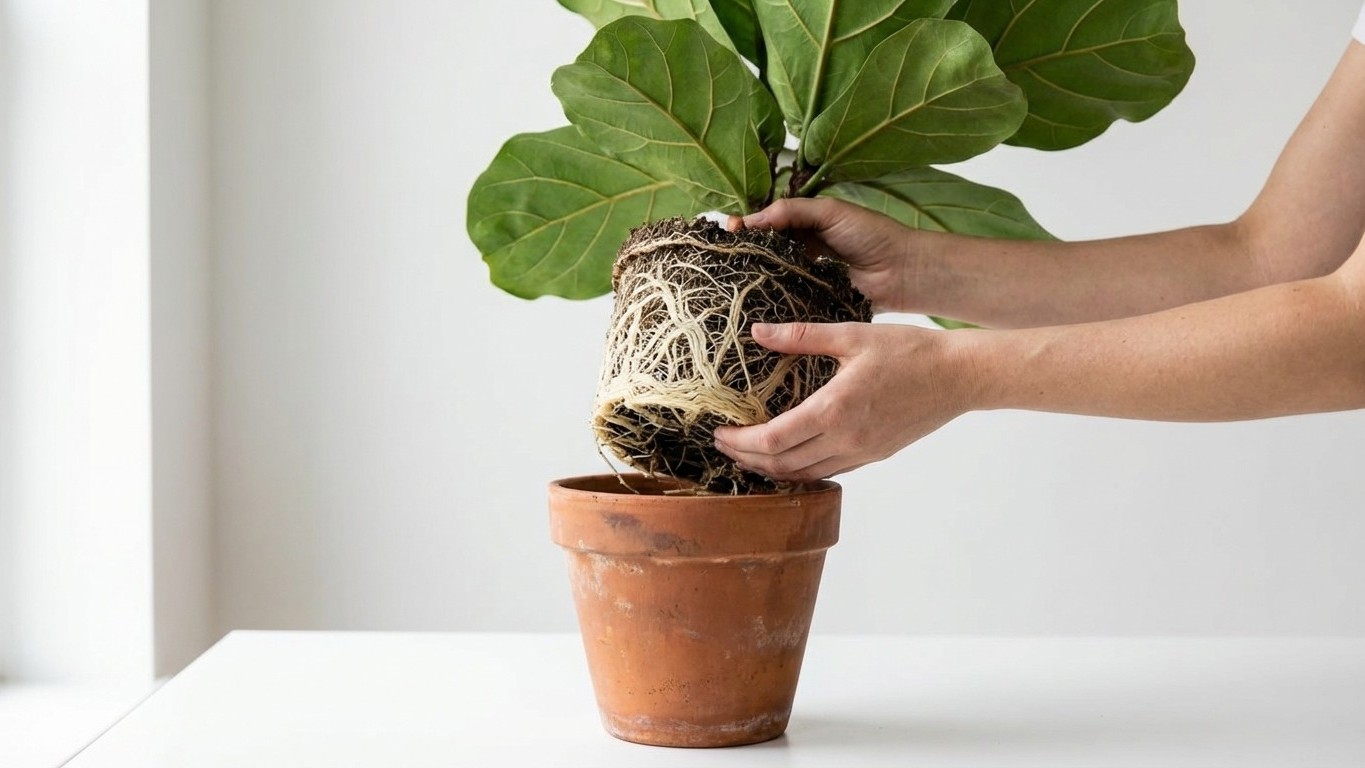
Your fiddle leaf fig’s roots are staging a rebellion. They’re pushing through drainage holes, circling the pot’s edge like a NASCAR track, and your once-thriving plant looks stunted despite your best care. Spring signals the perfect opportunity to liberate these botanical prisoners through strategic repotting.
Root-bound plants represent one of the most overlooked aspects of indoor gardening. These green companions outgrow their homes faster than most people realize, creating a cascade of problems that even perfect watering and lighting can’t solve.
Key takeaways
- Roots poking through drainage holes are screaming for help—but what quieter signals are you missing?
- Why repotting in March-May gives your plants superhero recovery powers that winter dormancy can’t match
- One size-up rule that makes the difference between thriving growth and silent root rot disaster
The telltale signs your plant needs a bigger home
Roots creeping through drainage holes mark the most obvious cry for help. But several subtler indicators often appear first. Water runs straight through the pot without being absorbed, a phenomenon that occurs when dense root masses block soil contact. Your plant might appear perpetually thirsty despite regular watering.
Growth comes to an inexplicable halt during what should be the active growing season. New leaves emerge smaller than previous ones, or leaf color becomes pale and lackluster. The soil dries out unnaturally fast, sometimes within 24 hours of thorough watering.
Check the bottom of the pot regularly. Root tips poking through holes indicate moderate crowding, but thick, woody roots or a solid root mass visible at the surface signals urgent action needed. Some plants, particularly fast growers like pothos or spider plants, might require annual repotting.
Gently slide the plant from its current container, if the root ball holds the exact shape of the pot and you see more roots than soil, repotting time has arrived. This investigation works best on slightly dry soil, making removal easier and less messy.
Spring timing gives your plants the advantage
March through May creates optimal conditions for repotting stress. Plants enter their natural growth phase, producing energy reserves and new root development that help them recover quickly from transplant shock. Daylight hours increase, temperatures stabilize, and humidity levels typically rise, all factors supporting successful transitions.
Repotting during dormant winter months often backfires. Plants lack the metabolic energy to establish new root systems in fresh soil, increasing the risk of root rot or prolonged recovery periods. Summer repotting, while possible, coincides with heat stress and vacation disruptions that complicate aftercare.
The two-week window after your last frost date proves particularly favorable. Indoor conditions mirror outdoor seasonal changes, triggering biological responses that prime plants for growth. Even houseplants that never venture outside respond to these environmental shifts.
Container selection makes or breaks success
Size matters, but bigger isn’t always better. Choose pots one to two inches larger in diameter than the current container. Jumping to dramatically larger pots creates problems, excess soil retains moisture around roots that can’t yet access it, promoting fungal issues and root rot.
Drainage remains non-negotiable. Every container needs holes in the bottom, regardless of how attractive it appears or how well it matches your decor. Those trendy ceramic pots without drainage? Use them as decorative outer containers, slipping the actual growing pot inside.
Material choice affects watering frequency and root temperature. Terra cotta breathes, allowing air exchange and faster soil drying, perfect for plants prone to overwatering like succulents or snake plants. Plastic retains moisture longer, benefiting tropical species that prefer consistent dampness.
Weight considerations become crucial for large plants. Ceramic and concrete pots provide stability for top-heavy specimens but create mobility challenges. Lightweight resin alternatives offer easier handling while maintaining adequate drainage and root space.
Avoid containers without saucers unless you enjoy water damage. Choose saucers slightly larger than the pot bottom to catch overflow without creating standing water directly under drainage holes.
The repotting process that minimizes trauma
Water your plant thoroughly 24 hours before repotting, then allow it to approach dryness. Moist soil cooperates better than bone-dry or soggy conditions. Gather newspaper, fresh potting mix, and clean containers before starting, rushing leads to Mistakes.
Remove the plant by turning the pot upside down while supporting the stem base. Tap the rim against a solid surface or gently squeeze flexible containers. Stubborn plants might require running a knife around the pot’s interior edge.
Examine the root ball carefully. Healthy roots appear white or cream-colored with firm texture. Brown, mushy, or foul-smelling roots need removal with clean, sharp scissors. Gently tease apart circled roots with your fingers, they won’t straighten themselves in new soil.
Add fresh potting mix to the new container’s bottom, creating a level that positions the plant at the same depth as before. Center the root ball, fill gaps with soil, and firm gently. Leave about an inch of space between soil surface and rim for watering.
Water immediately but moderately. Soil should feel evenly moist, not saturated. Place the repotted plant in bright, indirect light for one to two weeks while it adjusts. Avoid fertilizing for at least a month, fresh potting mix contains sufficient nutrients.
Most houseplants show initial signs of stress through slight wilting or leaf drop. This reaction is normal and typically resolves within two weeks as new roots establish. Monitor soil moisture carefully during this adjustment period, as water needs often change with fresh soil and larger containers.
Spring repotting transforms struggling houseplants into thriving specimens that reward your effort with vigorous growth throughout the season. Which of your green friends has been dropping hints about needing more room?