
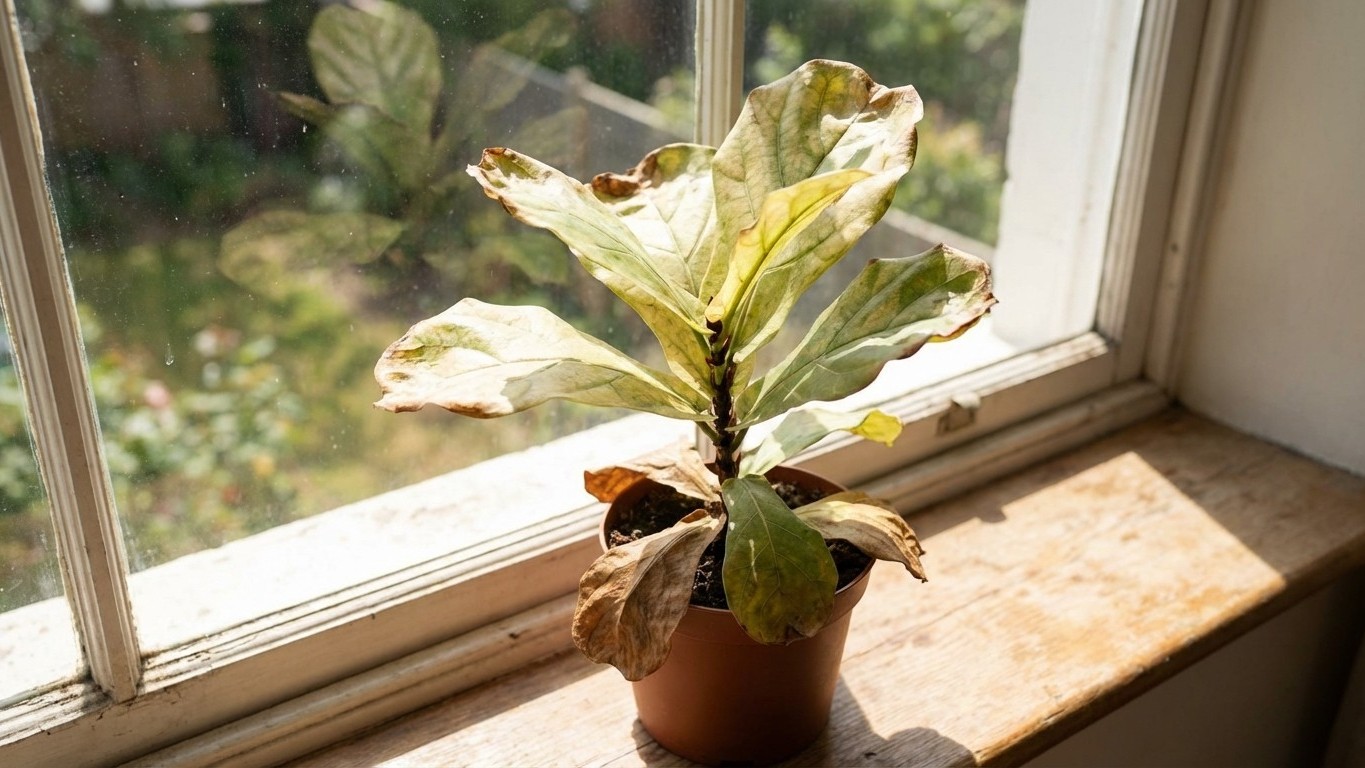
Your plant has been sitting in that sunny windowsill for months, and you’ve been proud of yourself for giving it what you thought it needed. Then, slowly, something goes wrong. The leaves bleach out, curl at the edges, or develop crispy brown tips that spread like a slow burn. You water more. Nothing improves. The problem isn’t water, it’s the fact that your plant has been quietly screaming at you in a language you haven’t learned to read yet.
Sun tolerance is one of the most misunderstood concepts in indoor plant care. We tend to think in binaries: a plant either likes sun or it doesn’t. The reality is far more layered. A plant that thrives in bright indirect light in a north-facing apartment might get scorched in the exact same pot placed two feet from a south-facing window in June. Context changes everything, and the signs of sun stress are sneaky enough to be mistaken for almost anything else.
Key takeaways
- The exact same sunny windowsill can be perfect for one plant and lethal for another—context changes everything
- Direct sun through glass is MORE intense than outdoor sun, creating a greenhouse effect most plant parents never consider
- Yellow leaves, fading colors, and leaf curl are screaming for help, but people misread them as completely different problems
What “Bright Light” Actually Means (and Doesn’t)
Garden centers and plant tags love vague descriptions. “Thrives in bright light” sounds helpful until you realize that a shaded patio in Florida gets more UV exposure than a sunny bedroom in Seattle in December. Light intensity, duration, and angle all matter. A window that feels gloriously warm and golden to you at 2 p.m. might be delivering more direct radiation than a sun-loving cactus wants, because even cacti appreciate some afternoon shade in their natural desert habitats, where they’re partially shielded by rocks and neighboring plants.
Direct sun through glass is actually more intense than outdoor sun, because the glass traps infrared heat while transmitting UV, creating a greenhouse effect on a small, very personal scale. Plants that evolved under a forest canopy, like many popular houseplants (pothos, peace lilies, most ferns, monsteras), never “see” unfiltered direct sun in the wild. Putting them against a south-facing window in summer is roughly the equivalent of dropping someone accustomed to shade directly onto a beach with no sunscreen. Damage accumulates before the crisis Becomes obvious.
The Signals Most People Misread
Yellowing leaves are the classic alarm bell, but here’s where people go wrong: they assume yellow means underwatering, so they water more. If the yellowing starts on the uppermost, most exposed leaves and those leaves also feel dry or papery, excess sun is the more likely culprit. Overwatering yellowing tends to start lower, on older leaves, and the leaf texture stays soft before drooping.
Fading color is another sign that reads as completely harmless at first. A variegated plant losing its bright green patches, or a deep-green tropical becoming pale and washed-out, often signals the plant is bleaching from too much light. Chlorophyll breaks down faster than it’s produced when light exposure is too high. The plant isn’t thriving, it’s being depleted.
Leaf curl deserves its own moment of attention. When leaves roll inward along their edges or cup downward, the plant is physically reducing the surface area exposed to light and heat. Think of it as the plant doing its own version of closing the blinds. Combined with crispy brown edges (not the soft, rotting brown of overwatering), this curling is a reliable indicator that your plant is running too hot and too bright.
One sign that almost no one catches early enough: stunted growth during peak growing season. A healthy plant in appropriate light should put out new leaves regularly between spring and early fall. If yours has stopped growing entirely during those months, and the soil moisture looks fine, it may be spending so much energy managing light and heat stress that it has nothing left over for growth. Survival mode looks like stillness.
The Plants Most Commonly Misplaced
Fiddle-leaf figs are endlessly blamed for being difficult, but a huge portion of their drama comes from being placed in direct afternoon sun because they “look like they want it.” They want bright, indirect light, meaning they should see the sky, but not the sun itself directly hitting their leaves. A sheer curtain between the plant and the window can make the difference between a thriving specimen and a progressively sadder stump.
Pothos, which many people treat as nearly indestructible, will develop pale, almost translucent patches on leaves exposed to direct sun for several hours a day. The damage is permanent on those leaves, the cells are simply cooked. The plant survives, but it doesn’t look great, and people often mistake the damage for a fungal issue and start treating for the wrong problem entirely.
Snake plants are fascinating in this regard. They genuinely tolerate low light, which gets translated (incorrectly) into “they prefer low light.” Given bright indirect light, snake plants grow faster and stay more vibrantly colored. Given direct hot sun, though, they’ll show the same bleaching and leaf damage as more delicate species. Tolerance isn’t preference, and it’s definitely not immunity.
How to Test and Adjust Without Guessing
A simple shadow test remains one of the most practical tools available. On a clear afternoon, hold your hand about a foot above a white piece of paper in the spot where your plant lives. A sharp, well-defined shadow means direct or high-intensity light. A soft, blurry shadow indicates indirect light. No visible shadow at all? Your plant is probably getting less light than most tropical houseplants need to photosynthesize properly.
Moving a plant gradually matters more than most guides acknowledge. Shifting a pothos from a dim corner to a south window in one day is a form of shock. A two-week transition, moving it a little closer every few days, allows the plant to acclimate by producing leaves with adjusted cell structure. Plants grown in shade produce thinner, broader leaves to capture more light. Sun-grown leaves are thicker and more reflective. The plant can adapt, but not overnight.
Sheer curtains, frosted window film, and even the simple act of moving a plant back two or three feet from the glass all dramatically reduce light intensity without sacrificing brightness. The goal isn’t darkness, it’s the right quality of light for the specific plant you’re caring for. And once you start seeing the signals your plants are already sending, you’ll realize they’ve been telling you what they needed all along.