
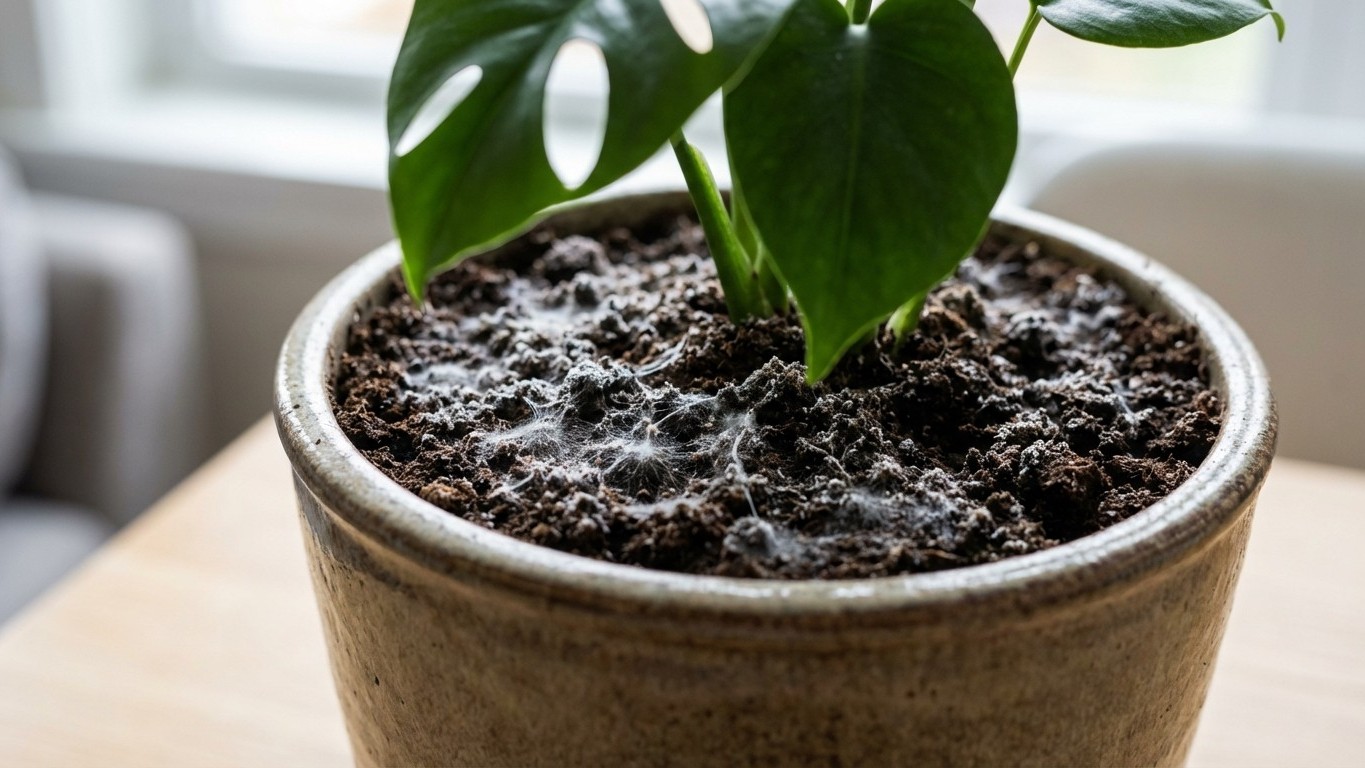
You spot it first at the edge of the pot, a thin, powdery white film spreading across the soil surface like frost on a windowpane. Your brain registers “mold” and immediately moves on. Maybe you poke it with a finger, maybe you don’t. Either way, you keep watering on schedule. Three weeks later, tiny flies swarm every time you walk past your fiddle-leaf fig, and your pothos looks mysteriously sad. The white fuzz wasn’t just mold. It was a warning sign you missed.
Key takeaways
- The white fuzz is mycelium, and it’s a harbinger of a fungus gnat invasion that could colonize your entire home
- One overlooked environmental factor creates the perfect storm: overwatering triggers mold, which attracts flying insects and damages roots
- You can eliminate it with items from your pantry, but only if you address the real culprit hiding in your watering habits
What You’re Actually Looking At
The white fuzz on your plant soil is likely a type of fungus known as mycelium, the vegetative part of a fungus, consisting of a mass of branching, interconnected hyphae. Think of it as the underground root system of a mushroom, visible only when it has colonized enough surface area to become impossible to ignore. This white fungal growth appears in warm, damp conditions, especially on plants that grow in poor light. Sound familiar? It should — that description covers roughly half the plants in the average American home.
What we call mold is a specific type of fungus: a saprophytic fungus. These fungi play an important and highly valuable role in nature, they are responsible for breaking down organic matter and turning it into valuable nutrients. Calling it “mold” conjures images of bathroom grout and soggy bread. The reality is stranger. Often referred to as “litter transformers,” saprophytic fungi change the chemical composition of organic material into valuable nutrients for soil and plants. So in small quantities, these organisms are genuinely doing you a favor.
The trouble starts when “small quantities” stops being accurate. Some types form a network of mycelium so dense that it impedes air and water circulation to the plant’s roots. That’s when benign biology tips into real damage. And here’s what makes the white fuzz worse than simple mold: it’s a reliable preview of what comes next.
The Cascade Nobody Warns You About
White mold on houseplant soil is usually harmless, but it’s a sign the soil is staying too moist, which can lead to fungus gnats or root rot if ignored. Root rot is bad enough. But fungus gnats? Those are the flying insects that will colonize your living room, circle your coffee, and breed prolifically across every pot in the house before you’ve had time to Google a solution.
The main trigger of a fungus gnat infestation is overwatering, because fungus gnats thrive in soggy environments. Larvae feed on decaying organic matter in moist soil. The white mycelium you see on top is essentially the same warm, wet environment those larvae need to survive, they arrive because you’ve built them a habitat. Their larvae primarily feed on fungi and organic matter in soil, but also chew roots and can be a problem in greenhouses, nurseries, potted plants, and interior plantscapes. So the chain goes: overwatering, white fuzz, fungus gnats, root damage. Four links. All avoidable.
Mold spores can negatively affect indoor air quality, and it doesn’t make the best impression. For households with allergy sufferers or asthma, this isn’t trivial. The spores are airborne, and a pot sitting on a coffee table or shelf isn’t far from your face. If you have allergies, asthma, or small kids and pets close to the pots, it’s still best to remove it and improve airflow.
Is It Definitely Mycelium? Or Something Else?
Before you treat, identification matters. White fuzz has at least three distinct causes, and confusing them leads to wasted effort. White mold is usually fuzzy or web-like and can look “fluffy,” while mineral buildup looks more like a crusty white layer (often from tap water or fertilizer salts). Mineral deposits don’t spread. Mycelium does.
Insect infestations and pests can also cause white fuzz on plant soil. Mealybugs, spider mites, and aphids can secrete a white, waxy substance that resembles fuzz. These pests can feed on plant sap, causing damage to the leaves, stems, and roots. If the white substance is clustered near stems or in leaf joints rather than spread across the soil surface, look harder, you may be dealing with pests, not fungi.
And if the fuzz is grey rather than white, pay close attention. If you see grey mold, that can be bad for your plant’s health. Grey mold will have a dusty look and will often be on old parts of your plant, giving them a wrinkly, collapsed appearance. Grey mold warrants more aggressive intervention than the white saprophytic variety.
How to Actually Fix It
The good news: the fix is straightforward, and you probably already own everything you need. Take a fork and scrape off the upper surface of potting soil to a depth of about 1 inch (2 cm), then replace with fresh soil. That’s your starting point. Physical removal, not chemical warfare.
After scraping, reach into your spice cabinet. Sprinkle a light layer of cinnamon onto the surface of the soil. Cinnamaldehyde, a chemical compound in cinnamon, is a natural anti-fungal, a great, all-natural way to take care of the problem without using chemicals. Odd as it sounds, your baking supplies are genuinely useful here. Mix 2 teaspoons of baking soda with 1 liter of water to make a spray that will kill the fungus. The high pH level of baking soda will kill off the white mold. For a more targeted approach, mix two teaspoons of organic neem oil with half a gallon of water, thoroughly mix in one teaspoon of dish soap to emulsify the solution, pour into a spray bottle and liberally spray the white mold — you can also use this as an antifungal soil flush.
Repotting is an option, but think twice before doing it reflexively. One of the Easiest ways to deal with white mold is simply to repot the plant using new potting soil. However, keep in mind that the organisms that caused the mold are probably in the new potting soil too, and if you don’t take care of the environmental issues, you’ll be dealing with mold again at some point.
The real fix is environmental. Overwatering is the main cause of mold growth in Houseplant pots. Soil that is constantly wet is a good home for mold spores. Instead of watering on a schedule, only water your plants when the top two inches of soil feel dry. And if you love decorative pots without drainage holes, consider placing your plant in a plastic nursery pot within the decorative one. To water the plant, remove the plastic container and return it only after the excess water has drained away. Setting plants in a bowl of water allows them to soak up water through the bottom drainage hole, this kind of watering keeps the top of the soil dry, which prevents fungus and mold. Also, keeps fungus gnats from becoming a problem.
One last thing worth considering: the mold may have arrived before your plant even left the store. Fungi spores float around in the air both indoors and out and germinate when they find a substrate that suits them, and spores may already be present in the potting soil you buy. Mold can sometimes originate in the soil itself: if your potting soil was exposed to moisture during storage or was not adequately packed, mold spores may have been present when you planted your houseplant. So even a freshly potted plant in pristine conditions can show white fuzz within days. That doesn’t mean you’ve failed — it means the conditions inside your home are tipping the balance. The real question is whether those conditions are about to get worse before they get better.