
Three years. That’s how long I repotted my fiddle-leaf fig on a strict spring schedule, same month, same ritual, same slightly smug feeling of being a responsible plant parent. Then a nursery worker named Marco watched me squeeze my pothos out of its container, looked at the root ball, and quietly said: “That didn’t need repotting.” The plant was fine. I was the problem.
Most of us learn to repot by calendar, not by observation. Spring arrives, garden centers flood their Instagram feeds with fresh soil bags and ceramic pots, and the urge to refresh our plants feels as natural as cleaning out a closet. But this seasonal impulse, however well-intentioned, ignores the one signal that actually tells you when a plant is ready: what’s happening at the roots.
Key takeaways
- What Marco saw in the root ball that changed a gardener’s entire approach to plant care
- The surprising reason plants can actually suffer from well-intentioned repotting
- A 90-second inspection that replaces the entire spring repotting ritual
The sign I kept missing (and you probably are too)
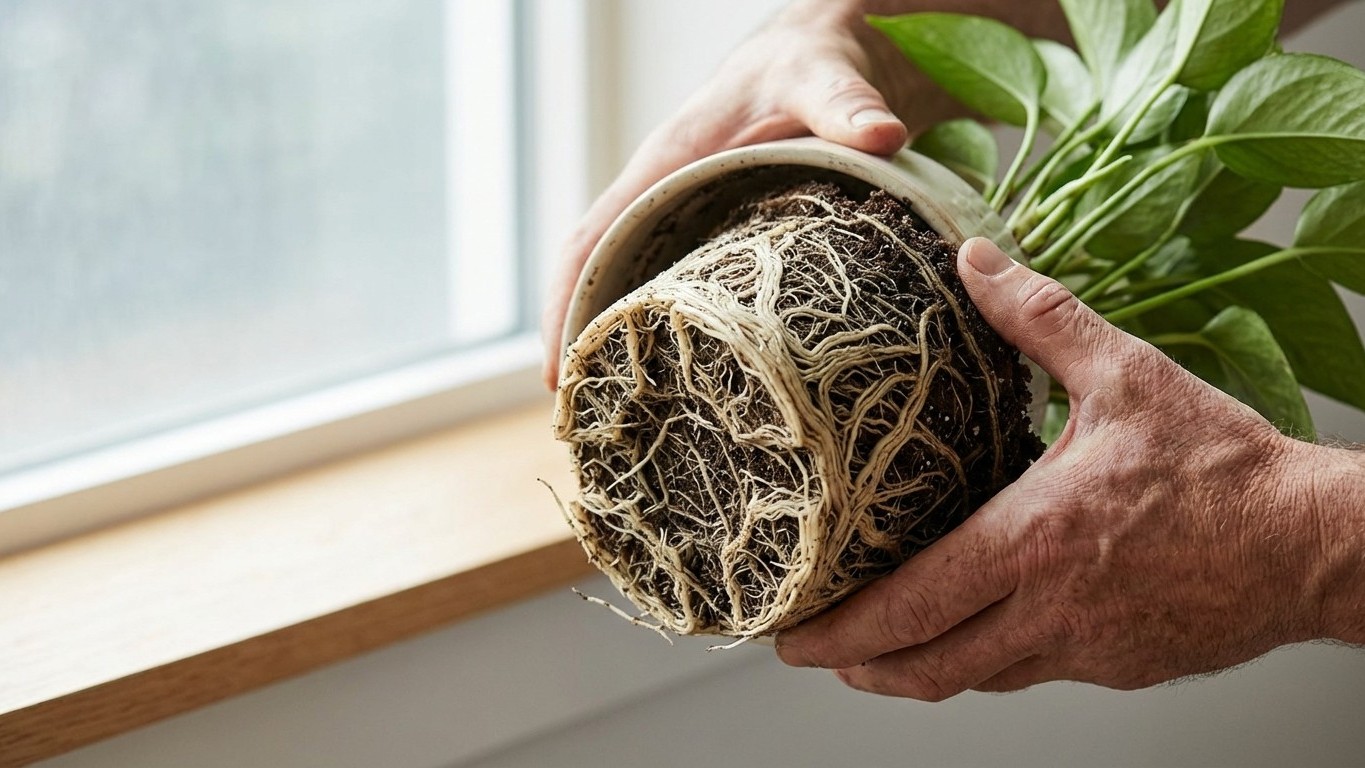
Marco pointed to something I’d seen dozens of times but never registered as meaningful: a dense, tightly coiled mat of roots circling the outer edge of the root ball, with almost no visible soil between them. Not a few roots poking out of the drainage hole, that’s just a curious plant exploring. What he described was a root system that has essentially consumed its growing medium, leaving the plant sitting in a compressed mass of its own structure with nowhere left to expand.
The soil disappearing is the tell. Healthy roots grow through soil, drawing nutrients and moisture from it. When the root-to-soil ratio flips, when you’re looking at mostly roots and barely any growing medium — the plant has outpaced its container in a real, functional way. Drainage slows. Water runs straight through without being absorbed. The plant dries out faster than it should, even after a thorough watering.
Compare that to the plant I’d been repotting every April: plenty of loose soil visible, roots reasonably distributed, no circling. It was comfortable. Disturbing it, washing away that established root environment, and forcing it to adapt to new soil was, in Marco’s words, “unnecessary stress dressed up as care.”
Why the calendar method fails your plants
The spring repotting advice isn’t wrong, exactly, it’s just incomplete. Repotting during active growth (typically spring and early summer) does give plants the best chance to recover quickly. The problem is treating the season as the trigger rather than the timing. A plant that doesn’t need repotting doesn’t benefit from it just because the calendar says March.
Repotting disrupts mycorrhizal networks, those fine fungal threads that colonize root systems and dramatically improve nutrient uptake. It can shock even healthy plants into a period of stalled growth while they re-establish. For slow-growers like snake plants or ZZ plants, unnecessary repotting can set them back six months. Six months of a plant just… existing, not growing, not thriving, because its owner felt productive on a Saturday afternoon.
Marco told me something that reframed the whole practice: “A plant that’s slightly pot-bound is often a happier plant than one that’s swimming in fresh soil.” Many species Actually bloom more readily when mildly root-bound, peace lilies, spider plants, and most tropical aroids among them. The stress of being slightly confined triggers a reproductive response. Give them too much space too soon, and they spend their energy on roots instead of leaves and flowers.
How to actually read your roots before you repot
The diagnostic takes about 90 seconds. Tip the plant sideways, cover the soil surface with your hand, and gently slide the root ball out. What you’re looking for falls into roughly three categories.
First: roots circling tightly around the entire outer surface, with the root ball holding its container shape perfectly and almost no loose soil visible. That plant needs repotting. Second: roots visible at the edges but with significant soil still present, the ball loosening somewhat as you handle it. That plant is approaching its limit but isn’t there yet, check again in six months. Third: the root ball crumbles, soil falls away, and roots look sparse or pale. That plant may have a different problem entirely, and dropping it into a bigger pot won’t solve it.
One detail Marco emphasized: check the drainage holes before you unpot. Roots visibly growing out of the holes and circling underneath the pot is a strong external signal. A single root poking through, though? That’s exploration, not desperation. The distinction matters more than most plant guides acknowledge.
The one adjustment that changed how I care for every plant I own
Since that conversation, I’ve stopped scheduling repotting and started scheduling checks. Every spring, instead of automatically reaching for a new pot and a bag of soil, I do the 90-second inspection on every container plant I own. Most years, maybe a third of them actually need to move up a size. The rest get watered, fed, and left alone to do what they’re already doing well.
The fiddle-leaf fig I’d been repotting annually? It’s been in the same pot for two years now. Last summer it put out seven new leaves, more than in any previous year. Coincidence, maybe. But I’d rather think it appreciated finally being left in peace.
There’s a broader shift buried in this: the instinct to do something to our plants is often more about us than about them. Caring for living things scratches a real psychological itch, and intervention feels like love. The harder skill, and maybe the more honest one, is learning to recognize when a plant is already telling you it’s fine, and choosing to listen to that instead.