
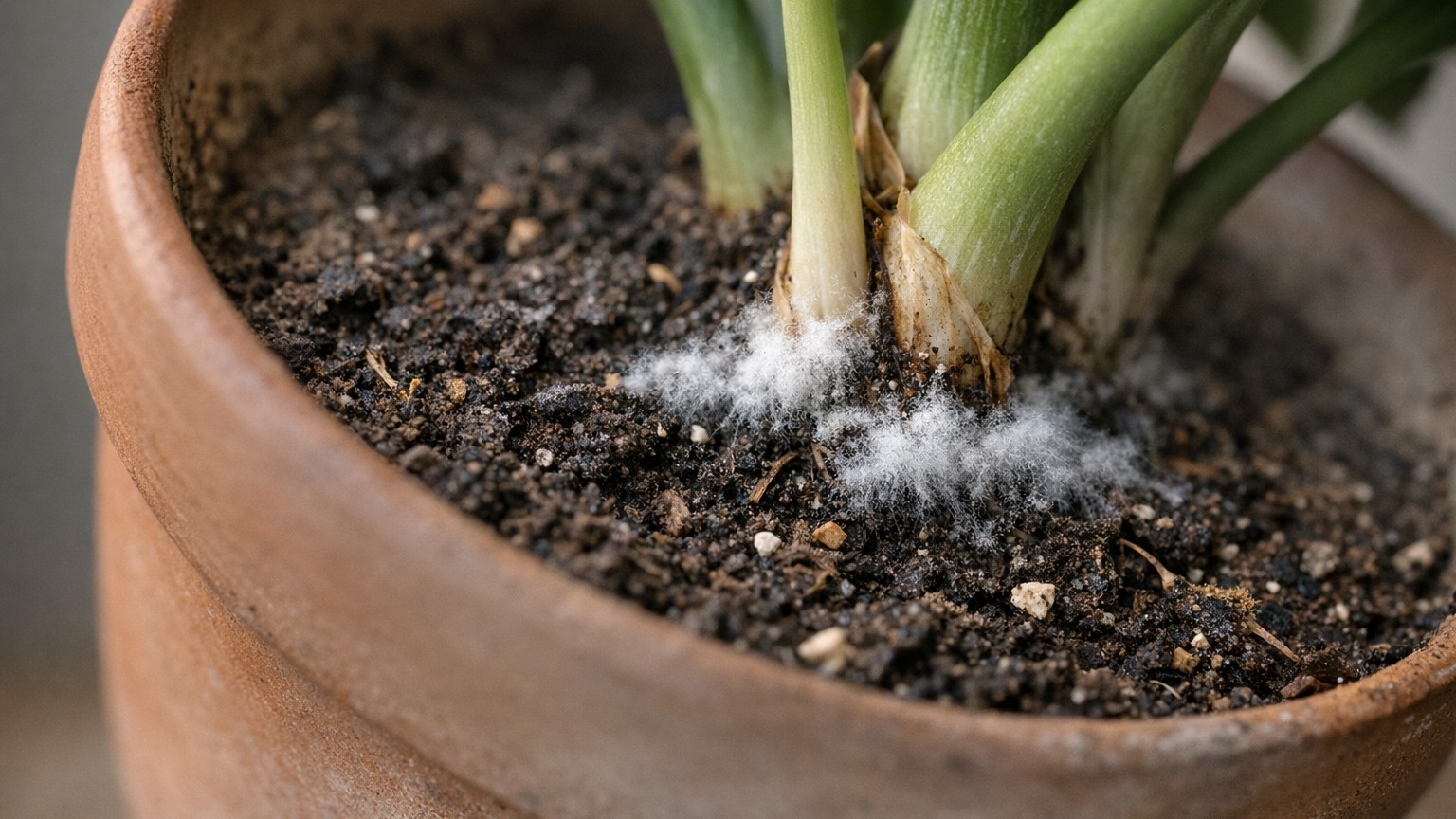
A dark patch on the soil. A faint white fuzz clinging to a leaf stem. The kind of thing you only notice when you actually move a pot, and then you cannot unsee it. Grouping houseplants together is one of the most common styling tricks in home decor right now, and for good reason: it creates lush, layered corners that look like they belong in a botanical greenhouse. The problem is that what happens between those pots is a story most plant care guides conveniently skip.
Key takeaways
- A humidity-rich environment that helps plants thrive is exactly what fungal spores need to spread aggressively
- Gray mold and powdery mildew can colonize your entire collection for weeks before you notice any visible symptoms
- Your healthiest-looking plants might be silent carriers of spores that devastate more delicate neighbors
The appeal of clustering, and the blind spot it creates
Tight plant groupings do something genuinely useful beyond aesthetics. As plants transpire, they release moisture into the air around them, creating a small humidity microclimate that tropical species like calatheas, ferns, and monsteras genuinely benefit from. That part is real and well-documented. A 2023 study from the Royal Horticultural Society confirmed that grouped plants can raise local relative humidity by 5 to 10 percentage points compared to isolated specimens, a meaningful difference for species that struggle in dry indoor air.
But that same moisture-rich environment is exactly what opportunistic pathogens love. Fungal spores, which are always present in soil and air in small quantities, germinate and spread most aggressively when two conditions align: warmth and persistent dampness. A tightly packed corner where air barely circulates between pots creates both. The plants’ canopies overlap, blocking airflow. Water that drips from one saucer can migrate to the next. And because you are not regularly moving each pot to check underneath it, problems can advance for weeks before they surface.
What you are most likely to find, and what it actually means
The most common discovery is gray mold, technically Botrytis cinerea, which appears as a powdery gray coating on dying leaves and stems. It spreads through airborne spores and accelerates dramatically in still, humid air. A single infected leaf tucked between two pots, invisible from above, can contaminate neighboring plants within days. This is not a rare scenario — Botrytis is one of the most widespread plant pathogens in both professional horticulture and domestic settings.
White powdery mildew is another frequent find, and it is deceptive because it looks almost decorative on first glance: a fine, dusty coating that could pass for mineral deposits from hard water. Unlike Botrytis, powdery mildew does not need wet surfaces to spread, it actually thrives in warm days combined with cool, humid nights, the exact conditions of a living room corner in winter when the heating cycles on and off. By the time the coating is visible on upper leaves, the fungus has usually been colonizing the plant for two to three weeks.
Fungus gnats deserve their own mention. Their larvae live in the top inch of moist soil, feeding on organic matter and, when populations are high, on fine root hairs. A cluster of pots with overlapping drainage means adult gnats can lay eggs across multiple plants in a single evening. One infested pot essentially seeds the entire group. The adults are more annoying than destructive, but the larvae can genuinely weaken young or stressed plants by compromising root function.
How to keep the group together without letting problems spread
The solution is not to break up every plant arrangement you have built. It is to build in deliberate gaps and a rotation habit. Placing pots on individual saucers rather than a shared tray cuts off the moisture bridge between them, a small change with a disproportionate impact on fungal spread. Each pot should ideally have at least two inches of clear air on all sides, which is enough to allow some airflow without dismantling the visual composition you worked to create.
A monthly rotation check is more useful than any spray. Pull each pot out, flip it slightly to examine the base, check the underside of lower leaves, and look at the soil surface for white fungal threads or gnat larvae. This takes about four minutes per plant and catches problems at a stage when a simple removal of affected leaves, combined with a reduction in watering, is enough to stop them. Waiting until something looks obviously wrong from above means the intervention needs to be much more aggressive.
Improving airflow in the corner itself is underrated as a preventive measure. A small USB-powered fan running on a low setting for a few hours a day can reduce the humidity spike that builds up between dense foliage. Professional growers use continuous airflow as a primary disease management tool, a principle that scales down perfectly to a home shelf or corner arrangement. This also strengthens stems over time, as plants respond to slight air movement by building slightly denser cell walls.
For any plant that shows active signs of mold or mildew, physical removal of affected tissue comes first, before any treatment. Cutting the infected leaf and sealing it in a bag before disposing of it prevents spores from becoming airborne during the process. A diluted neem oil solution or a simple baking soda spray (one teaspoon per liter of water) applied to the remaining foliage can suppress further development, but neither works if the environmental conditions driving the problem stay unchanged.
One last thing worth knowing: some plants are disproportionately likely to be carriers rather than victims. Pothos and philodendrons, both extremely popular in grouped arrangements, are remarkably resilient and often show no symptoms while hosting fungal spores that neighboring, more sensitive plants like begonias or nerve plants cannot handle. If your arrangement includes a mix of robust and delicate species, the robust ones deserve the closest inspection, precisely because they look fine.