
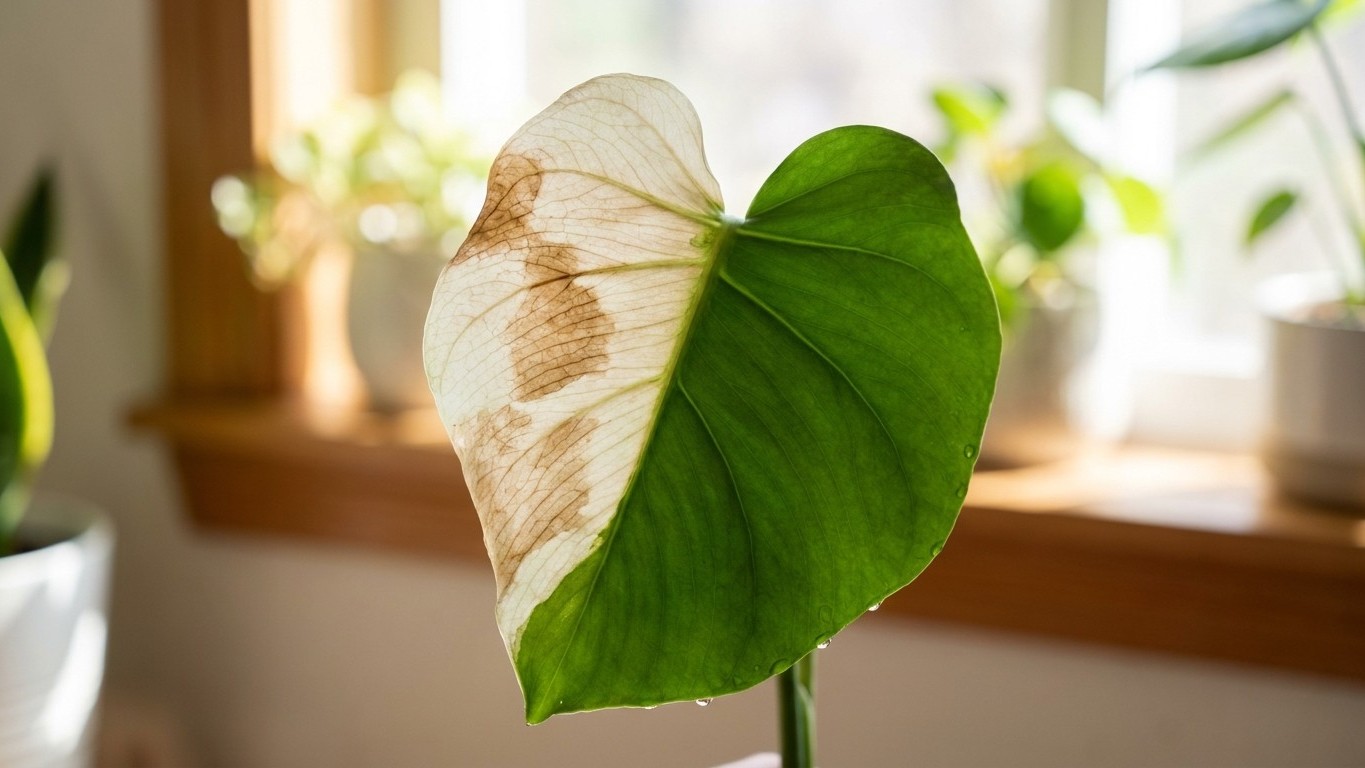
Brown patches on a monstera leaf, especially one sitting a few feet from a south-facing window, almost never mean the plant is thirsty. They mean it’s burning. Sun scorch on monstera deliciosa shows up as bleached or crispy tan-to-brown blotches, usually on the side of the leaf closest to the glass, and once that tissue dies it stays damaged for good. No amount of extra watering will bring it back.
The confusion makes sense. Underwatered monstera leaves do turn brown at the edges and droop before crisping up, so the visual overlap with sunburn is real. The difference is in the pattern. Watering-related browning tends to start at leaf tips and margins, spreading inward in a fairly uniform, symmetrical way across the whole plant. Sunburn is lopsided. It shows up on the leaves and even the specific patches of leaf tissue that face the window directly, while the shaded side of the same leaf stays green and healthy. If you rotate the pot and the damage pattern doesn’t match the plant’s overall shape, that’s your tell.
Key takeaways
- The brown patches might look like underwatering, but the pattern tells a completely different story about what’s really happening inside the leaf
- Glass windows act like magnifying lenses in certain angles and times of day, concentrating light intensity in ways that can damage a single leaf in less than a week
- Once the chlorophyll breaks down and cells collapse from heat stress, no amount of watering will reverse it—but moving the plant immediately can save new growth from the same fate
Why south-facing glass is the real culprit
A south-facing window in the Northern Hemisphere delivers the most direct, high-intensity light of any exposure, often for six or more hours a day depending on the season and any overhangs or trees outside. Monstera deliciosa evolved as an understory plant in Central American rainforests, filtering light through a dense canopy. In its native habitat it almost never receives unfiltered midday sun. Put that same plant a foot behind an unshaded south window in July, and the leaf surface Temperature can spike well above the surrounding room temperature, according to plant physiology research from university extension programs, including guidance from the University of Florida IFAS Extension on managing light stress in tropical houseplants.
Glass makes this worse in an unexpected way. It doesn’t just pass light through, it can act like a small magnifying lens depending on the angle and time of day, concentrating beams onto a single leaf zone rather than spreading light evenly. That’s why the scorch mark often looks like a distinct blotch rather than an even tan across the whole leaf. I’ve seen this on my own monstera: a single new leaf pressed against the pane developed a perfect brown triangle in under a week during a stretch of clear summer days, while every other leaf a foot further back stayed fine.
What’s actually happening inside the leaf
Sunburn on a monstera is a chlorophyll problem before it’s a water problem. Excess light energy breaks down chlorophyll faster than the plant can replace it, and the cell structures inside the leaf tissue start to collapse under heat and UV stress. The area turns pale yellow or bleached first, then dries out and browns as the cells die completely. Because this is structural damage, not dehydration, watering the soil does nothing to reverse it. The plant isn’t lacking water in that leaf; it has lost the machinery that would use the water anyway.
There’s a secondary effect worth knowing: damaged leaf tissue becomes an easy entry point for fungal issues in humid indoor environments. Once a patch of cell walls has broken down from heat stress, spores can colonize that dead tissue more easily than healthy leaf surface. So a sunburned monstera left untreated doesn’t just look bad, it can develop a follow-up problem that spreads to otherwise healthy leaves nearby.
Acting immediately, not eventually
The urgency in fixing this comes down to timing, not aesthetics. New monstera growth, the pale, still-unfurling leaves, is far more vulnerable to burn than mature, hardened foliage. If a new leaf gets scorched while it’s still developing its waxy cuticle, the damage locks in permanently as that leaf finishes growing. Waiting a few more days in the same spot can mean the difference between one damaged leaf and three.
The fix isn’t complicated, but it has to happen right away. Move the plant back from the glass, at minimum three to four feet, or shift it to an east or filtered west exposure where light is bright but indirect for most of the day. Sheer curtains work well if relocating isn’t an option, since they scatter direct beams without cutting light levels drastically. Trim off leaves that are more than half damaged, since they won’t recover and are pulling resources the plant could use on new growth; leaves with only minor edge scorch can often stay, as the healthy tissue keeps photosynthesizing.
Check the soil moisture too, but separately from the sunburn diagnosis. Monstera prefers to dry out somewhat between waterings, roughly the top two inches of soil, and overcorrecting with extra water because you assumed drought stress can trigger root rot, which brings its own kind of brown, mushy leaf damage that’s distinct from crispy sun scorch. It helps to actually confirm the pattern before changing your watering routine at all.
Reading the leaf like a diagnostic tool
Once you know what to look for, a monstera leaf becomes a fairly reliable gauge of its own environment. Crispy, uniform browning starting at the tips across most leaves points to underwatering or low humidity. Yellowing leaves with soft, translucent brown patches near the base usually signal overwatering or poor drainage. Sharp-edged, localized tan or bleached patches on the sun-facing side of specific leaves, especially ones closest to a bright window, means light stress, full stop.
The plant world runs on this kind of visible feedback loop, and monstera happens to be an unusually good communicator compared to something like a succulent, which can mask stress internally for weeks before showing anything on the surface. Learning to read one plant’s specific brown patch pattern actually transfers well to diagnosing other tropical houseplants dealing with the same south-window intensity, from philodendrons to fiddle leaf figs, which show remarkably similar scorch signatures when pushed too close to unfiltered glass.