
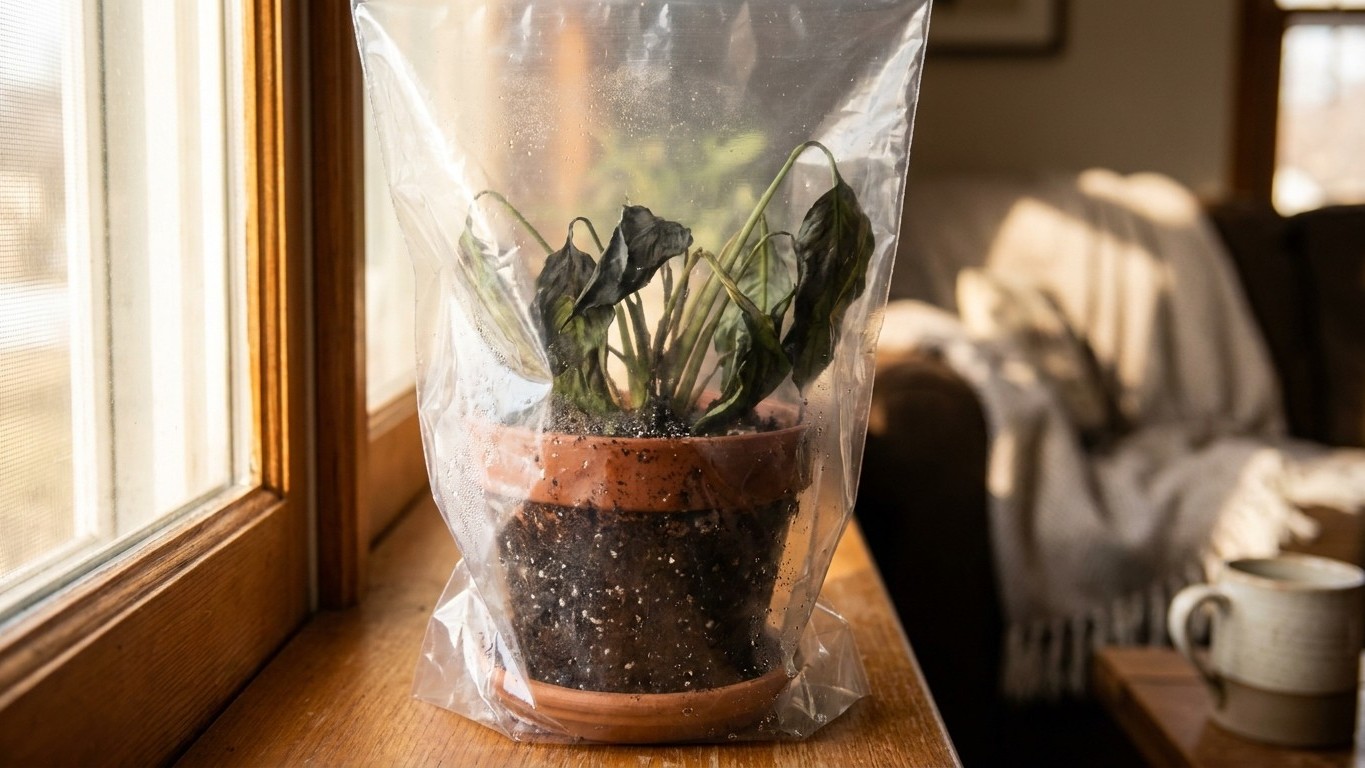
Ten days into a July trip, the plastic bags I’d carefully taped around my pothos and ferns had turned into something closer to a compost bin than a greenhouse. The leaves were mush. Black spots crawled up the stems of what used to be a healthy fiddle leaf fig. The soil underneath smelled sour, almost fermented. I’d done everything the internet told me to do, and I’d killed four plants in the process.
The clear plastic bag trick gets passed around every summer as a foolproof way to keep houseplants hydrated while you’re away. The logic sounds reasonable enough: seal in the humidity, trap the moisture the plant releases through transpiration, and you’ve built yourself a mini greenhouse that waters itself. Except that’s only half the story, and the missing half is exactly what cooked my plants alive.
Key takeaways
- A sealed plastic bag doesn’t just trap moisture—it traps heat that can cook plants alive in direct sunlight
- Waterlogged soil inside a sealed bag causes root rot in the first week, often before visible damage appears
- The method fails for most houseplants beyond 3-4 days, but better alternatives exist that actually work
Why the greenhouse effect turns against you
A sealed plastic bag doesn’t just trap humidity. It traps heat, and in a July apartment with south-facing windows, that heat has nowhere to go. Temperatures inside a closed plastic enclosure can climb well beyond what’s happening in the room, especially if any direct sun hits the bag during the day. Plants that would tolerate a warm room just fine start cooking in what’s essentially a solar oven made of Glad wrap.
The University of Vermont Extension, which studies plant physiology and home gardening practices, notes that excess humidity combined with poor air circulation creates ideal conditions for fungal pathogens like botrytis and pythium to take hold within days. Add heat to that equation and you’ve accelerated the timeline dramatically. What might take two weeks to develop into a serious mold problem under normal conditions can happen in four or five days inside a sealed bag baking in a window.
My mistake, looking back, was picking the sunniest spot in the apartment to line up the plants before leaving, thinking more light meant a better chance of survival. It’s the opposite. Bagged plants need to be pulled away from direct sun entirely, ideally into a spot with bright but indirect light, because the plastic magnifies whatever heat and light exposure the plant already gets.
The soil moisture nobody accounts for
Most people watering their plants right before bagging them are making a second, compounding error. Wet soil sealed inside plastic doesn’t dry out. It stays saturated for the entire trip, and roots sitting in waterlogged soil for ten or fourteen days start suffocating and rotting long before the leaves show any visible sign of distress. By the time the yellowing or blackening becomes obvious, the root system is often already dead, which explains why lifting the bag “too late” often means the damage happened in the first week, not gradually over the whole vacation.
Succulents and cacti are the plants most likely to die from this method, ironically, because they’re adapted to dry conditions and have zero tolerance for sitting in damp soil. Tropical plants like pothos, philodendron, and peace lilies have a bit more buffer, but even they have limits. Ferns, despite loving humidity, are surprisingly vulnerable to the stagnant, windless air inside a bag, which lets fungal spores settle and multiply on fronds with nothing to disturb them.
What actually keeps plants alive for two weeks
Bottom watering through a wicking system works far better than sealing plants in plastic, and it doesn’t require any special equipment. A cotton rope or strip of felt, one end buried in the pot’s soil and the other dropped into a jar or bucket of water placed nearby, will draw moisture up slowly and continuously through capillary action. It’s the same principle greenhouses have used for decades, just scaled down for a windowsill.
Grouping plants together in a bathtub or a shaded corner, away from direct sun and heating vents, also raises the ambient humidity naturally without the risk of trapped heat. Placing pots on a tray lined with pebbles and a shallow layer of water lets evaporation do the humidity work without saturating the roots. For anyone gone longer than two weeks, Self-Watering pots with a built-in reservoir remove the guesswork entirely, and they’ve become common enough that most garden centers stock at least a few models.
A friend or neighbor checking in once midway through the trip beats any gadget or bagging trick. Ten minutes to glance at soil moisture, crack a window if the room’s gotten stuffy, and rotate a pot away from a sudden burst of afternoon sun can save a plant that a sealed bag would have quietly killed.
Reviving what’s left, and what to skip next time
If you come home to the same scene I did, don’t compost everything immediately. Cut away blackened, mushy leaves and stems first, then unpot the plant to inspect the roots. White or pale tan roots that are firm to the touch mean there’s still a chance; brown, slimy roots mean the plant is likely unsalvageable and root rot has already spread through the whole system. For plants with partial damage, repotting in fresh, dry soil and cutting back on watering for the following two weeks gives the surviving roots a shot at recovering without drowning again.
The plastic bag method isn’t entirely worthless. It can work for very short absences, three or four days at most, and only when the plants are kept out of direct light the entire time. Beyond that window, the risks of heat buildup and fungal growth start outweighing whatever hydration benefit the bag provides. My fiddle leaf fig didn’t need a greenhouse. It needed someone to water it from the bottom and leave it in the shade, which would have taken five minutes to set up instead of the twenty I spent taping plastic around six different pots.