
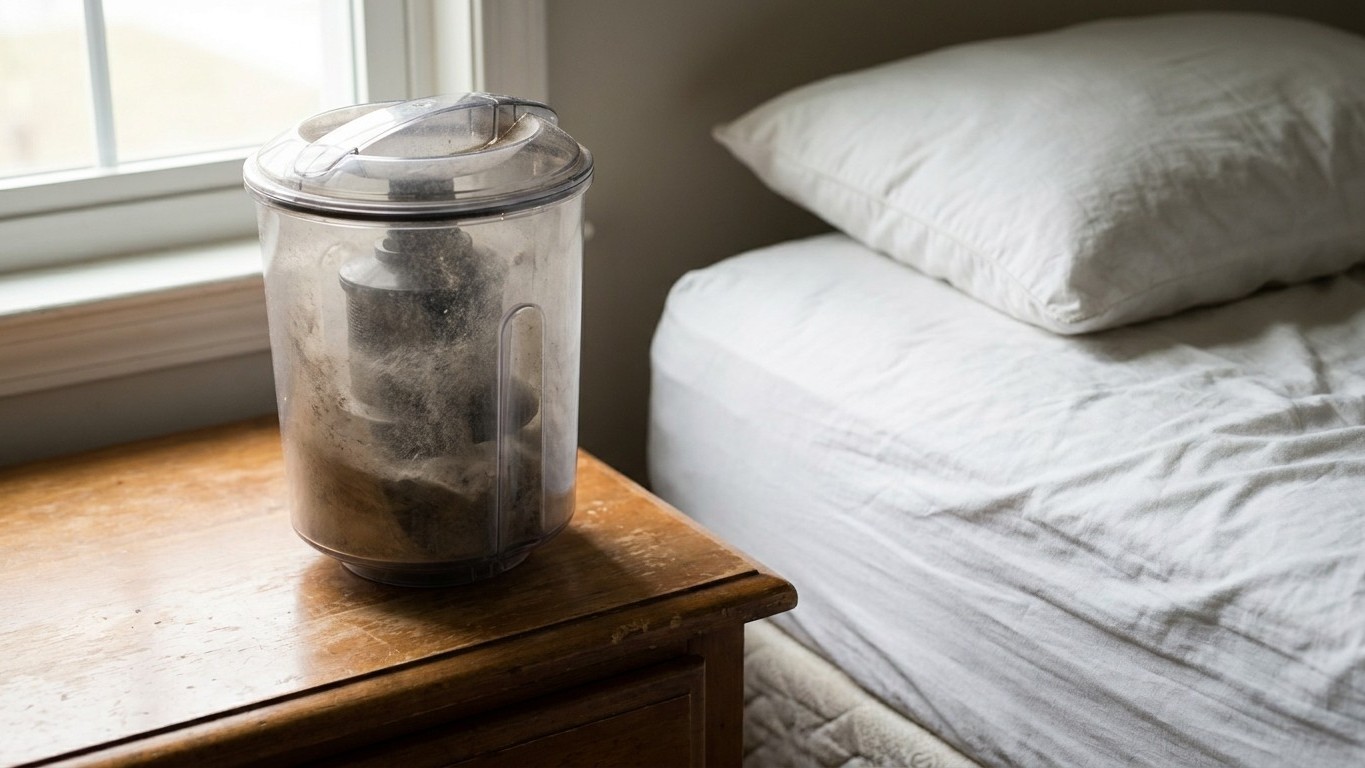
Bed bugs can survive a trip through a vacuum cleaner, and they can keep surviving inside it for months. That’s the uncomfortable truth behind a scenario more common than most homeowners realize: someone spots a few bites, grabs the vacuum, runs it over the mattress seams every morning like clockwork, and assumes the problem is under control. Then, weeks later, they open the canister and find a colony that never left. It didn’t die in there. It moved in.
Key takeaways
- Bed bugs have protective exoskeletons that let them survive vacuuming and live for months sealed inside
- Daily vacuuming without immediate, proper disposal turns your cleaner into an incubation chamber
- Eggs get left behind on surfaces while adults reproduce in the canister—creating a hidden infestation cycle
Why a Vacuum Doesn’t Kill What It Picks Up
The instinct to vacuum is reasonable. It’s fast, it’s chemical-free, and it visibly removes bugs from the seams where they cluster. The problem is what happens after the suction stops. Bed bugs can survive being vacuumed because they have a hard, protective exoskeleton that helps them withstand the suction and physical forces of a vacuum. That shell isn’t a minor inconvenience for pest control, it’s the entire reason vacuuming alone never finishes the job.
Once inside, bed bugs don’t just cling to life for a few hours until you empty the bag. Even if they get trapped in the vacuum bag or canister, bed bugs can still live for many months in those conditions, and they can go without feeding for extended periods of time, which allows them to outlive the vacuum bag. Some estimates push that survival window even further. Bed bugs can survive for an exceptionally long time sealed in a vacuum bag, potentially up to a year or more, since the lack of air and food sources may slow their metabolism. A canister left in a closet for three weeks isn’t a wait, it’s practically a vacation for them.
There’s also a design flaw specific to bagless models, the kind most people reach for because they’re convenient. All vacuums have filters that protect the motor from dust and debris, and bed bugs should never make it to the filter in a vacuum that uses bags, but in a bagless vacuum the filter could collect live bed bugs. Every crevice, seam, and joint in a bagless canister becomes a potential hiding spot, and every one of those spots has to be cleaned if you want the vacuum to stop being part of the infestation.
The Habit That Backfires: Vacuuming Without Emptying
Daily vacuuming feels proactive. Skipping the disposal step afterward turns that same habit into a slow-motion breeding chamber. Pest control guidance from entomology programs is blunt about this. If you use a vacuum cleaner without proper containment, the machine may have living bed bugs inside even after discarding the bag or cleaning the canister, and to prevent their release back into the home, the vacuum cleaner and all its parts should be stored inside a large plastic bag, sealed until the next use. Running the same uncleaned vacuum over the mattress morning after morning doesn’t reduce the population, it just keeps depositing fresh bugs and eggs into a container that already has plenty of both.
Federal guidance treats this as a non-negotiable step, not an optional precaution. The Environmental Protection Agency’s do-it-yourself bed bug guidance is direct: vacuum after each use, seal the bag as tightly as possible, and immediately throw it out in an outdoor trash container. “Immediately” is doing a lot of work in that sentence. Not later that day, not once the canister feels full, immediately. County health guidance echoes the same urgency, noting that after vacuuming, the vacuum cleaner bag should be placed in a sealed plastic bag and disposed of in an outdoor trash container right away, because bed bugs can crawl out of vacuum cleaner bags.
Eggs complicate the picture further, and they’re the part most people underestimate. Bed bug eggs are coated in a sticky, glue-like substance that helps them cling firmly to surfaces such as fabric seams and wooden cracks, and a vacuum often slides right past them, leaving the eggs behind to hatch later and restart the cycle. So even a rigorous seam-by-seam vacuuming routine can miss the next generation entirely, while the canister quietly incubates the adults already caught.
What Actually Empties the Canister Safely
For bagless vacuums specifically, the cleanup goes well beyond dumping the dust bin into a trash can. Extension entomologists at Purdue recommend that the bagless vacuum canister be thoroughly washed with hot soapy water to eliminate any bed bugs and eggs after every single use during an active infestation. Skipping that wash step is exactly how a canister becomes, as one pest control resource puts it, a “Trojan Horse” effect where the vacuum itself becomes a mobile nest.
Freezing offers a backup option for washable parts, though it has to be done correctly to matter. Cold treatment involves placing infested items in a sealed plastic bag and putting them in a home freezer at 0°F or below for at least four days, provided the items can withstand freezing temperatures without damage. Most standard kitchen freezers don’t reliably hit that mark, so a thermometer check is worth the two minutes it takes.
None of this replaces heat, which remains the one method that actually kills bed bugs on contact rather than just relocating them. Bed bugs die when their body temperature reaches 45°C, or 113°F, but reaching that temperature reliably inside a mattress seam requires specialized equipment, not a space heater. Raising the indoor temperature with the thermostat or space heaters won’t do the job; special equipment and very high temperatures are necessary for successful heat treatment. A steam cleaner is the closest DIY equivalent, provided it hits the right output. The EPA specifies that steam cleaners can get into cracks and fabrics to treat carpets, baseboards, bed frames, and other furniture, and the steam temperature must be at least 130°F but should not have a forceful airflow, or it may cause bed bugs to scatter.
Vacuuming still has a place in this fight, just not as the whole strategy. It reduces numbers quickly and clears visible clusters from seams and folds, but treating the canister as harmless once it’s snapped shut is the mistake that turns a manageable problem into a three-week surprise. If bites keep appearing despite a daily vacuuming routine, the next call shouldn’t be to buy a stronger vacuum. It should be to a pest management professional who can pair heat or EPA-registered insecticides with mattress encasements built to trap and starve out whatever survived.
Sources : amazinghomedecorco.com | iere.org