
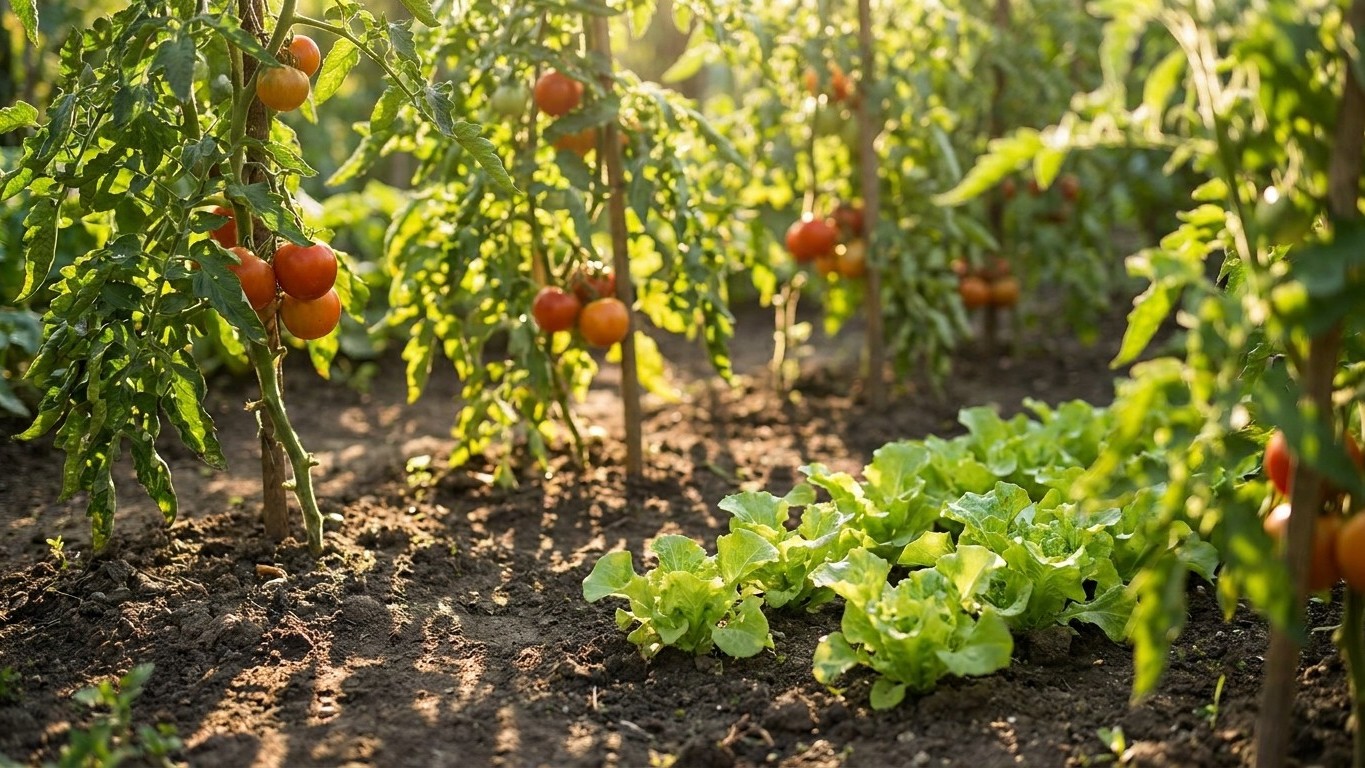
My grandmother never read a single gardening manual, and she certainly never used the word “microclimate.” Yet every June, without fail, she’d tuck her lettuce seedlings into the dappled shadow of her pole beans and staked tomatoes. As a kid helping her in the garden, I thought it was simply a lack of planning, wasted real estate under plants that clearly needed the sun more. Decades later, with my own vegetable beds and a stack of failed summer lettuce crops behind me, I finally understand what she knew instinctively: lettuce hates full, blazing sun once the temperatures climb.
Key takeaways
- Your grandmother’s shade trick wasn’t just luck—it’s backed by horticultural science
- Lettuce bolts and turns bitter not just from heat, but from longer spring days triggering an internal flowering signal
- Living shade from taller plants keeps soil cool and extends your harvest by weeks—and it’s completely free
Why lettuce turns bitter and bolts in the heat
Lettuce is what horticulturists call a cool-season crop, and it shows. Lettuce grows best at temperatures of 59-68°F, and temperatures of around 85°F promote bolting (flower stalk formation) and development of bitter flavor. That’s a narrow comfort zone for a plant that so many home gardeners plant right alongside heat-loving tomatoes and peppers in the middle of a sun-drenched bed.
The mechanism behind bolting is more interesting than most people realize, and it upends the simple “it’s just too hot” explanation my grandmother might have given if I’d asked her directly. Cooperative Extension experts explain that the reason lettuce bolts is that if growing conditions aren’t perfect, the plant can quickly go to seed, and bolting is triggered by an internal signal that also produces the bitter-tasting chemicals. For a long time, gardeners assumed heat alone flipped that switch. But research tells a more nuanced story: it was long thought lettuce bolted from summer heat, but it has been shown experimentally that lettuce and spinach actually take their cues for flowering from the length of the hours of darkness at night. Shorter nights, not just hot days, push the plant toward seed production. Since temperature and daylength both shift together as summer progresses, my grandmother’s shade trick was still doing real work, just not for the exact reason I assumed.
What that shade actually does for the plant
Where afternoon shade genuinely earns its keep is at soil level. Extension research on heat stress found that using straw as mulch can help keep soil cool, which is important for crops like tomatoes and lettuce, and mulch also helps keep the soil moist. Shade does something similar without a wheelbarrow of straw. Iowa State’s small farm program notes that brassicas, lettuce, carrots and spinach are particularly vulnerable to bitterness, wilting, bolting, deformities and coloring that affect the quality of the produce when heat piles up, and cooling the root zone is one of the few levers a home gardener can actually pull.
This is precisely why letting taller plants lean over your lettuce rows works as well as it does. The University of Maryland Extension recommends gardeners use tall crops and trellises to protect late spring lettuce plantings from direct afternoon sun, interplanting between rows or within the row of later-maturing crops like tomatoes, broccoli, and brussels sprouts as a space-saving practice. My grandmother’s tomato stakes and bean poles were doing exactly that job, decades before “interplanting” became a term I’d encounter in an extension bulletin.
Commercial shade cloth, sold in garden centers everywhere, essentially mimics this same effect on a bigger scale. Shade cloth is a simple tool that enables many growers to enjoy crops prone to burning, bolting, or bitter flavor well into the summer months, and most guidance converges on a similar number: a 30% shade cloth provides adequate cooling without blocking too much light for most vegetables, though higher percent shade of 50-70% is sometimes used for very heat sensitive crops like lettuce. My grandmother’s beanpoles were, in effect, a free, biodegradable version of that fabric.
Building your own living shade structure
If you want to copy the trick without buying a roll of shade cloth, the logic is simple: put your lettuce on the east or north side of something tall enough to block the harshest afternoon sun, while still letting in gentle morning light. Home Depot’s companion planting guidance backs this up directly, noting that lettuce does best with a bit of light shade, so planting it with tall flowers is not only beautiful but practical, whether that’s cleome, nicotiana, tall zinnias or another leggy plant suited to your area. Tomatoes, staked cucumbers, and pole beans all do the job just as well as ornamental flowers, and they give you a second harvest from the same square footage.
There’s a nuance worth knowing before you copy this wholesale, though: shade cloth thrown directly over the crop doesn’t behave the same way as living shade from a neighboring plant. One extension answer is blunt about it: shade cloth that reduces the quantity of light during the day does not increase the critical length of night, and will have little effect on bolting. So the real payoff of grandma’s method isn’t stopping the flowering trigger. It’s keeping the soil and leaves cooler so the lettuce stays sweeter and more tender for longer before it inevitably bolts, and buying you extra weeks of harvest in the meantime.
Planting date still matters more than any amount of shade. The best strategy to prevent bolting is to plant as early in the spring as possible, since gardeners tend to blame bolting on rising temperatures when day length is really driving it. Combine early sowing with a leafy neighbor to the west, and you’ve essentially recreated, almost by accident, the exact system my grandmother ran in her backyard plot for forty years. She never explained her reasoning because she probably never needed one. The lettuce simply didn’t turn bitter under the bean poles, and that was proof enough for her.
Sources : extension.iastate.edu | shopping.yahoo.com