
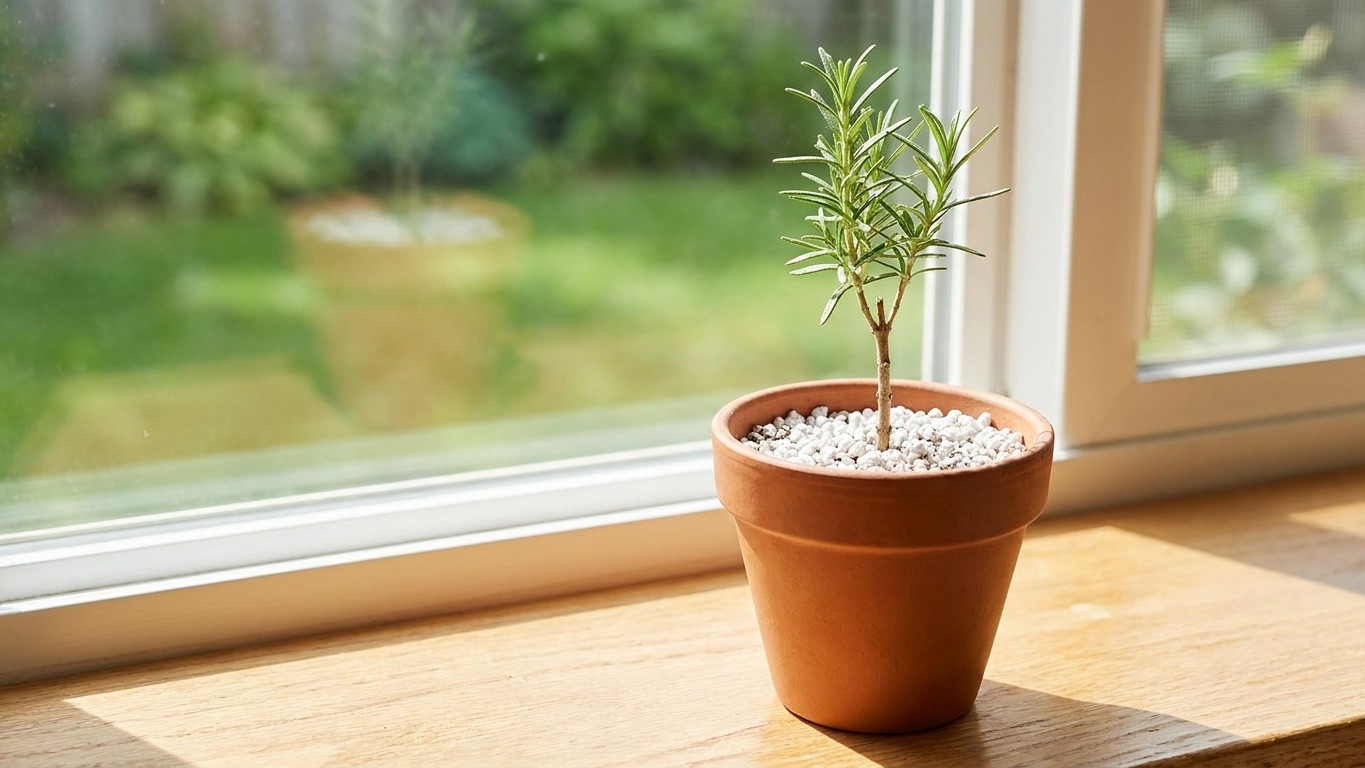
Rosemary cuttings that once sat in a windowsill glass for two months are now going straight into perlite, and gardeners are watching roots form in half that time. The shift isn’t a trend dreamed up on social media. It’s a practical response to a problem every rosemary grower has faced: cuttings that either rot in murky water or take forever to sprout the fine white threads that mean success.
The water method has a reputation problem it never quite shook. Although there are many plants you can grow in water indefinitely, rosemary isn’t one of them, and even after regular changing, the cutting will struggle to meet its nutrient requirements after it hits the three-week mark. That’s the catch nobody mentions when they hand you a jar and tell you to wait. Softwood cuttings taken early in spring are more popular because they root faster, but they’re also at a higher risk of rotting in water, which is why semi-hardwood cuttings are preferred for water propagation, though they take longer to develop roots, about four to six weeks. Six weeks of staring at a jar, hoping the water hasn’t gone cloudy again.
Key takeaways
- Why your rosemary cuttings keep rotting in water (and it has nothing to do with how often you change it)
- The unexpected quality difference between water-rooted and soil-rooted stems that changes everything after potting up
- One hormone treatment that increases rooting success from 40% to 92% in just seconds of preparation
Perlite Does What Water Can’t
Swap the glass for a small pot of moistened perlite, sand, or vermiculite, and the timeline changes fast. Fibrous roots can form in two to three weeks when cuttings go straight into a well-draining mineral mix instead of liquid. The reason comes down to oxygen. Water-submerged stems sit in an environment starved of air, which slows root initiation and invites rot. Perlite is essentially popped volcanic glass, full of tiny air pockets that let a cutting’s base breathe while still holding just enough moisture.
The soil method involves inserting cuttings into a well-draining, light medium, such as standard potting soil blended with perlite, vermiculite, or coarse sand, since heavy, moisture-retentive mixes must be avoided because rosemary requires excellent drainage. That drainage requirement is exactly what a glass of standing water can’t provide. It’s also why rot, not slow growth, is the number one killer of rosemary cuttings started in water.
There’s a second advantage that rarely gets mentioned: root quality. The transition from water to soil matters more than people think, because roots developed in water are tender and different from roots that grew in soil. A cutting rooted directly in perlite skips that fragile in-between stage entirely. It never has to relearn how to pull nutrients from solid ground, because it was doing that from day one. Fewer transplant shocks, fewer wilted stems two weeks after potting up.
The Hormone Dip That Changes the Math
Speed doesn’t come from the medium alone. Most gardeners now pair the perlite switch with a quick dip in rooting hormone, and the data on that combination is striking. Hormone types like IBA (indole-3-butyric acid) at 750ppm deliver 92% rooting success compared to 40-60% without treatment. That’s not a marginal bump. It’s the difference between a windowsill full of dead sticks and a tray of new plants ready for the garden.
The technique itself takes seconds. Immediately after cutting off the bottom leaves, dip the bare area of the stem into rooting hormone. Application methods matter, so use quick-dip techniques on dry stems, tapping off excess powder to prevent clumping. Overdoing it doesn’t help. Concentration levels are vital since overtreatment causes leaf twisting and reduced stimulation. A light tap of powder on the cut end, and that’s it, no soaking, no repeat applications.
From there the process is almost boring in its simplicity. Take 4- to 6-inch-long stem cuttings, strip away the lower half of the leaves, fill a pot with a well-draining mix that has perlite, and make sure the container has a drainage hole. Make a hole in the center of the pot with a pencil, insert the bare end of the cutting, and place the container in a warm area with bright, indirect light. A pencil and a pot. That’s the entire equipment list.
Keeping Humidity Without Drowning Roots
Air pockets alone don’t guarantee success. Rosemary cuttings still need moisture in the air around them while their roots are forming, just not moisture pooling at their base. To maintain high humidity, a clear plastic bag or dome can be placed over the pot, but this covering should be removed periodically to allow for air circulation. Skip that step and condensation turns into a breeding ground for the exact fungal problems perlite was supposed to prevent.
Watering habits matter just as much as the setup. Keep the rosemary cuttings watered daily or more often if the rooting medium dries out too quickly. That’s a shift from the “set it and forget it” appeal of the water jar, but it pays off. Cuttings rooted in a soil medium must be kept evenly moist but never saturated or waterlogged, because overwatering quickly leads to stem rot, to which rosemary is particularly susceptible.
Checking progress doesn’t require digging anything up. Tug gently on the cutting to test for rooting, and if it resists moving when you pull, it’s forming roots. Some growers add a bottom-heat boost to speed things along further. For quicker rooting, place the pots on a propagating mat, which keeps the potting soil warm. Warmth at the root zone pushes cellular activity, which is part of why a heated mat can shave days off the wait.
Not every rosemary grower needs to abandon the water jar entirely, especially for hardwood cuttings taken in fall, when it works especially well for hardwood cuttings in the fall. But for anyone starting cuttings in spring or summer, when stems are softer and more prone to rot, perlite has quietly become the default. The jar on the windowsill still looks charming. It’s just not where the roots show up first anymore.
Sources : growagoodlife.com | leravi.org