
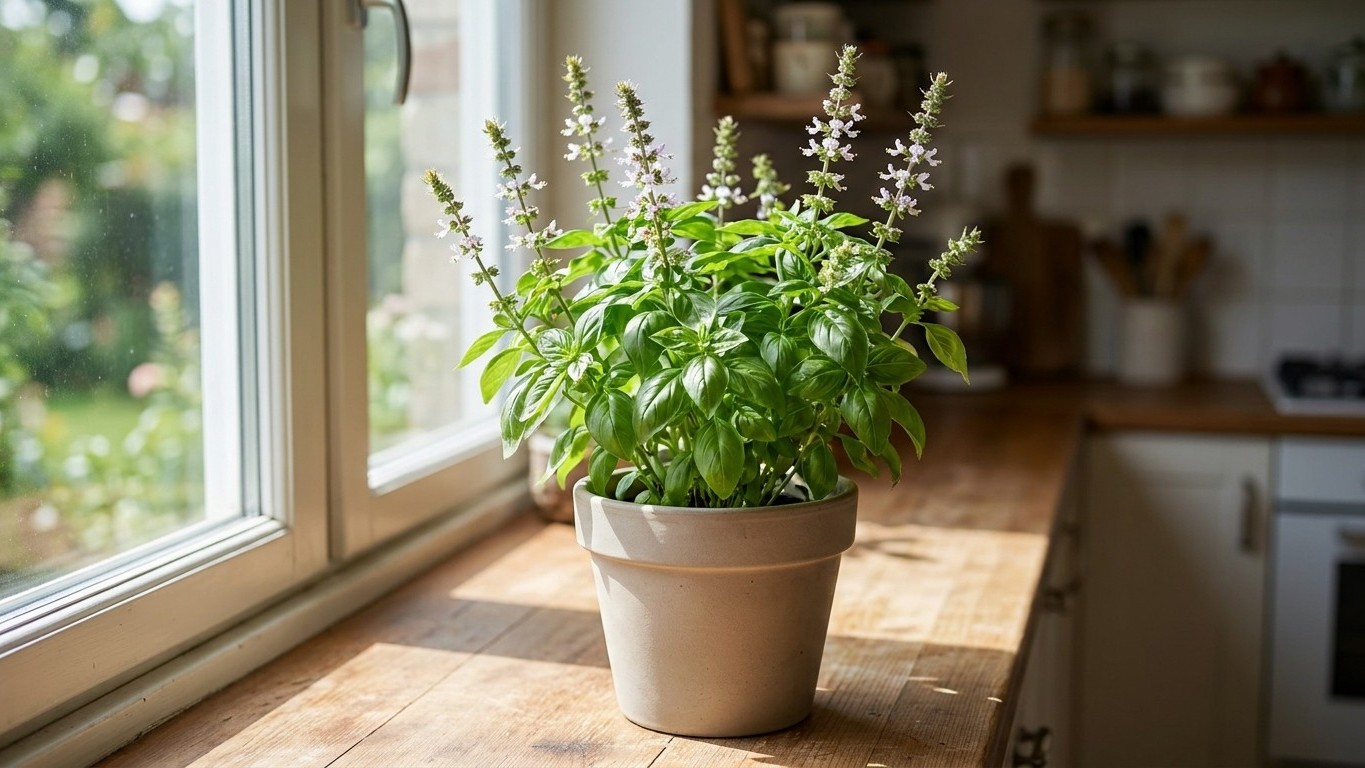
Two weeks. That’s all it took for a healthy pot of basil to go from pesto-ready to practically inedible for fresh use, just because the plant was left alone to flower. The lesson lands hard the first time it happens: basil doesn’t wait around, and once it decides to reproduce, there’s no calling it back.
The mistake felt reasonable at the time. Saving seeds sounds like the responsible, frugal thing to do, the kind of move that turns one plant into next year’s entire crop for free. So the flower spikes were left standing instead of pinched off. Big error, and a common one among first-time growers who don’t realize how fast the flavor clock starts ticking once those tiny white or purple blooms appear.
Key takeaways
- What happens inside the plant when it decides to flower—and why there’s no turning back
- The exact two-week timeline when basil flavor crosses from pesto-perfect to unrecoverable
- A surprising way to still use bitter basil leaves, plus the seed-saving strategy that actually works
Why flowering flips a switch in the plant’s chemistry
What’s happening underneath those pretty little flowers is a full metabolic pivot. The transition to a bitter taste is linked to “bolting,” where the basil plant shifts energy from producing foliage to developing flowers and seeds, driven by the plant’s survival instinct. The plant essentially stops investing in leaf growth and pours everything into reproduction, because in nature, flowering means the growing season is ending and seeds need to be ready before frost or drought hits.
The flavor consequence is chemical, not just cosmetic. Basil’s sweet aroma comes from compounds like linalool, but during bolting, the concentration of other essential oils increases significantly, with compounds such as eugenol and methyl chavicol becoming more concentrated and leading to a pungent or bitter flavor. That’s why a caprese salad made with post-flower leaves tastes off, harsh, almost medicinal compared to the sweet, peppery basil from a few weeks earlier.
Bolting isn’t only triggered by the plant’s natural clock, either. Extreme heat is a common external factor that forces basil to bolt prematurely, with temperatures consistently climbing into the 90s Fahrenheit causing the plant to interpret the environment as unstable and prompting it to set seed quickly. A potted basil sitting on a hot windowsill or a sun-baked balcony is basically being told, chemically speaking, that it’s time to panic and reproduce now.
Once the seeds form, there’s no going back
Here’s the part that stings for anyone who assumed a quick trim would fix things. Once basil has flowered and produced seeds, pruning will not bring the leaves back to being sweet again, and once at that stage it is not possible to go back. The window for damage control closes fast, and it closes earlier than most gardeners expect.
There is a narrow rescue opportunity, though, and it’s worth knowing about before the flower stalks fully open. If the flower just developed and the basil is cut back to the first sets of leaves above the soil, the new growth is likely to be nearly as tasty as before, or at least far less bitter. That’s a very different outcome from what happens after seed pods have already started forming, which is roughly the two-week mark where flavor loss becomes permanent.
The plant’s lifespan also shortens dramatically once it commits to seed production. Once basil develops its first seeds, it’s going to die relatively soon, which becomes noticeable as the stems turn woody. So the choice isn’t really “flower now, eat leaves later.” It’s closer to “pick one purpose for this particular plant.” Basil, unlike a tomato vine that keeps producing after a partial harvest, treats flowering as a one-way door.
Bitter doesn’t mean ruined, and seed-saving still has a place
The good news: bitter basil is still basil. The leaves are still perfectly edible after flowering, though it’s better to avoid using them raw in salads or caprese and instead reserve them for cooked dishes or pesto. Cooking mellows the sharper, clove-like notes that develop post-bolt, so a batch of tomato sauce or a soup base can absorb those leaves without much complaint. Pesto works too, especially blended with enough olive oil, garlic, and pine nuts to balance the harsher oils.
The flowers themselves aren’t wasted space either. Basil flowers are edible and can be used as garnish, infused into oil, or turned into a basil flower pesto. A small silver lining for anyone standing over a pot of leggy, flowering basil wondering what to salvage.
As for the actual seed-saving payoff, patience matters more than most people assume. Basil plants typically start to flower anywhere from 8 to 12 weeks after germination, and once flowering begins, leaf production usually starts to decline. The seeds themselves need time too. Once the flower petals start to die off, seed pods begin to form, and those pods can be harvested once they turn brown and begin to dry out. Rushing the harvest, pulling pods while they’re still green, produces nothing viable. Seeds need to be black inside the brown seed head; white or green seeds are immature and won’t produce plants.
Once harvested, storage is refreshingly low-tech. Dried seeds can be stored in a cool, dry, and dark place for up to five years, labeled with the harvest date for easy planting later. A single flower spike, crushed between the fingers, releases far more seed than one pot of basil will ever need again. That’s really the trade worth weighing before letting a plant bolt on purpose: one abandoned pot for a lifetime supply of free seeds, versus a couple more weeks of fresh leaves for the kitchen. Splitting the difference, letting just one or two plants in a larger collection go to flower while keeping others in regular harvest rotation, avoids the all-or-nothing regret entirely.
Sources : gardeningknowhow.com | onemoregarden.com