
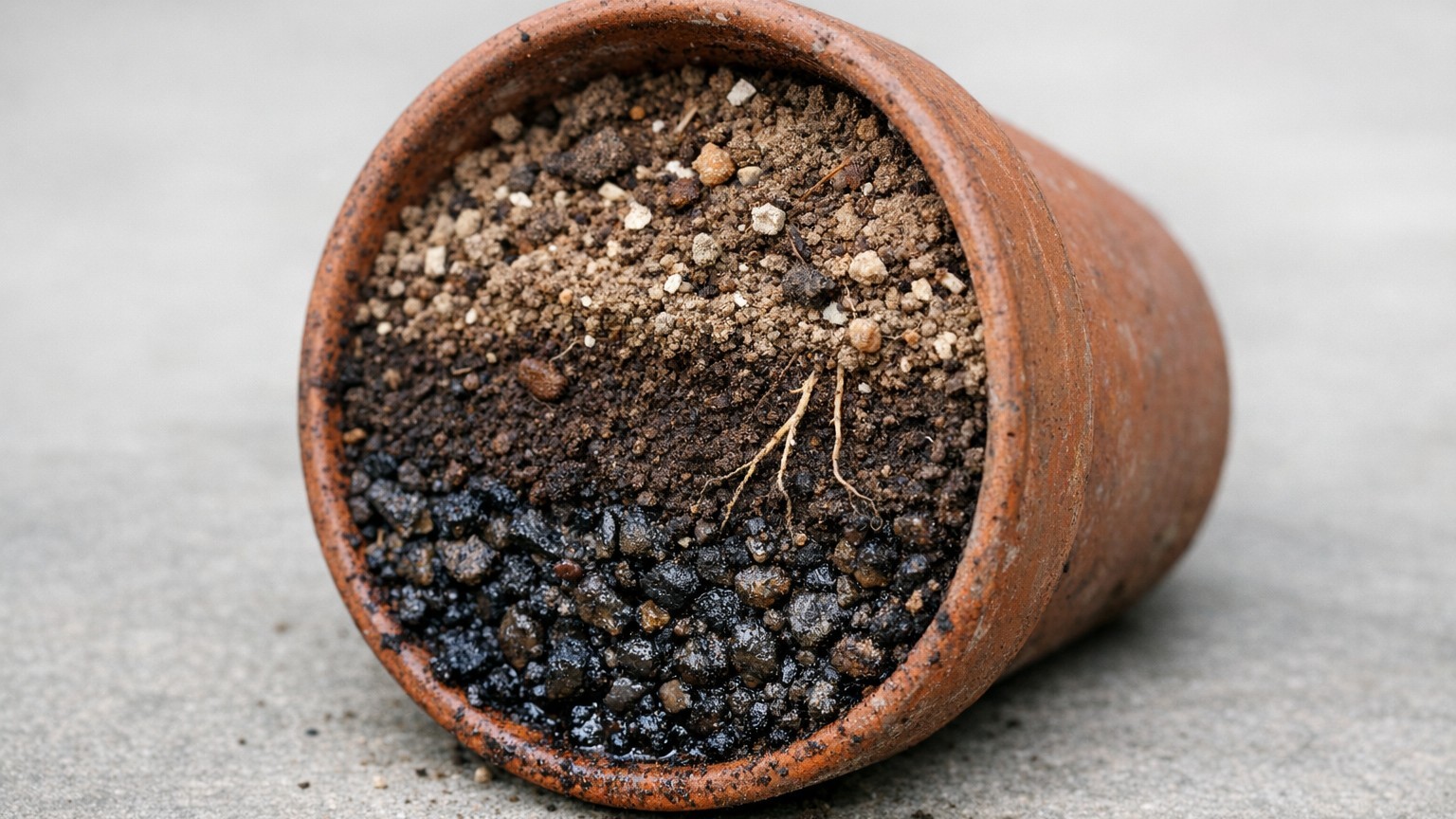
The gravel layer at the bottom of a pot is one of those gardening tips that feels so logical, so time-tested, that questioning it seems almost absurd. Broken pottery shards, pebbles, coarse sand, generations of gardeners have lined their containers with some version of this idea, convinced they were protecting roots from drowning. Then comes the moment you tip a pot over, or repot a plant after a few seasons, and you actually look at what happened to that carefully arranged drainage layer. The results are often a surprise, and not a pleasant one.
Key takeaways
- The gravel layer creates a ‘perched water table’ that keeps soil soggy, not dry
- Research from multiple universities confirms this counterintuitive drainage trap has persisted for generations
- Simple fixes like better drainage holes, quality potting mix, and pot feet work far better than gravel
What the gravel is actually doing down there
Soil science has a concept called a perched water table. When two materials with different textures sit on top of each other, fine potting mix above coarse gravel, for example, water moving downward through the soil doesn’t simply pass through into the gravel layer. It stalls. The water molecules cling to the fine particles at the boundary between the two materials, and the lower layer only begins to drain once the upper layer is completely saturated. The gravel, far from encouraging drainage, effectively raises the level at which water pools inside the pot.
This isn’t a fringe theory. Research published by the University of Illinois Extension and confirmed by studies from container horticulture departments at multiple land-grant universities has documented this perched water table effect in container gardening for decades. The physics is consistent: a coarse layer beneath a fine layer creates a moisture trap, not a drain. The roots sitting just above that gravel layer end up bathing in exactly the soggy conditions you were trying to prevent.
When I tipped my large terracotta pot sideways, it had been growing a mature monstera for three years, the gravel layer I’d put in was no longer a clean, airy drainage zone. It was compacted, dark, partially clogged with fine soil particles that had migrated downward through watering cycles, and the potting mix immediately above it was a distinctly darker, heavier mass than the rest of the root zone. The monstera had survived in spite of the gravel layer, not because of it. Its roots had simply avoided that zone.
Where the myth came from, and why it stuck
The gravel-for-drainage advice isn’t completely fabricated. In open ground, adding coarse material below fine soil does improve drainage because water can eventually move laterally and escape the system. In a closed container, that escape route doesn’t exist. The gravel layer made sense as a translation of in-ground gardening logic, but the translation was flawed from the start.
It persisted for one simple reason: it’s not catastrophically wrong. Plants survive. They often even thrive, because factors like pot size, watering frequency, and soil quality can compensate. So the gravel gets the credit it doesn’t quite deserve, generation after generation, because the feedback loop is too slow and too indirect for most gardeners to notice. You’re not going to autopsy every plant you lose to root rot and trace it back to that innocent layer of pebbles.
There’s also a tactile satisfaction to the ritual. Putting something purposeful at the bottom of a pot before planting feels responsible, preparatory, like laying a foundation. Skipping it feels reckless. That psychological weight is hard to argue with, even when the science is clear.
What actually works instead
The single most effective drainage improvement for container plants requires no materials at all: use a pot with an adequate drainage hole, and use it consistently. A single small hole in a large container is often insufficient, three or four holes, or a wider single opening, makes a measurable difference in how quickly water evacuates after watering.
The quality of the potting mix itself matters far more than what sits beneath it. A mix amended with perlite, coarse pumice, or horticultural grit drains well throughout the entire root zone, not just near the bottom. For plants that genuinely hate wet feet, cacti, succulents, most Mediterranean herbs, a mix that’s 30 to 50 percent inorganic material keeps the entire column of soil fast-draining rather than creating one soggy stratum near the base.
Elevating pots on feet or risers is another underused approach. When a pot sits flush on a surface, the drainage holes can seal against the ground and water backs up. Pot feet, those small ceramic or rubber wedges sold at most garden centers — cost almost nothing and make a real, immediate difference in how freely water exits the container. Particularly on patios or decks where pots sit on flat stone or wood, this small adjustment eliminates a chokepoint that even the best potting mix can’t overcome.
Mesh or landscape fabric cut to fit the bottom of the pot before adding soil is a legitimate compromise for those who want to keep soil from washing out through drainage holes without blocking them. It addresses the actual problem, soil loss, without creating the perched water table issue that gravel produces.
One detail worth knowing: terracotta pots have a meaningful advantage over glazed ceramic or plastic in wet climates because they’re porous. They lose moisture through their walls, which moderates the water content of the soil even between waterings. A plant in a terracotta pot in a humid environment is working with a fundamentally different drainage dynamic than the same plant in a sealed plastic nursery container, which is part of why so many houseplant growers swear by unglazed terracotta for anything prone to overwatering.