
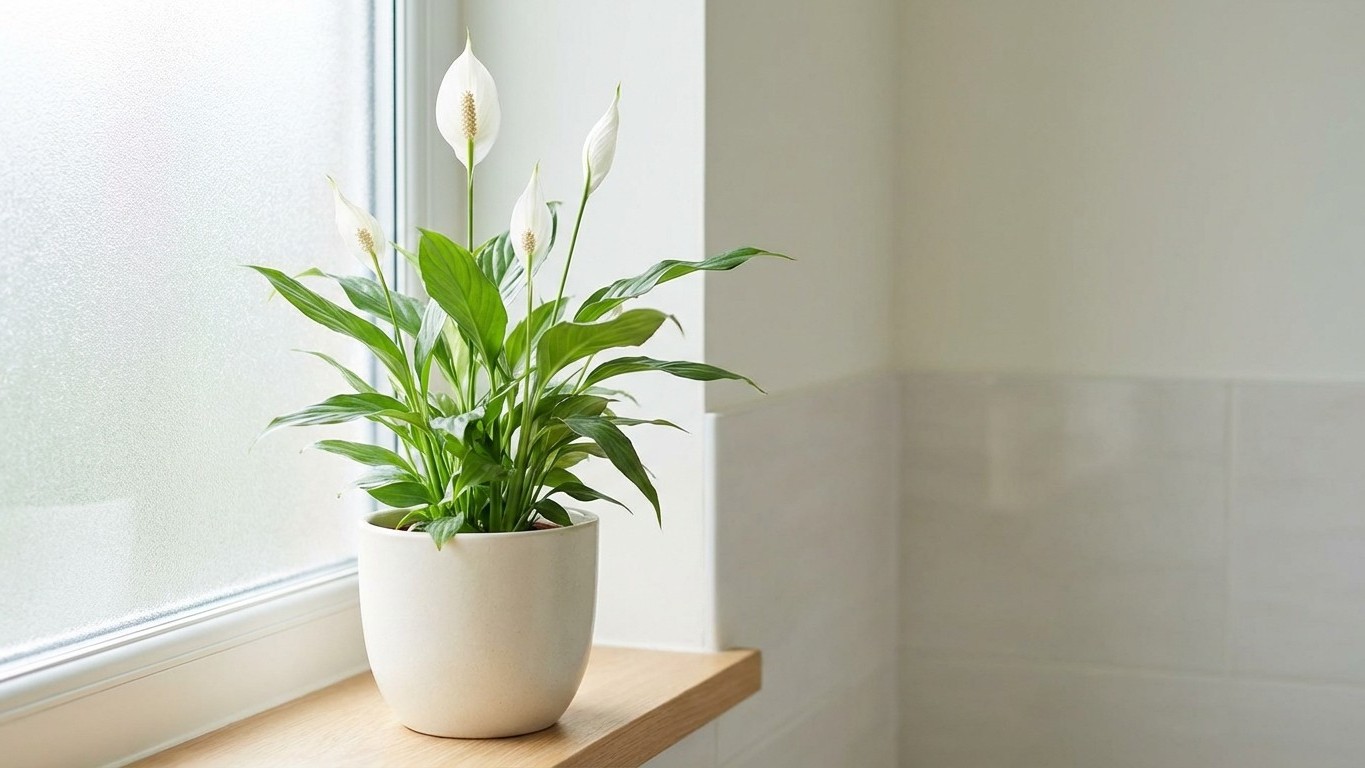
Six months of glossy green leaves and absolutely nothing else. No white spathes, no flower spikes, no sign that the plant remembered it was supposed to bloom. If you’ve lived with a peace lily long enough, you know exactly that frustration, the plant looks healthy, you’re doing Everything “right,” and yet it just… sits there. What finally broke the streak wasn’t a new fertilizer or a humidity tray. It was a single change of location, to a spot most plant owners walk past every day without a second thought.
Key takeaways
- Most peace lilies fail to bloom indoors due to insufficient light, not watering or soil issues
- One everyday room in your home naturally creates the exact light and humidity conditions peace lilies crave
- Three weeks after relocation, a non-blooming plant produced multiple flower spikes with zero additional effort
Why Peace Lilies Stop Blooming (And Why We Usually Blame the Wrong Things)
The first instinct is always to blame yourself. Not enough water, too much water, wrong soil. In reality, Spathiphyllum is one of the more forgiving houseplants, it practically announces when it’s thirsty by drooping dramatically, then bounces back within hours of a drink. Blooming, though, is a different calculation entirely. A peace lily flowers in response to specific light conditions, and most indoor environments simply don’t deliver them.
Here’s the misunderstanding that trips up so many people: “low light” doesn’t mean no light. Peace lilies tolerate dim rooms, yes, but tolerating and thriving are two different states. A plant surviving in a dark corner will grow leaves, that’s it. Flowering requires something closer to what botanists call “bright indirect light,” meaning the plant receives a real, substantial amount of diffused natural light for several hours a day. Most living rooms don’t provide that, especially in winter, when northern exposures might offer only a couple of hours of usable light.
The other factor that rarely gets mentioned: temperature fluctuation. Peace lilies in the wild flower in response to seasonal shifts. Inside a climate-controlled apartment, nothing ever changes. No cool nights, no variation. The plant has no biological reason to produce a flower stalk because nothing in its environment is signaling “now.”
The Spot No One Thinks Of: The Bathroom With a Window
Most people assign their peace lily to a living room shelf, a bedroom corner, or a home office desk, places that feel decoratively appropriate. The bathroom tends to get ignored for plants, either because it seems impractical or because people assume light is too limited. But a bathroom with even a modest window, frosted glass included, often creates ideal peace lily conditions almost by accident.
Humidity in a bathroom cycles naturally throughout the day. Every shower pushes moisture into the air; the room dries between uses. That fluctuation mirrors, loosely, the humid tropical forest floor where Spathiphyllum originates. The plant’s stomata stay open longer in humid air, nutrient uptake improves, and the stress that suppresses flowering begins to ease. A frosted window, meanwhile, acts as a natural light diffuser, delivering bright, even, indirect light without the harsh afternoon sun that can scorch the leaves.
That combination, elevated ambient humidity plus consistent indirect light from a small window, is genuinely closer to a peace lily’s native conditions than most other spots in the average home. The fact that it also happens to be the room where people spend the least time thinking about plant placement is almost ironic.
Within about three weeks of moving my plant to a small bathroom shelf near a north-facing frosted window, the first flower spike appeared. By week six, there were three. The plant hadn’t changed pots, hadn’t received any new fertilizer, hadn’t been misted or fussed over. The location did all the work.
Getting the Details Right
The bathroom approach works, but placement within the room still matters. Directly above or immediately beside a heat vent will dry the air out and undo the humidity benefit. The floor, if the bathroom is large, may be too far from the light source. A shelf or small plant stand positioned three to five feet from the window tends to be the sweet spot, close enough to receive a meaningful amount of light, far enough to avoid any cold drafts from the window itself in winter.
Watering rhythm can shift slightly in a humid bathroom. The soil stays moist longer than it would in a drier room, so checking before watering becomes more important than following a fixed schedule. Overwatering is still the most common way to kill a peace lily, root rot develops quietly, and by the time leaves yellow, the damage is often already significant. The general rule: water when the top inch of soil feels dry, and always drain excess water from the saucer.
Fertilizing deserves a brief mention. During blooming season (roughly spring through early fall), a balanced liquid fertilizer diluted to half-strength once a month gives the plant the phosphorus it needs to sustain flower production. Heavy feeding is counterproductive, too much nitrogen produces lush leaves at the expense of blooms, which is probably another reason so many peace lilies look vibrant but flowerless.
What the Bloom Actually Signals
A flowering peace lily is a reasonably reliable indicator that the plant’s core needs are being met in balance, not just one or two of them. Light, humidity, temperature stability, and root health all have to align. That’s why chasing a single fix rarely works. Moving the plant to a better environment addresses several variables at once, which is why relocation tends to outperform any individual tweak.
There’s also something worth sitting with here. The bathroom is often the last place in a home that gets intentional design attention for plants. People invest in grow lights, humidity trays, and fertilizer kits, bypassing the simplest intervention: a window, a room with natural moisture, and a plant allowed to live somewhere it actually wants to be. The peace lily that finally bloomed wasn’t a product of more effort. It was a product of less assumption about where a plant belongs.
Which raises a fair question for anyone with a struggling plant right now, not just a peace lily: how much of your current placement is based on what works for the plant, and how much is based on where it looks nice in the room?