
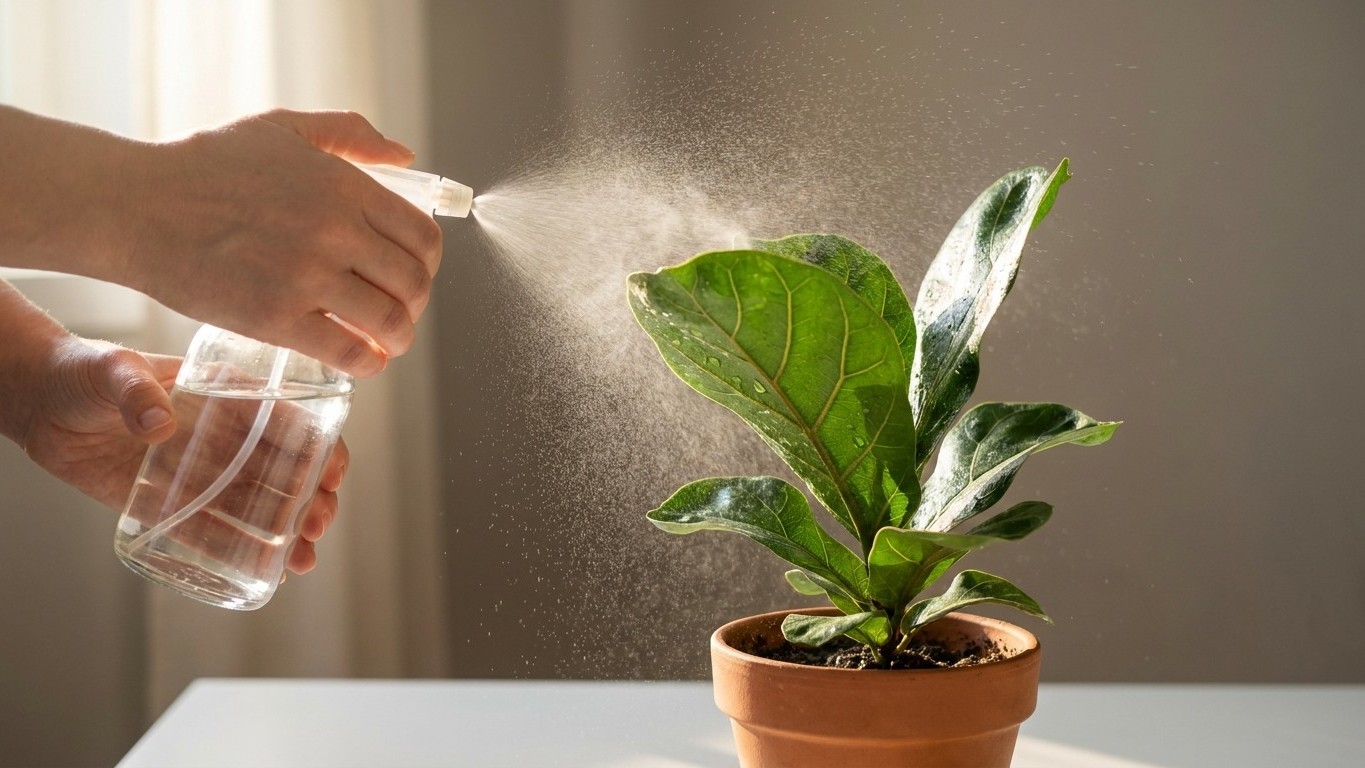
Spider mites can colonize a houseplant in under a week, spinning fine webbing across leaf joints before most owners notice anything wrong. By the time the damage shows up as stippled, bronze-colored leaves, the infestation has usually spread to neighboring pots. That speed is exactly why a calm, repeatable pest routine Matters More Than any single miracle spray.
Most indoor pest problems trace back to four culprits: spider mites, aphids, mealybugs, and fungus gnats. Each behaves differently, but the natural treatments that work best, insecticidal soap and neem oil, tackle them through the same basic mechanism. Soap sprays strip away the protective waxy coating on soft-bodied insects, causing them to dehydrate. Neem oil, pressed from the seeds of the neem tree (Azadirachta indica), contains azadirachtin, a compound that disrupts insect hormone systems and interferes with feeding and reproduction. Neither works like a chemical pesticide that kills on contact. Both require patience and repetition.
Key takeaways
- One overlooked step happens before any spray and costs nothing—but skipping it nearly guarantees treatment failure
- Why commercial insecticidal soap outperforms most DIY dish soap mixtures, and the one application mistake most plant owners make
- The unexpected weekly habit that catches infestations before they spread, often days before visible leaf damage appears
Why Isolation Comes Before Any Spray
The single most effective step in treating houseplant pests costs nothing and takes thirty seconds: move the infected plant away from the rest of your collection. Mealybugs and spider mites travel by crawling onto adjacent leaves, riding air currents, or hitching a ride on your hands and pruning shears. A plant shelf pushed together for aesthetic reasons is basically a pest highway.
Quarantine should last a minimum of two weeks after the last visible pest sighting, not two weeks from when you started treatment. This distinction trips up a lot of plant owners who declare victory too early and reintroduce a still-infested plant to the collection. During isolation, inspect the plant every three or four days with a magnifying glass or your phone’s macro camera, checking the undersides of leaves, stem joints, and the soil surface where fungus gnat larvae live.
Isolation also protects your treatment investment. Spraying neem oil on a plant sitting six inches from three others defeats the purpose, since mites and aphids simply migrate to untreated foliage during the hours the spray takes to work. Separate first. Treat second. That order rarely gets reversed successfully.
Building an Effective Soap Spray
Insecticidal soap works on contact, which means coverage matters more than concentration. A homemade version typically uses a mild, pure liquid soap (not detergent, which contains degreasers that damage leaf tissue) diluted at roughly one to two teaspoons per quart of water. Commercial insecticidal soaps sold at garden centers are formulated with potassium fatty acids specifically for this purpose and tend to be gentler on foliage than improvised dish soap mixes.
The application technique matters as much as the formula. Spider mites and aphids cluster on leaf undersides and in the crevices where leaves meet stems, so a quick misting over the top of the plant accomplishes almost nothing. Tilt the plant, spray upward into the canopy, and get the solution onto every surface until it drips. Repeat every five to seven days for at least three applications, since soap sprays kill adult insects but not eggs, and most pest life cycles run seven to ten days from egg to adult.
Test any soap spray on a single leaf first and wait 24 hours. Thin-leaved plants like ferns, and fuzzy-leaved plants like African violets, are more prone to soap burn than thick-leaved succulents or pothos. Spraying in direct sun or when temperatures climb above 80°F increases the risk of leaf scorch, so early morning or evening application is safer.
Neem Oil: The Slower, Broader Fix
Neem oil earns its reputation as a near-universal houseplant treatment because it works through multiple pathways at once. It smothers some insects, disrupts the molting process in others, and acts as a mild antifungal against powdery mildew, a common side issue on stressed plants. The U.S. Environmental Protection Agency classifies azadirachtin-based products as biopesticides with low toxicity to humans and pets, which is part of why it’s become the default recommendation among plant retailers and extension offices alike.
A standard mixture combines cold-pressed neem oil with a few drops of mild liquid soap (which acts as an emulsifier, since oil and water don’t naturally blend) at a ratio of about one teaspoon of neem per quart of water. Shake the sprayer frequently during application, because the mixture separates within minutes. Apply in the evening rather than under bright light, since neem oil can degrade quickly in direct sun and, on rare occasions, cause phototoxic leaf spotting.
Where soap spray delivers a fast knockdown, neem oil plays a longer game. Weekly applications for four to six weeks tend to break the reproductive cycle of mealybugs and scale insects, pests that soap alone often struggles to fully eliminate because of their waxy protective coatings. Combining both, soap spray for the immediate population and neem oil as a following week’s treatment, tends to outperform either product used alone.
The Weekly Routine That Actually Prevents Reinfestation
Treating an outbreak is reactive. Preventing one is a habit. A simple weekly inspection, five minutes per plant, checking leaf undersides and new growth tips, catches problems before they become infestations. Fungus gnats, the most common complaint from indoor gardeners, breed in consistently damp soil, so letting the top inch or two dry out between waterings removes their breeding ground without any spray at all.
New plants deserve two weeks of solo quarantine before joining the rest of the collection, regardless of how healthy they look at the garden center. Pest eggs are nearly invisible to the naked eye, and a seemingly clean plant can be carrying a mite population that hasn’t hatched yet. This single habit, adopted by more serious indoor gardeners over the past few years, prevents more outbreaks than any spray regimen.
One detail that surprises a lot of plant owners: yellow sticky traps, the small cards sold for catching fungus gnats, double as an early warning system for winged pests you can’t otherwise see coming. A trap that suddenly fills up between weekly checks is a signal to inspect nearby plants more closely, often days before visible leaf damage would tip you off.