
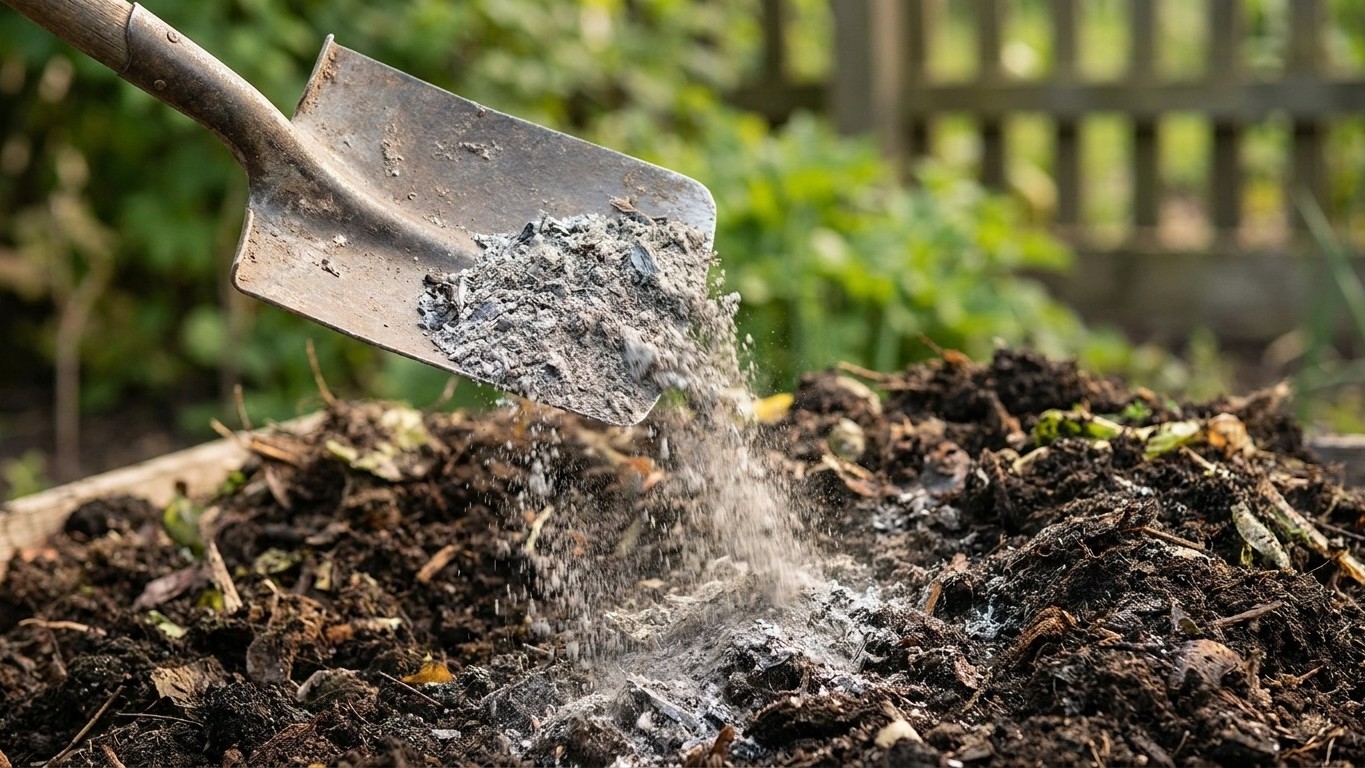
Your compost heap isn’t struggling because you tossed in too many banana peels or grass clippings. If the pile has gone quiet, stopped shrinking, and started reeking of cat litter, check what landed on it right after your last cookout: the ash from the grill. That gray powder is the real saboteur, and most backyard composters have no idea it’s capable of shutting down an entire ecosystem of microbes overnight.
Key takeaways
- One common backyard mistake transforms a thriving compost heap into an ammonia-reeking graveyard overnight
- The culprit isn’t what you think it is—and most people have no idea it’s even happening
- There’s a precise formula for safely using this ingredient, but almost nobody follows it
The chemistry nobody warns you about
Wood ash and charcoal ash are almost pure alkalinity. The largest Ingredient in wood ash is calcium carbonate, about 20 percent, followed by potassium at less than 10 percent, phosphorus at 1 percent, and trace amounts of micro-nutrients. None of that sounds dangerous on its own. The trouble starts the moment that alkaline dust meets the nitrogen-rich material already sitting in your bin, whether that’s fresh grass clippings, kitchen scraps, or coffee grounds.
Mixing wood ash with synthetic nitrogen fertilizer is dangerous because the high alkalinity of wood ash causes a chemical reaction that produces ammonia gas. Your compost pile, full of nitrogen-rich greens, behaves exactly the same way. It’s the same reaction that makes applying lime to fresh manure counterproductive, since the calcium in ash reacts with nitrogen compounds to volatilize them. Instead of feeding your microbes, that nitrogen escapes into the air as the sharp, eye-watering smell you now associate with the pile.
The pH shift alone is enough to stall decomposition. At a pH above 8, many beneficial bacteria and fungi become inactive, and above pH 9 the pile can essentially shut down, with decomposition slowing dramatically. So you get a double hit: nitrogen bleeding off as gas, and the surviving microbes too stressed by the alkaline environment to keep working. That’s why a pile that was steaming and shrinking a week earlier suddenly looks frozen in time.
Charcoal ash is a different animal entirely
Wood ash from a clean fireplace is one thing. Ash from a charcoal grill is another matter, and this is where a lot of backyard cooks get tripped up. Because harmful chemicals are usually added to charcoal briquettes to help them catch light and burn, charcoal generally should not be added to compost. Lighter fluid residue, binders, and other additives don’t disappear when the coals cool. They just sit there, waiting to leach into whatever you’re trying to grow.
Even ash-guide writers who are generally enthusiastic about wood ash draw a hard line at the grill. Good quality hardwood ash for composting should not come from barbecue grills, cardboard, plywood, painted or pressure-treated wood, since those sources have no real agricultural use and should be discarded. If you happen to use pure lump charcoal with no lighter fluid, the calculus changes slightly, but plenty of experts still recommend steering clear altogether unless you’re certain about what went into the bag.
Two other ingredients deserve a flat no. Ash from black walnut trees should never go into compost destined for the garden. And ash still holding heat is a genuine fire hazard inside a bin full of dry leaves and cardboard, so cooling leftover ashes completely before adding them eliminates the risk of fire in the pile or burns to your skin.
How much ash your pile can actually handle
None of this means ash is banned from composting. Used correctly, it’s a legitimate source of potassium and lime for garden soil. The problem is almost always dosage and placement, not the ingredient itself. One widely cited rule of thumb keeps things in proportion: no more than one to two cups of wood ash per 25 to 50 gallons of compost material, added no more frequently than every few weeks. That’s a fraction of what most people dump on the pile after clearing out the fire pit.
Concentration matters as much as quantity. Ashes should never be piled in one concentrated spot, since doing so can develop an ammonia odor from escaping nitrogen. Spread it thin instead. Because of its liming properties, ash raises the alkalinity of the pile, so a practical guideline is a quarter inch of ash for every eighteen inches of carbon material and every six inches of nitrogen material. Layered and diluted that way, ash behaves as a mild soil amendment rather than a shock to the system.
Reviving a pile that’s already gone quiet
If the damage is done and your compost already smells like a barn in August, the fix is mechanical before it’s chemical. Turning the pile or spreading it out lets excess ammonia vaporize, and mixing in brown material restores the carbon-nitrogen balance. Shredded cardboard, dry leaves, and straw are your best allies here. Add carbon-rich brown materials at a ratio of roughly three parts brown to one part green by volume, and resist the urge to add more ash while you’re at it. The pile needs to recover its balance, not absorb a second dose of alkalinity.
Give it time before judging results. If you catch the ammonia smell early, a single round of shredded cardboard mixed in thoroughly is usually enough to turn things around within 48 hours. After that, the earthy, forest-floor smell should return as aerobic microbes take back over.
Next barbecue season, save the ash instead of dumping it straight on the compost. Store it dry in a sealed metal container until it’s fully cooled, then sprinkle it directly onto garden soil in spring, where it acts as a slow-release source of potassium without ever touching your nitrogen-hungry pile.
Sources : gardenbotany.com | weekand.com