
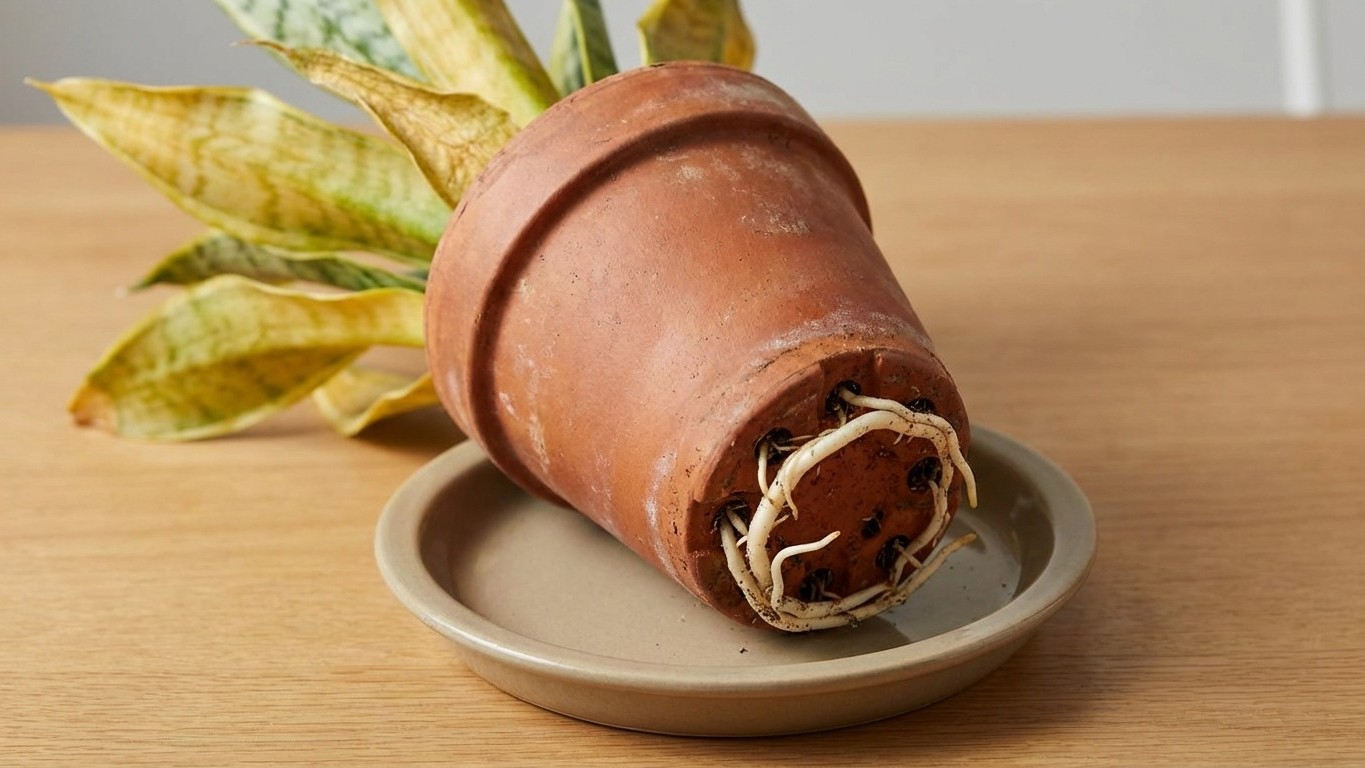
Roots poking out of the bottom of a pot are one of the most visible distress signals a plant can send, and most plant owners either ignore them or misread them entirely. The common assumption is that roots escaping through drainage holes are simply “looking for water,” as if the plant were on some kind of underground adventure. The reality is far less poetic: your plant is telling you it has run out of room, and the clock is already ticking.
Key takeaways
- Your plant’s root system can only expand so far before it runs out of room—and the clock starts ticking once it does
- Escaping roots signal multiple hidden problems: compressed soil, oxygen deprivation, and a vascular system under strain
- Moving to the wrong pot size or repotting at the wrong time can trigger transplant stress that makes everything worse
What’s Actually Happening Underground
A healthy root system is constantly growing outward, branching into fresh soil to absorb water, oxygen, and nutrients. When a plant is well-matched to its container, those roots stay mostly within the pot, filling it gradually over time. The trouble starts when they’ve colonized every cubic inch of available soil, circling the inside walls, knotting around themselves, and eventually finding the only exit left: the drainage hole at the bottom.
Those escaping roots aren’t explorers. They’re overcrowded refugees. The soil in an overly root-bound pot compresses and degrades faster, loses its ability to hold moisture evenly, and offers diminishing nutritional value. What you see dangling below the pot is a symptom, not a strategy.
There’s also an oxygen problem that rarely gets mentioned. Plant roots need air just as much as they need water, a fact that surprises many new plant owners. When roots are packed too tightly, gas exchange in the soil breaks down. The plant effectively begins to suffocate from the root up, even if it’s sitting in a bright window and getting watered on schedule. Yellowing lower leaves, stunted growth, and soil that dries out within a day of watering are all signs that root crowding has crossed into root stress.
How to Actually Diagnose the Problem
Seeing roots at the drainage hole is a strong hint, but it’s worth confirming before you start repotting everything in sight. Gently tip the pot sideways and slide the root ball out (or as far out as it will go). If the roots form a dense, tangled mass that holds the exact shape of the pot, like a mold of itself, you’re dealing with a seriously root-bound plant. If there’s still visible, loose soil woven between the roots, you may have a little more time.
One detail worth paying attention to: the type of roots coming out matters. White, firm roots are healthy and actively growing. Brown, mushy roots signal rot, which is a different problem entirely, one often caused by overwatering combined with too little drainage. A plant with rotting roots escaping the pot needs treatment, not just a bigger container. Trimming the damaged roots and reassessing your watering frequency matters more at that point than pot size.
Roots that are thick, coiled, and visibly circling the outside of the root ball (called “girdling roots”) can eventually strangle the plant’s own vascular system. For trees and large shrubs grown in pots, this Becomes a structural issue over years, not just a growth one. For a typical houseplant, the damage is less dramatic but still real: a girdled root ball moves water and nutrients inefficiently, and the plant never quite performs as well as it should.
Repotting Without Wrecking Things
The standard advice, go up one pot size, exists for a good reason. Moving a plant from a 4-inch pot directly into a 10-inch pot seems generous, but it backfires. The extra soil around the root ball retains moisture the roots can’t yet reach, and soggy soil breeds rot. One size up (roughly 1-2 inches in diameter) gives the roots room to breathe Without drowning them in unused growing medium.
Timing is another variable people underestimate. Spring is the textbook answer, and it holds up, most houseplants enter a growth phase as daylight increases, meaning they recover from the disturbance of repotting faster. Repotting in the dead of winter, when a plant like a fiddle-leaf fig or a monstera is essentially in low-energy mode, is like asking someone to run a race right after waking up from anesthesia. Possible, but not ideal.
When you remove the old root ball, resist the urge to leave it perfectly intact. Gently loosening the outer layer of roots, just enough to break the circular pattern, encourages them to grow outward into the new soil instead of continuing to spiral. This small step makes a measurable difference in how quickly the plant settles into its new home. Use fresh, appropriate potting mix for the species: a moisture-retaining blend for tropicals, a chunkier, fast-draining mix for succulents and cacti.
After Repotting: The Part Nobody Talks About
Plants don’t always reward repotting with an immediate glow-up. In fact, a plant may look worse for the first two to three weeks, dropping a leaf or two, pausing new growth, looking vaguely unhappy. This is called transplant stress, and it’s normal. The roots are adjusting to new soil conditions, re-establishing their network, and recalibrating water uptake. The worst thing you can do during this period is overwater out of concern, or add fertilizer thinking the plant needs a boost. Both actions increase stress on a root system that’s already dealing with change.
Hold off on fertilizing for at least four to six weeks after repotting. Fresh potting mix already contains enough nutrients to support early root growth. Introducing extra fertilizer too soon can burn tender new roots before they’ve had a chance to establish.
There’s a broader lesson buried in all of this: plants communicate constantly, and roots creeping out of drainage holes are one of the clearer messages they send. The question worth sitting with isn’t just “does this plant need a bigger pot?” but rather how often we confuse a plant surviving in a cramped space with a plant Actually thriving. Those are two very different things, and the gap between them usually shows up somewhere between the soil and the drainage tray.