
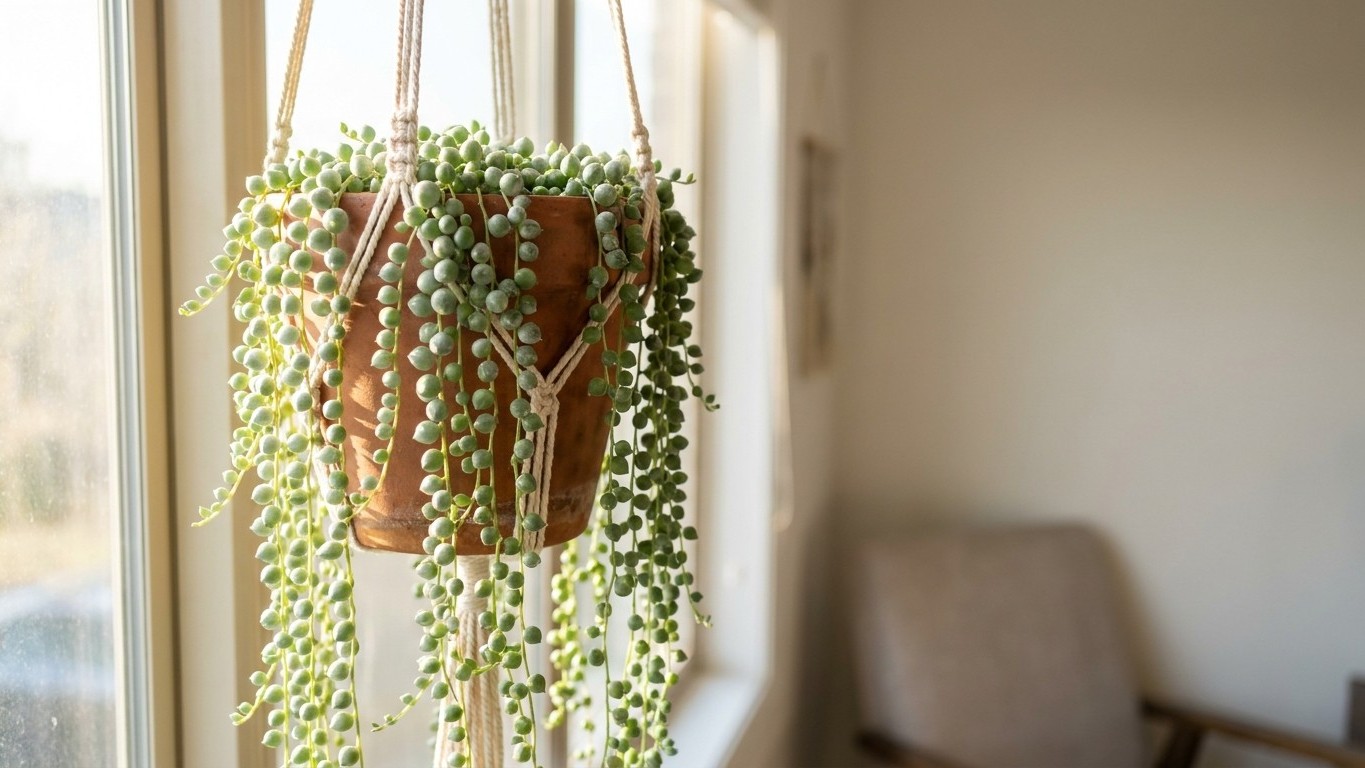
That silvery-white powder dusting the plump leaves of your string of pearls isn’t a disease, and it’s not something to wipe off. It’s called epicuticular wax, a natural protective coating that healthy Curio rowleyanus plants produce to reflect intense sunlight and slow moisture loss. The more pronounced that waxy shimmer, the better your plant is performing. But here’s where most owners go wrong: they place this sun-loving succulent in the one room where that wax becomes a liability rather than an asset.
Key takeaways
- That waxy coating is nature’s sunscreen—it means your plant is happy in bright, dry conditions
- One common room in your home creates the exact opposite environment your string of pearls needs to survive
- Moving your plant and changing one watering habit can be the difference between years of growth and silent collapse
What the waxy coating is actually telling you
Epicuticular wax on succulents serves a very specific purpose: it acts like a natural sunscreen, reflecting UV radiation and reducing the rate of transpiration in hot, arid conditions. String of pearls evolved in the rocky cliffs of southwest Africa, where the sun is relentless and rainfall is a rare event. The wax is the plant’s version of adaptive armor. Thick coating means the plant has been thriving in bright, dry conditions. A faint or absent coating often signals the opposite, low light, excess humidity, or both.
This matters because the wax is also hydrophobic. Water beads off it rather than absorbing into the leaf surface. That’s a feature in a dry climate. In a humid environment, that same property traps moisture around the base of each pearl, creating exactly the conditions that invite rot and fungal issues. The plant didn’t evolve for humid air, it evolved against it.
The room you need to avoid
The bathroom. Full stop. It’s the single worst location in most American homes for a string of pearls with a healthy wax coating, and the irony is that it’s also one of the most popular spots for trailing plants right now, thanks to the “spa aesthetic” trend that dominated interior design through 2024 and hasn’t fully let go.
Bathrooms generate consistent humidity spikes every time someone showers. Average bathroom humidity can hit 80–90% during a shower and often lingers around 50–65% even afterward, especially in smaller or poorly ventilated spaces. String of pearls prefers humidity levels between 30–50%, closer to what you’d find in a well-ventilated living room than a steamy bathroom.
The waxy coating complicates things further. Because moisture doesn’t absorb easily through the leaf surface, any excess water the plant takes in has to exit through the roots. In humid air, the soil stays wet longer between waterings. The roots sit in damp conditions far beyond their tolerance. Root rot in string of pearls doesn’t announce itself loudly, by the time you notice the pearls shriveling and the stems going mushy at the soil line, the damage is already done deep in the pot.
Light is the other issue. Most bathrooms offer limited natural light, often from frosted or small windows oriented away from direct sun. String of pearls needs a minimum of four to six hours of bright, indirect light daily, and does best with two to three hours of direct morning sun. A north-facing bathroom window with condensation on the glass is essentially the opposite of southwest Africa.
Where it actually belongs
A south- or east-facing windowsill in your living room or bedroom is the sweet spot. East-facing windows deliver the gentle morning sun that string of pearls handles well without scorching, while south-facing exposures give it the sustained brightness it craves through most of the day. The air in these rooms also tends to be drier and more stable, neither the humidity swings of a bathroom nor the cold drafts of an entryway.
If you have a bright kitchen with a window above the sink, that can work, with one condition. Keep the plant a couple of feet away from the sink area itself. Cooking generates brief humidity spikes, but they’re less sustained and less frequent than shower steam. The tradeoff is usually manageable if the light is strong.
Hanging placement matters too. String of pearls trails naturally and looks striking in a hanging planter near a window, but elevation affects temperature and airflow. Ceiling-level air in rooms without good circulation tends to trap humidity. If your plant is hanging high in a warm room with little airflow, you’re recreating bathroom conditions even in a bright space. A shelf or stand that keeps the plant at or below window height is a smarter choice.
How to preserve the waxy coating once you’ve got it right
The coating can be physically removed, and once it’s gone, it doesn’t regenerate on the affected pearl. Rubbing the leaves with a cloth, even a damp one, strips the wax permanently. This is why cleaning string of pearls the way you might wipe dust off a pothos is a mistake. If the plant looks dusty, a gentle blast of room-temperature air (a small fan set low works well) is all it needs.
Overwatering also suppresses new wax production on developing pearls. The plant produces the coating in response to stress signals, bright light and mild drought, so a consistently soggy root zone sends the opposite message. Watering deeply and then waiting until the top inch of soil is completely dry, and the pearls look ever so slightly less plump, gives the plant the cycle it needs to stay in productive stress mode.
One more thing worth knowing: string of pearls in a terracotta pot will always outperform one in glazed ceramic or plastic when it comes to maintaining the right root environment. Terracotta is porous, wicks excess moisture from the soil, and helps prevent the root zone from staying wet between waterings. For a plant whose entire survival strategy is built around managing water scarcity, that breathability isn’t a minor detail, it’s the difference between a plant that thrives for years and one that quietly collapses by spring.