
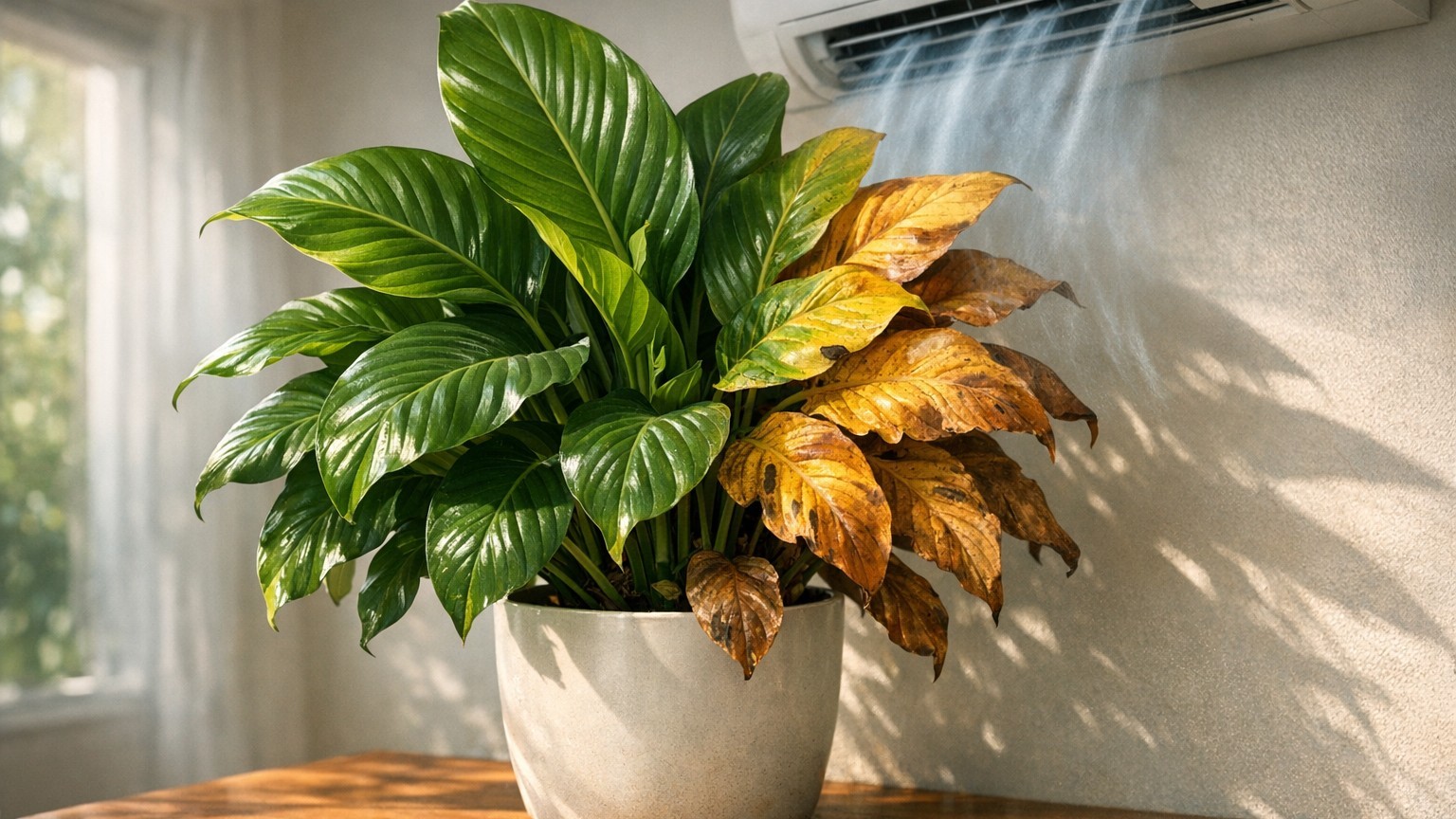
Leaf drop on an otherwise healthy-looking houseplant is one of those problems that seems random until you trace it back to one overlooked detail: proximity to a forced-air vent. Many plant owners assume that because a plant tolerates low temperatures, a steady blast of air-conditioned air must be harmless, or even pleasant. The reality is that cold drafts from HVAC systems are among the top five reasons houseplants decline indoors, yet they rarely show up on the usual troubleshooting lists that focus on watering and light.
Key takeaways
- Your AC vent delivers something far worse than cool air: repeated shocks of dehumidified air that force leaves to shut down
- The damage pattern looks identical to overwatering, which is why most plant owners never suspect the vent two feet away
- Simple fixes like deflectors and strategic distance can transform a dying plant into a thriving one within weeks
The difference between “cool air” and “draft stress”
A plant sitting near a window on a cold winter morning experiences passive, ambient cold. That’s manageable for most species. What an AC vent delivers is fundamentally different: a high-velocity stream of dehumidified air, typically between 55°F and 65°F, hitting the foliage repeatedly throughout the day. The plant can’t acclimate because the conditions keep changing, blast of cold, then stillness, then blast again. That oscillation is what damages tissue.
The mechanism is mostly about transpiration disruption. Leaves lose moisture through tiny pores called stomata. When cold, dry air hits them repeatedly, the stomata slam shut as a stress response. The plant essentially holds its breath. Nutrient transport from roots to leaves slows, photosynthesis drops, and the plant starts shedding leaves to reduce the surface area it needs to maintain. It’s triage, not a disease.
Tropical species are the most vulnerable here, and most popular houseplants happen to be tropical. Pothos, peace lilies, fiddle-leaf figs, monsteras, calatheas, ZZ plants. They evolved in climates where temperatures are stable and air movement is gentle. A central AC system mimics none of that.
What “draft damage” actually looks like
The symptoms can look confusingly similar to overwatering or root rot, which is why the AC vent rarely gets blamed quickly. Leaves turn yellow, then droop, then fall. The soil may be perfectly moist. The light may be ideal. Everything checks out, except the invisible factor blowing two feet away.
Cold draft damage tends to follow a directional pattern. The leaves facing the vent deteriorate faster than those on the opposite side of the plant. If you rotate your plant occasionally (which most people don’t), this pattern gets scrambled and becomes even harder to diagnose. Brown, crispy leaf edges are another clue: the forced air desiccates the leaf margins faster than the plant can hydrate them, even when the soil moisture is fine.
Calatheas and prayer plants are particularly dramatic about this. They’ll drop leaves, curl them inward, or develop brown tips within days of being placed near a vent. Fiddle-leaf figs, already notorious for their sensitivity, can lose a third of their leaves in a single week under direct AC exposure. The fiddle-leaf’s reputation for being “difficult” is largely a product of indoor climate mismanagement, not some inherent fussiness.
Rethinking your room layout with plants in mind
Moving the plant is the obvious fix, but the challenge in most American homes is that vents are placed in ceilings or along baseboards near windows, the same spots that get the best natural light. You often have to choose between good light and safe air. A few practical approaches help resolve this.
A thin sheer curtain panel positioned between the vent and the plant can break up the airflow without blocking light. Some plant owners use a vent deflector (a clip-on plastic hood) to redirect the air stream toward the ceiling or along the wall, effectively diffusing it before it reaches foliage. These cost under $15 at most hardware stores and take about three minutes to install. Not glamorous, but effective.
Distance matters more than most people realize. At six feet from an AC vent, the air velocity drops dramatically, studies on HVAC airflow patterns suggest velocity decreases by roughly 50% for every doubling of distance from the outlet. Moving a plant from one foot away to six feet away isn’t just a modest improvement; it’s potentially the difference between chronic draft stress and a plant that thrives.
Humidity is the other variable worth addressing. AC systems strip moisture from the air aggressively. Grouping plants together helps, they create a shared microclimate of slightly higher humidity through their collective transpiration. A pebble tray with water beneath the pot adds passive humidity at the root level. Misting is less effective than commonly believed; it raises humidity for about 20 minutes before the AC cycles and strips it back out.
Recovery is possible, but patience is required
Once you move the plant away from the vent, don’t expect an instant comeback. The plant has been in survival mode, possibly for weeks. It stopped investing in new growth to protect existing tissue. Recovery looks like a long pause followed by a single new leaf, then, a few weeks later, another. That slow restart is normal.
Resist the urge to fertilize immediately after moving the plant. The root system has been underperforming, and pushing nutrient uptake before the plant has stabilized can burn the roots or cause more leaf drop. Give it four to six weeks of stable, draft-free conditions with consistent watering before introducing any fertilizer. Let the plant recalibrate on its own schedule.
One underappreciated detail: winter months are actually when this problem intensifies in heated homes. Furnace vents deliver hot, dry air, the opposite temperature extreme but the same mechanical stress. The same directional damage, the same stomatal shutdown, the same leaf drop. Plants parked next to a baseboard heater in January suffer identically to those next to a window AC unit in July. The enemy isn’t the temperature itself; it’s the forced, dehumidified airflow hitting the leaves directly, season after season.