
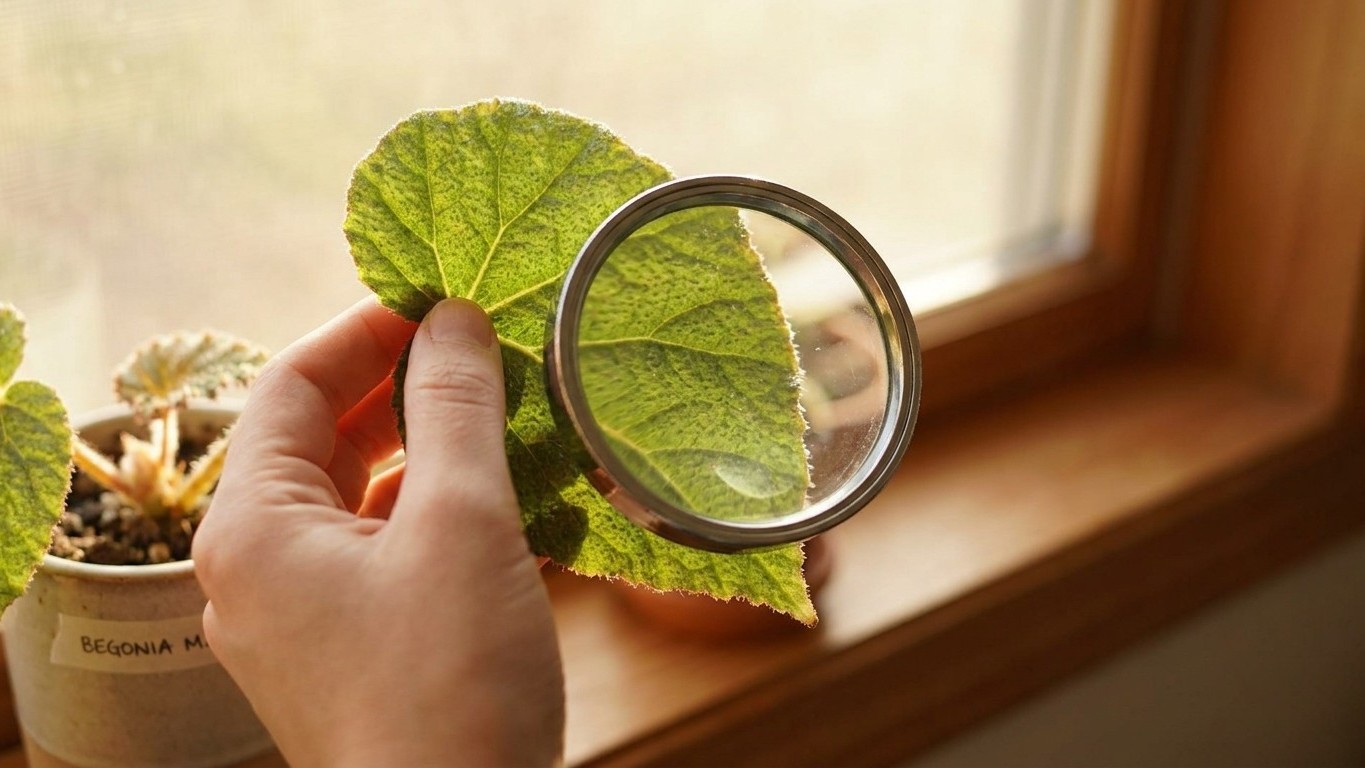
Ten days. That’s how long it took for a cluster of pale green dots to appear on the undersides of the newest leaves, right where the stem meets the leaf. By the time I noticed, they’d already spread to three other pots on that same living room shelf. What arrived with my patio plants wasn’t just soil and roots. It was a small colony of aphids that had been riding along undetected since the day I rushed them inside ahead of the first frost.
This is a more common mistake than most gardeners admit. The urge to save a plant collection from a sudden cold snap often overrides the slower, more careful process that keeps pests where they belong: outside.
Key takeaways
- A hidden pest colony arrived indoors undetected and exploded within days in warm conditions
- Outdoor plants lose their natural predators once inside, allowing insects to multiply rapidly
- Most gardeners skip the critical inspection step when rushing to beat the first frost
Why the shelf becomes a five-star hotel for bugs
Outdoors, a plant’s pest population stays in check because something is always eating the eaters. Ladybugs pick off aphids, predatory mites keep spider mites from exploding, and birds snack on caterpillars. Move that same plant onto a warm, dry shelf next to a window, and all of that natural policing disappears overnight. Insects like spider mites, scale and aphids have no problem widening their menu options to include your summer plant vacationers. Once inside, the conditions actually favor the pests over the plant. Once inside, populations can rapidly increase and spread to other plants.
The timing matters more than people think, too. A rule of thumb is to bring cold-sensitive plants indoors before the night temperature drops below 50 degrees. Wait until an actual frost warning and you’re forced to grab everything at once, skipping the inspection step entirely, which is exactly how a few stowaways turn into an infestation three weeks later.
The usual suspects hiding under new growth
Aphids aren’t the only hitchhikers. Insects, such as aphids, whiteflies, scale, and spider mites are pests commonly found on outdoor plants. Extension entomologists in Michigan add a longer, slightly stranger list. This list can include flying, walking and scale insects, cocoons from moths, slugs, snails and the occasional “party favor” hidden inside the drain hole of the pot.
Mealybugs are the ones that surprise people most, mostly because they don’t look like insects at all. Mealybugs look like tiny spots of white cotton and gather where stems meet, on stems, and on the undersides of leaves. Aphids give themselves away differently. Aphids cluster around new stem growth and in flower buds and flowers, and secrete a sticky substance called honeydew. That explains why my infestation showed up specifically under the newest leaves. New growth is soft, sugar-rich, and easy to pierce, which makes it prime real estate for sap-feeders.
Then there’s what’s hiding below the soil line, which is easy to forget about since it’s out of sight. Fungus gnat larvae live in the potting mix itself and go unnoticed until adults start swarming around a lamp at night. Larvae live in houseplant soil; adults are a nuisance as they fly around lights in the home at night. Ants, slugs, and sowbugs can tag along too, tucked into drainage holes where a quick glance never reaches.
The ten-minute habit that would have stopped this
None of this requires a greenhouse or a chemistry degree. It requires slowing down by about ten minutes per pot, which feels like nothing until you compare it to weeks spent battling a full-blown infestation across an entire plant shelf.
Start with a genuine inspection, not a glance. Use a magnifying glass or hand lens to look at the leaves, under the leaves, along the stems, and even at the soil. A simple trick works better than squinting: hold a piece of white paper under the leaves and gently tap them to see if anything falls on the paper. Give the whole plant a shake, too, since jostling the plant will reveal if any insects fly away from it.
Washing goes a long way before a single leaf crosses the threshold. Experts recommend bathing or soaking plants in a bucket of water with mild dishwashing soap before bringing them inside, or spraying larger plants with water to remove outdoor dust and soft-bodied insects. Don’t stop at the foliage. The soapy water should also get into the soil, since it helps kill any pests living there too. The pot itself deserves the same treatment: wash the outside of the pots to remove dirt and any unwanted pests that might be present.
If a plant has clearly been hosting something all summer, fresh soil solves problems a soap bath can’t touch. Repotting in fresh, sterile potting soil helps eliminate pests such as fungus gnat larvae, and is the best defense against ants, slugs, sowbugs, and anything else that crawled into the soil. Skip the temptation to sterilize the old pot with anything harsher than a scrub and rinse; a bleach solution works fine for that job separately.
Quarantine isn’t optional, even for one pot
The single biggest lesson from my aphid surprise: isolation buys time that inspection alone can’t. Insect problems may not be immediately apparent when plants are brought indoors, so it’s wise to keep outdoor plants separate from other houseplants for several weeks, since insects that hitchhike indoors may thrive and multiply in the warm environment. Most guidance lands in the same range. Place a new plant in a separate room, away from any other plants, for a period of about 40 days or so.
Location matters more than most people expect, and proximity is not quarantine. A new plant on the same shelf or bench as your existing collection is not meaningfully quarantined. A spare bathroom, a garage shelf, or even a windowsill in a rarely used room works, as long as it’s genuinely separate.
During that window, check daily rather than weekly, because the whole point is catching a problem before it becomes visible from across the room. If something does show up, a stream of water or a cotton swab dipped in alcohol handles small outbreaks. A brisk stream of water may help wash off mites, while a swab dipped in rubbing alcohol removes small infestations of aphids, mealybugs and scale.
My aphid colony is gone now, dispatched with a sink sprayer and a lot of patience. But the shelf stays half-empty until next fall’s frost warning, reserved specifically for whatever comes in from the patio first, alone, for a few weeks, before it earns a spot next to everything else.
Sources : extension.illinois.edu | gardeningknowhow.com