
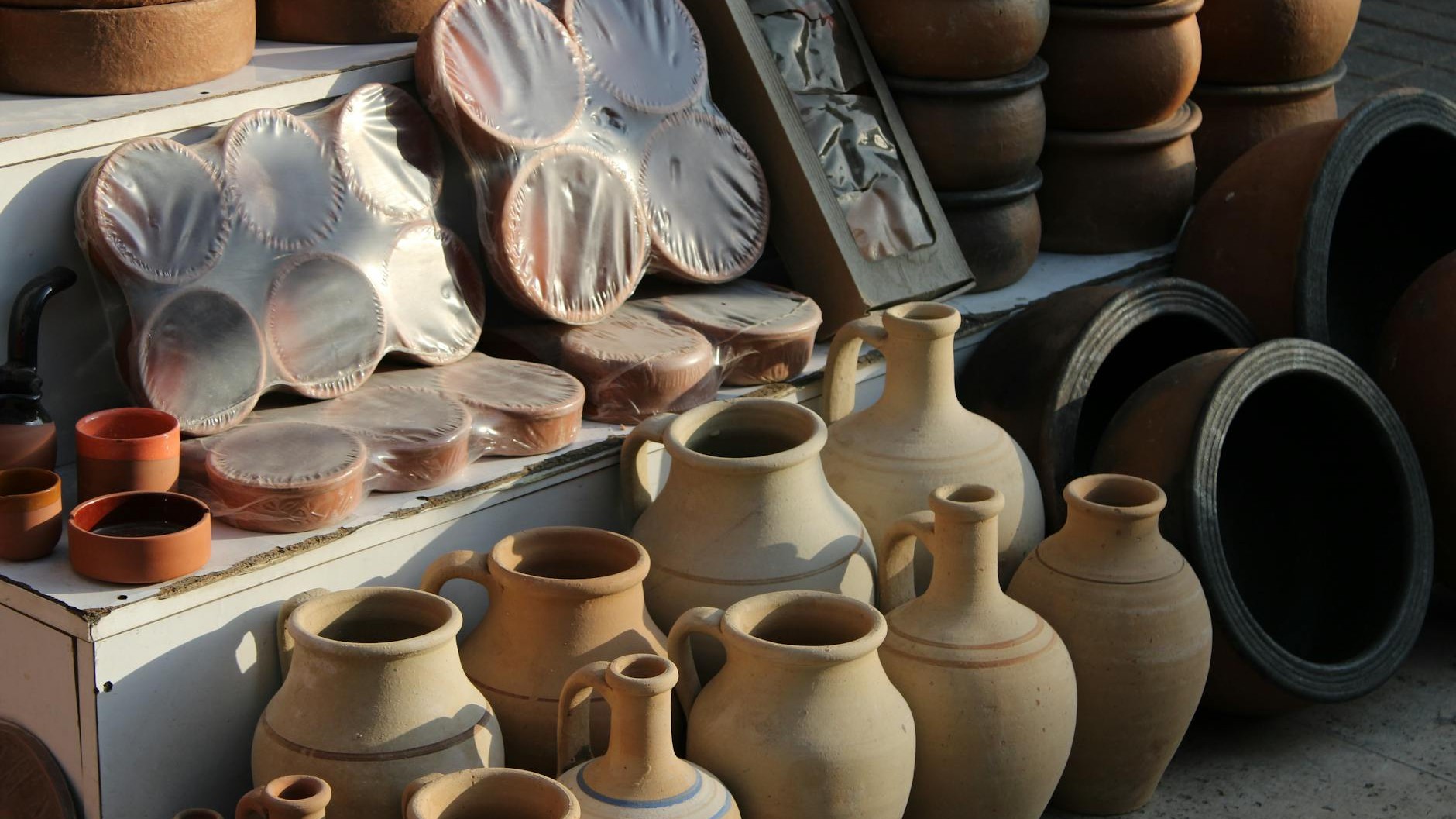
Terracotta pots have a reputation built on one selling point: they breathe. The clay is porous, water evaporates through the walls, roots stay aerated, and the soil dries out more evenly than in plastic. That part is true. The problem is that most terracotta pots sold today, in big-box stores, garden centers, and even specialty shops, are not actually doing what you think they are.
A nursery owner in Portland, someone who has been growing plants professionally for over two decades, pointed me toward a detail I had never thought to check. She picked up two pots that looked nearly identical, held one up to a window, and showed me the difference. One glowed faintly orange in the light. The other was opaque, almost solid-looking despite being the same terracotta color. The opaque one, she explained, had been sealed with a glaze or a sealant coating, common in mass-produced lines, that effectively turns the porous clay into something closer to ceramic. “You’re paying for the aesthetic,” she said, “not the function.”
Key takeaways
- A nursery owner’s simple light-through-the-pot test reveals which terracotta is sealed versus genuinely porous
- Manufacturers coat most mass-market terracotta with glazes and sealants that eliminate breathability—the one feature you’re actually paying for
- Three hidden tests (roughness, moisture absorption, price point) let you verify genuine porosity before checkout
Why the glaze changes everything
Traditional unglazed terracotta works through a simple mechanism: the fired clay contains microscopic pores that allow air and moisture to pass through the pot wall. This gas exchange helps prevent anaerobic conditions around the root zone, which is where root rot typically starts. Research from horticulture programs consistently shows that soil in unglazed terracotta dries 20 to 40 percent faster than in plastic containers of the same size, a meaningful difference for plants like succulents, Mediterranean herbs, and most cacti.
Glazed terracotta disrupts that entirely. The glaze, whether it’s applied inside, outside, or both, seals the pores. A pot glazed on the interior offers essentially no breathability benefit at all. One glazed only on the exterior still loses a significant portion of its evaporative surface. The nursery owner’s test, holding the pot to direct light, is not just visual curiosity: light transmission through the wall is a rough but practical proxy for porosity. Thick glaze blocks it. Thin sealant coatings do too, though they’re harder to spot.
The coating issue has gotten worse over the past decade as terracotta production shifted heavily toward manufacturers optimizing for shelf appeal. Unsealed terracotta stains easily, develops white mineral deposits called efflorescence, and looks worn within a season. Sealed pots stay photogenic longer. For retail, that’s a feature. For your plants, it’s closer to a bait-and-switch.
How to actually tell before you buy
The light test works in a sunny nursery but isn’t always practical. There are three faster checks you can do in any store. Run your finger firmly across the interior wall: genuine unglazed terracotta feels slightly rough and powdery, almost chalky. A sealed or glazed surface feels smooth, sometimes faintly slick. Second, press a slightly damp finger to the interior wall and hold it for ten seconds, unglazed clay will pull the moisture away from your skin; sealed clay won’t. Third, look at the price. High-quality unglazed terracotta from Italian or Spanish producers (regions where the tradition is centuries old) costs noticeably more than the imported mass-market versions. A six-inch pot under four dollars is almost certainly sealed or made from a lower-grade clay blend with reduced porosity from the start.
The country of origin label, if present, is worth checking. Terracotta from Impruneta, a town south of Florence that has been producing the material since the Medici period, is held to standards that include specific clay composition and firing temperatures above 1,800°F. That firing creates a dense but genuinely porous structure. Most commercial imports are fired at lower temperatures, which produces a softer, more brittle pot that may crack more easily and has inconsistent porosity, even when it isn’t additionally sealed.
The drainage hole is only half the story
Most plant advice focuses on drainage: make sure the pot has a hole, use well-draining soil, elevate the pot so water escapes. All correct. But drainage addresses excess water leaving through the bottom. Breathability is a different process, it’s about lateral moisture evaporation and gas exchange through the side walls, which affects the entire root zone, not just the bottom layer of soil. A plant in a sealed terracotta pot with good drainage is still sitting in slower-drying, less aerated soil than it would be in a genuinely porous pot. For forgiving plants like pothos or philodendrons, this barely matters. For anything adapted to dry, rocky soil — lavender, rosemary, most succulents, olive trees in containers, it can be the difference between a plant that thrives and one that slowly declines for reasons you can never quite diagnose.
The nursery owner also flagged one more thing worth knowing: even genuine unglazed terracotta loses some breathability over time as mineral salts and organic residue clog the pores. Scrubbing pots with a stiff brush between uses, not soap, which leaves residue, and soaking them in water for an hour before planting (so the dry clay doesn’t immediately pull moisture from fresh soil) keeps them performing the way they’re supposed to. Seasonal plants that get repotted annually naturally refresh this. Long-term container plants may benefit from a pot swap every two or three years, something almost no one thinks to do.
The real value in that nursery visit wasn’t learning that some pots are sealed, it was understanding that terracotta’s reputation was built on a specific material property that manufacturers are not legally required to preserve or advertise. The pot looks the same. The price is similar. But the biology happening inside the container is not.