
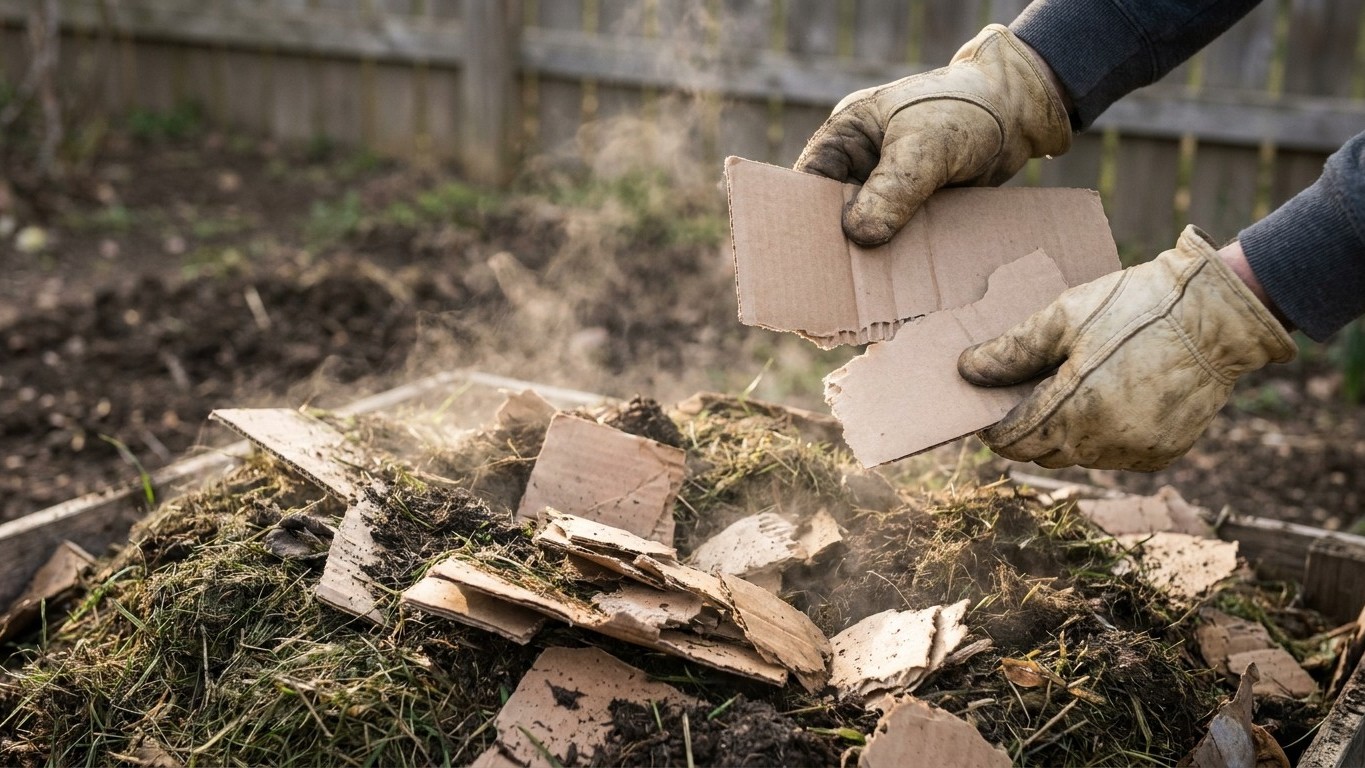
A gardener’s compost pile used to smell like a landfill on a hot day, sour, almost like vomit, until he started tearing a piece of cardboard between every layer of grass clippings. Two days later, the pile was steaming again. No fancy gadget, no compost accelerator bought online. Just cardboard, torn by hand, tucked between each fresh layer of mowed grass.
It sounds too simple to work. But the science behind it is straightforward, and it explains why so many backyard compost bins turn into a stinking, slimy mess the moment mowing season kicks in.
Key takeaways
- Fresh grass clippings compress into an airless, anaerobic swamp within hours—but something simple stops it cold
- The sour, vomit-like smell isn’t random: it’s a specific bacterial byproduct of suffocation, not just moisture
- One household material, deployed the right way, restores aerobic decomposition and heat in under 48 hours
Why grass clippings turn compost into a swamp
Fresh grass clippings contain a large amount of nitrogen and moisture, and thick layers quickly become compacted, restricting airflow and producing ammonia or sour odors. Pile them on thick, the way most people do after mowing the lawn, and the clippings mat together almost instantly. Grass clippings will quickly go anaerobic, turning slimy and stinky once oxygen can no longer reach the microbes doing the work.
That sour, gag-inducing smell is not a mystery. It’s prime territory for anaerobic bacteria, which smell terrible, like landfill terrible. The bacteria that thrive without oxygen produce a completely different set of byproducts than the ones that need air, and those byproducts happen to smell like rot, vinegar, or worse.
Here’s the part most home composters miss: it isn’t only about moisture. Heavy, dense materials like wet grass clippings compact under their own weight, squeezing out air pockets and creating anaerobic zones even if the moisture level is technically correct. A pile can look fine on the outside, feel damp but not soaked, and still be dying from suffocation on the inside. That’s exactly what happens when someone dumps a full mower bag straight onto the heap without breaking up the layer.
The torn cardboard trick, explained
Tearing cardboard by hand rather than cutting it with scissors matters more than it seems. Torn edges are rougher and bulkier than clean cuts, which means the pieces don’t nest together as tightly. They create tiny air pockets between each green layer instead of forming another flat, airtight sheet.
That structural role is the whole point. Coarse, bulky materials like wood chips, torn cardboard, and straw physically hold the pile open and maintain air channels. Grass alone can’t do that. Its blades are thin and flexible, so they collapse into a solid mat within hours. Cardboard, torn into strips or chunks, resists that collapse and keeps the whole structure breathing.
There’s also a chemistry side to the fix. Grass is loaded with nitrogen, and nitrogen-heavy piles without enough carbon start losing that nitrogen as gas instead of turning it into usable compost. Nitrogen-rich materials like fresh grass clippings release ammonia as they break down if there is not enough carbon present to balance the process. Cardboard is almost pure carbon. Adding it between every grass layer isn’t just about air, it’s about giving the nitrogen something to bond with instead of escaping into the yard.
Composting researchers have actually put numbers on this balance. Cornell Waste Management Institute notes that the ideal carbon-to-nitrogen ratio for efficient decomposition is 25:1 to 30:1 by weight. Grass clippings alone sit way below that ratio, closer to 15:1 or 20:1, which is precisely why a pile stacked with nothing but clippings turns sour so fast. Cardboard pulls that ratio back toward the sweet spot without requiring a kitchen scale or a chemistry degree.
Why the heap wakes up in just two days
Heat is the tell. A compost pile that’s working properly generates its own warmth, sometimes reaching well over 120°F at the core, because billions of aerobic microbes are metabolizing furiously. A cold, smelly pile means that activity has essentially shut down.
Restoring airflow and carbon flips the switch back on almost immediately. After taking these corrective steps, the pile should start to heat up within a few days if the conditions are now optimal. Two days lines up perfectly with that window, since aerobic bacteria multiply fast once oxygen and a balanced carbon source are back in play.
The habit that makes this stick, though, isn’t a one-time fix after the pile already smells bad. It’s doing it every single time fresh grass goes in. Every time a large green addition goes in, like grass clippings after mowing, an equal or greater volume of browns should go in at the same time. Skip that step even once during a busy mowing week, and the sour smell tends to creep back within days.
Getting the layering right
The technique works best with a bit of rhythm to it. After spreading a thin layer of fresh clippings, no thicker than two or three inches, a handful of torn cardboard goes on top before the next batch of grass arrives. Thin layers matter as much as the cardboard itself, since when adding new materials, it’s important not to leave them in a clump but to mix them in throughout the pile, and shredding leaves or grass helps too.
Plain, uncoated cardboard works best, without the glossy printed boxes or heavy tape residue that slow decomposition down. Egg cartons, shipping boxes, and cereal boxes with the plastic liner removed are the easiest to tear by hand and break down within weeks rather than months. For gardeners who mow weekly through summer, that torn-cardboard habit turns what used to be a dreaded, smelly chore into compost that’s ready for the vegetable beds by fall, no clothespin on the nose required.
Sources : letsgocompost.org | reencle.co