
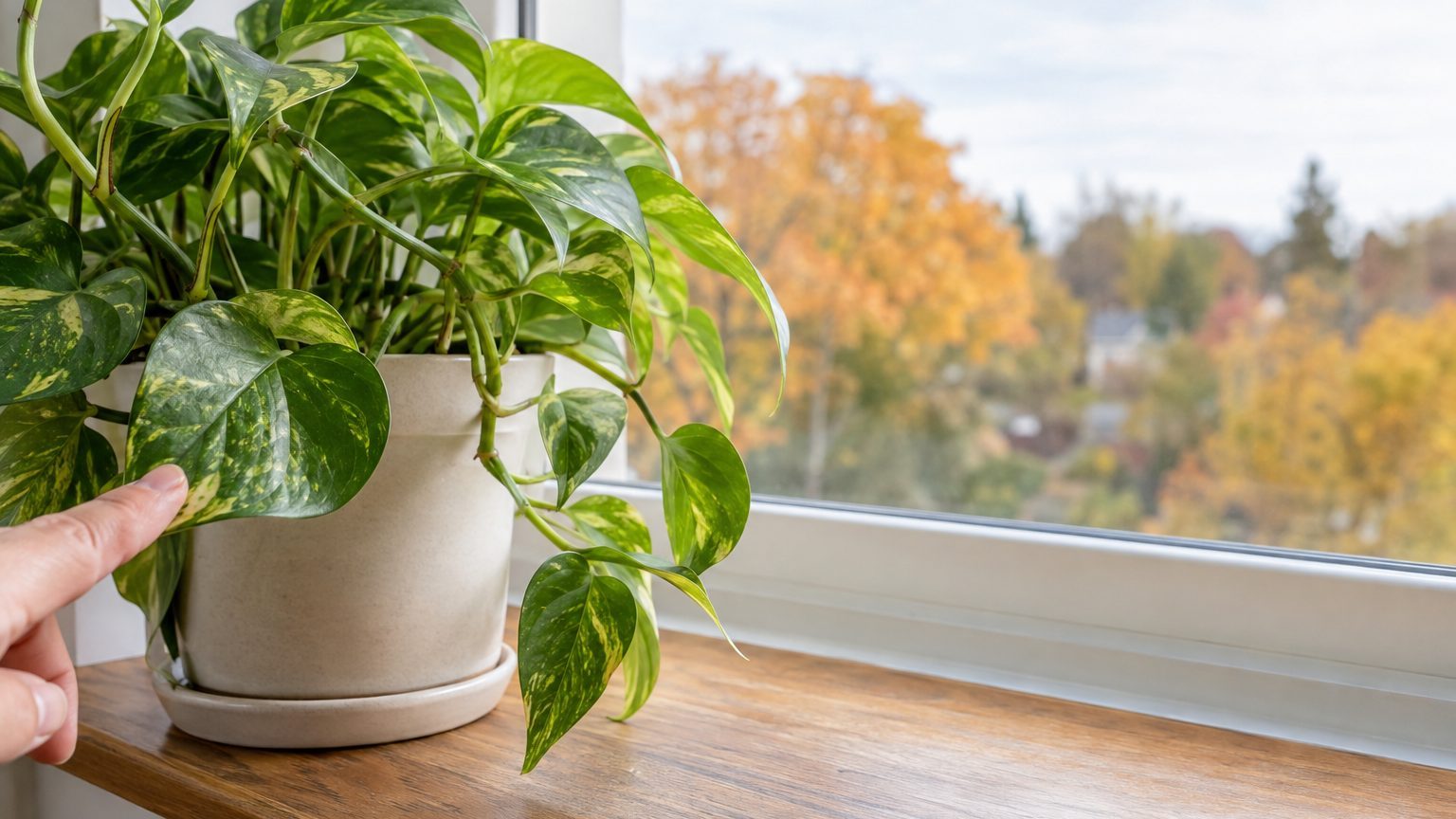
That tacky film on your pothos leaves isn’t a disease, and it isn’t sap. It’s honeydew, a sugary excrement produced by sap-sucking insects, and finding it means something is feeding on your plant right now.
Run a finger across the leaf and then check the surface underneath it. Honeydew drips, so the sticky patch often shows up on the leaf below the culprit, on the windowsill, or on the floor beneath a hanging pot.
- The sticky residue is honeydew, a sugary waste produced by sap-sucking insects.
- Scale, mealybugs, aphids and whiteflies are the common culprits behind it.
- Isolating the plant, washing the leaves and repeating treatment weekly for three to four weeks clears the infestation.
Why a plant gets sticky in the first place
Plant sap is rich in sugar and poor in protein. To get enough nitrogen, aphids, scale, mealybugs and whiteflies have to drink enormous quantities of it, then expel the excess sugar as droplets. That waste is the residue you’re feeling.
Left alone, it gets worse. A dark, sooty mold often colonizes the honeydew, turning leaves gray or black and blocking light the plant needs for photosynthesis.
The mold itself isn’t the real problem.
Before you blame pests, rule out two harmless causes. Some plants, such as hoya and certain orchids, secrete nectar from their flowers or leaf joints, and it feels sticky but is benign. Overspray from hairspray, cleaning products or leaf-shine can leave a film too, though it won’t reappear after you wipe it off.
Identifying the culprit
A magnifying glass or your phone’s macro setting helps here. Check the undersides of leaves, the nodes where stems meet, and the crevices near new growth, because that’s where pests hide first.
Scale is the most commonly missed offender. Adult scale insects look like tiny brown or tan bumps, about the size of a lentil or smaller, stuck flat to stems and along leaf veins. Many people mistake them for part of the plant. If a bump scrapes off with a fingernail and leaves a small wet smear, you’ve found one. Ficus, citrus, orchids, ferns and jade plants are frequent targets.
Mealybugs are easier to spot. They look like bits of white cotton tucked into leaf axils, and when crushed they leave a pinkish stain. They favor succulents, coleus, hoya and cacti, and they can also infest roots, which makes them especially stubborn.
Aphids are soft, pear-shaped and cluster on tender new growth and flower buds. Colors range from green to black to pale pink. You may also see the white, shed skins they leave behind, which can look like dandruff on the leaves.
Whiteflies give themselves away by flying up in a small cloud when you brush the plant.
Spider mites don’t produce much honeydew, so if you see fine webbing and stippled leaves without much stickiness, you’re probably dealing with something else. Fungus gnats aren’t to blame either, since they live in the soil.
Getting rid of them, step by step
Isolate the plant first. Pests spread between neighboring plants faster than most people expect, and a single infested fern can seed a whole shelf in a few weeks. Move it to another room, and inspect everything that sat within a few feet of it.
Next, wash. Take the plant to a sink or shower and rinse the leaves with lukewarm water, which knocks off aphids and much of the honeydew. For stuck-on residue, wipe each leaf with a cloth dampened with water and a few drops of mild dish soap.
Then treat the insects directly. A cotton swab dipped in 70 percent isopropyl alcohol dissolves the waxy coating on mealybugs and soft scale, killing them on contact. Test the alcohol on one leaf first and wait a day, because thin-leaved or waxy plants can burn.
For a broader infestation, insecticidal soap or horticultural oil (neem oil is the common one) coats and smothers soft-bodied pests. The University of California’s Integrated Pest Management program notes that these products work only on direct contact, so thorough coverage matters, especially the leaf undersides. Avoid spraying in direct sun, and keep the plant out of bright light for a few hours afterward to prevent leaf burn.
Repeat every seven days for at least three to four weeks. This is where most people fail, because eggs survive the first treatment and hatch a week later. Armored scale and mealybug eggs are especially resistant, so a single spray session rarely finishes the job.
Heavily infested stems are sometimes better pruned and thrown out.
If mealybugs are suspected in the roots, slide the plant from its pot and look for white, waxy clumps in the root ball. Repot in fresh potting mix and clean the old container with hot, soapy water before reusing it.
Keeping the stickiness from coming back
New plants are the usual way pests arrive. Keep any purchase quarantined for two to three weeks before it joins the rest of your collection, and inspect the leaf undersides before you even buy it.
Stress also plays a role. Overfertilized plants produce soft, nitrogen-rich growth that aphids love, and plants kept in dry, stagnant air attract scale and mealybugs more readily. Moderate feeding and decent airflow go a long way.
A quick inspection once a week, done while you water, catches most problems when they’re still a handful of insects instead of a colony. Yellow sticky traps hung near the pot also help for whiteflies and winged aphids, and they double as an early warning system.
One last detail: if the stickiness vanishes after cleaning but returns within days, the pest is almost certainly still on the plant, often hidden low on the stem or in the soil line. Check the pot’s drainage holes and the underside of the rim, where scale and mealybugs sometimes shelter.