
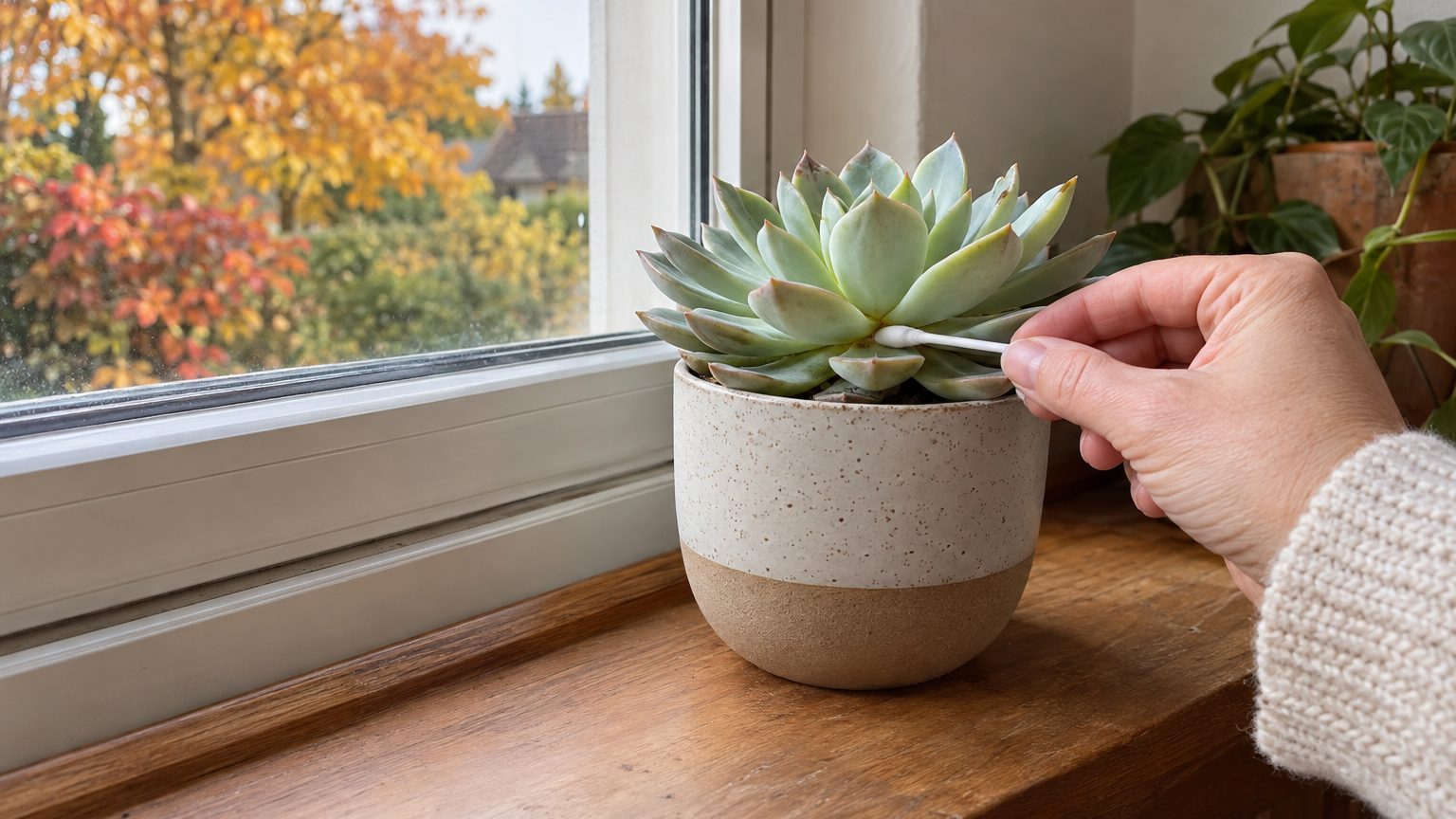
If the white fluff sits where leaves meet the stem and looks like a wisp of cotton pulled from a swab, you are almost certainly dealing with mealybugs. These soft-bodied, sap-sucking insects measure roughly an eighth to a quarter of an inch and wedge themselves into tight spots. A succulent rosette, with its tightly packed leaves, is practically a luxury apartment building for them.
Caught early, this is a two-week problem.
Left alone, it turns ugly. Mealybugs pierce the tissue and drink the sap, so leaves lose color, growth stalls, and new shoots come in stunted or distorted. They also excrete honeydew, a sugary residue that attracts ants and invites black sooty mold. Ants make matters worse, because they actively defend mealybug colonies from predators, much like farmers guarding livestock.
- Mealybugs are soft-bodied sap-sucking insects about an eighth to a quarter inch long.
- Farina is a powdery wax some succulents produce naturally, and it smears flat when touched.
- Dabbing pests with 70% isopropyl alcohol on a cotton swab kills them on contact.
- Treatment must repeat every five to seven days for at least a month to catch hatching eggs.
Mealybug or just plant wax?
Not every white substance on a succulent is a pest. Echeveria, Graptopetalum, Dudleya and several other genera wear a powdery coating called farina, a wax the plant produces to deflect harsh sun. It looks chalky and even, and it shows every fingerprint you leave on it.
The toothpick test settles most doubts. Touch the white material gently: farina smears into a flat, dry powder, while a mealybug feels like a tiny soft body and sits raised in a cottony tuft. Crush one on a paper towel and you will often see a pinkish or orange smear.
Other lookalikes exist, including crusty mineral deposits from hard water and white mold on damp soil. Woolly aphids and cottony cushion scale can also pass for mealybugs at a glance, though the treatment is similar.
Sticky leaves plus ants on the pot point to mealybugs.
Treatment that spares the leaves
Isolate the plant first. Mealybugs crawl slowly, but they do crawl, and a neighbor touching leaves is all the invitation they need. Move the sick plant at least a few feet from the rest of your collection, and check everything nearby while you are at it.
For a light infestation, a cotton swab dipped in 70% isopropyl alcohol is the most precise tool you have. Dab each insect and each fluffy egg mass directly, because the alcohol dissolves their waxy coating and kills on contact. On farinose varieties, be careful: any wiping removes the powder, and that leaf will not regrow it. Aim at the bug, not the leaf surface around it.
Larger or spreading infestations call for a spray. Many growers use insecticidal soap, or a mix of diluted alcohol with a few drops of mild dish soap, and neem oil works as a slower, more forgiving alternative. Test any product on a single leaf and wait 48 hours before treating the whole plant, since some succulents blister or scar. Keep the plant out of direct sun until it dries, because wet leaves under strong light can burn.
Repeat every five to seven days for at least a month.
The repetition matters because a female lays hundreds of eggs in a cottony sac, and sprays rarely penetrate those fibers. Eggs hatch within one to two weeks in warm rooms, so a single treatment simply clears the adults and leaves the next wave waiting. Each new round catches the crawlers before they mature and start laying.
For a severe case on a plant you can’t bear to lose, a systemic houseplant insecticide, applied to the soil and absorbed by the plant, can reach insects hidden deep in the crown. Follow the label closely and skip this route on anything edible. Most hobbyists find they never need it if they stay persistent with the swab.
The roots are part of the crime scene
Root mealybugs live below the soil line, and they are the reason some “cured” plants keep relapsing. The signs are subtle: a plant that wilts or stalls despite correct watering, plus white, waxy, powdery patches on the roots or clinging to the inside of the pot when you tip it out.
Treating them means unpotting the plant completely. Shake off the old soil, rinse the roots, trim anything damaged, and soak the root ball in a diluted insecticide solution according to the product label. Let the plant dry for a few days before repotting it in fresh, gritty mix. Scrub the old pot with hot soapy water, and bin the old soil rather than reusing it.
Check the neighbors too. Root mealybugs travel through pots that touch, and through shared saucers.
Keeping them from coming back
Most infestations arrive on a new plant. Quarantine anything you bring home for three to four weeks, whether it came from a big-box store or a friend’s windowsill, and inspect the crevices before it joins the group. A flashlight and a cheap magnifying glass reveal far more than a glance across the room.
Care habits matter as well. Heavy nitrogen fertilizer pushes out soft, sappy growth that mealybugs love, and stagnant, humid air gives them an easy ride. Succulents asked to live on lean feeding, bright light and good airflow tend to stay tougher and less appealing.
One last detail puts the enemy in perspective. Adult male mealybugs are tiny winged insects with no mouthparts, and they live only a few days, so every plant-damaging bug you see is a female. And one of their distant relatives, the cochineal, is the insect behind the natural red carmine dye in some lipsticks and food coloring.