
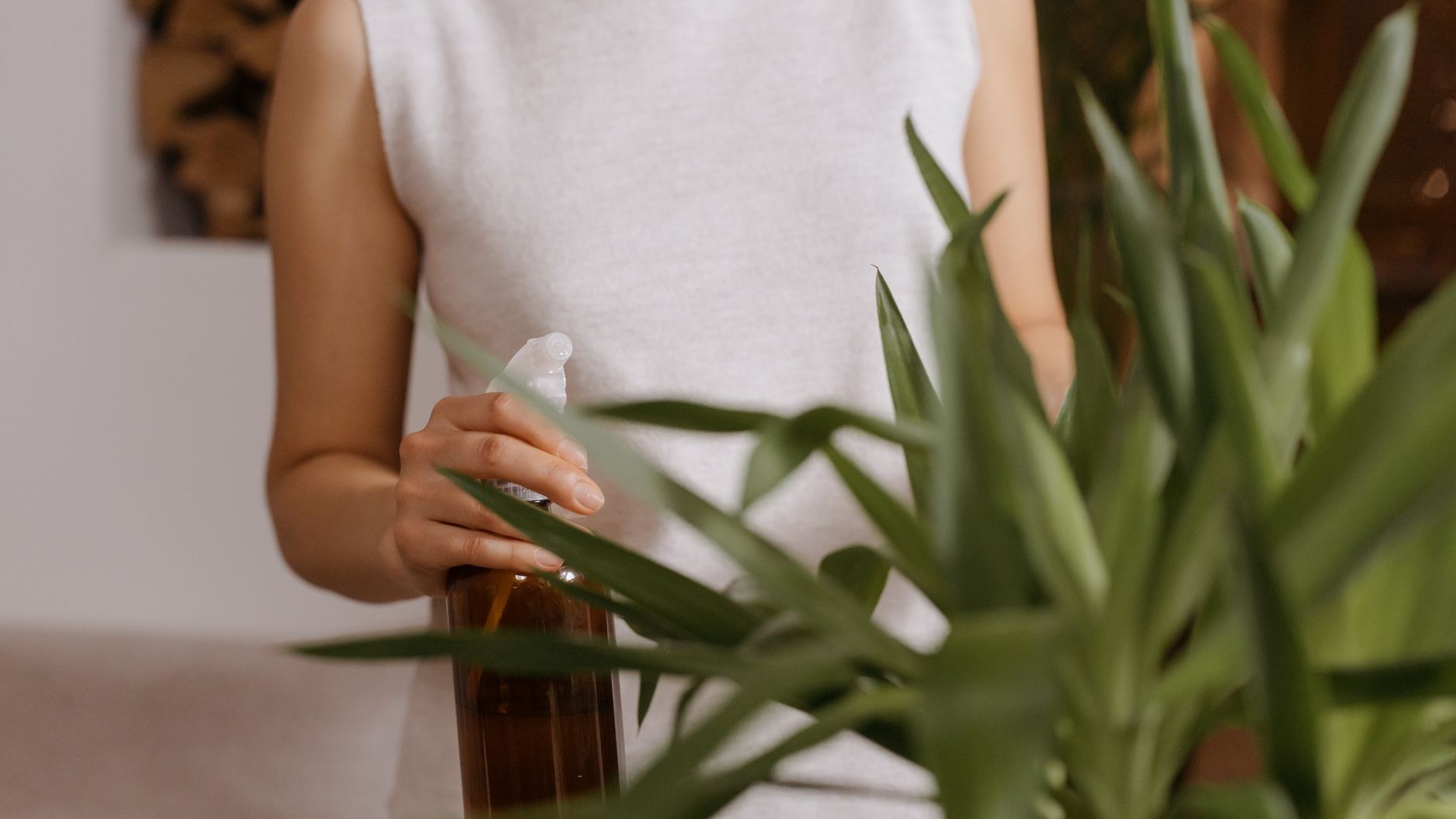
Leaf-shine sprays sit on the shelves of almost every garden center, marketed as a quick fix for dusty, dull foliage. The bottles look harmless. The promise, glossy, showroom-ready leaves in seconds, sounds reasonable. So for several months, a lot of plant owners (myself included, at one point) spray away without a second thought. The problem is that those leaves are not decorative surfaces. They are functional organs, and coating them changes everything about how a plant breathes.
Key takeaways
- A florist spotted leaf-shine damage and revealed the plant was struggling to transpire properly
- The coating blocks stomata, causing slow stress: yellowing, stunted growth, and weakened immunity
- Plants with large, thin, active leaves (monsteras, calatheas, pothos) suffer most from this treatment
What leaf-shine products actually do to your plants
Most commercial leaf-shine sprays work by depositing a thin film of silicone, mineral oil, or wax on the leaf surface. That film catches light and creates the wet, polished look you see in florist displays. What the label rarely explains is that this coating does not discriminate, it covers the stomata along with everything else. Stomata are the microscopic pores distributed across leaf surfaces (more densely on the underside) through which plants exchange oxygen and carbon dioxide, and release water vapor during transpiration. Block them, and you slow the entire metabolic process.
A florist who visited my apartment spotted my monstera immediately. She did not say it looked nice. She crouched down, turned a leaf over, ran her thumb across the underside, and asked how long I had been using the spray. The leaves had a faint waxy sheen even on the bottom : I had been thorough, which made it worse. Her diagnosis was blunt: the plant was struggling to transpire properly, which was also why new growth had slowed to almost nothing over the previous two months. I had attributed that to winter light. The real culprit was on the shelf next to my watering can.
The suffocation is rarely dramatic or fast. Plants are resilient, and most will not die from a few applications. What happens instead is a slow accumulation of stress: reduced photosynthesis, weakened immune response to pests and fungal issues, and leaves that paradoxically start looking worse over time, yellowing at the edges, developing brown spots, despite the shiny coat on top.
The plants most vulnerable to this treatment
Not all houseplants react equally. Thick-leaved succulents and cacti, which already have evolved waxy cuticles and slow transpiration rates, are less affected by an additional coating. The plants that suffer most are the ones with large, thin, active leaves, precisely the ones that look most spectacular when shined up. Monsteras, fiddle-leaf figs, peace lilies, pothos, calatheas, and philodendrons all fall into this category. Calatheas are particularly sensitive; their leaves are already prone to stress from water quality and humidity, and sealing their stomata adds another layer of pressure on a plant that has little tolerance for it.
Tropical species also rely heavily on their leaves for humidity management. In a dry indoor environment, typical of American homes running central heating or air conditioning — a plant’s ability to transpire helps it regulate its own microclimate to some extent. Coat those leaves, and you remove that mechanism. The plant essentially loses one of its main tools for coping with dry air.
Why the florist display myth is misleading
The comparison to florist shop plants is worth unpacking, because it’s the implicit justification behind most leaf-shine marketing. Those plants are shined, they look perfect, so the product must be fine for long-term use. The reality is that florist displays are short-term environments. Plants in a shop window are replaced regularly, they are not expected to thrive for years. Using a florist technique on a plant you intend to keep for a decade is a category error.
Professional growers who produce the large tropical specimens sold in nurseries specifically avoid leaf-shine products on growing stock. The shine you sometimes see on freshly potted store plants often comes from a single application done right before sale, a presentation decision, not a care decision. Once the plant is in your home, that coating starts working against you.
How to get genuinely healthy-looking leaves without the risks
The most effective substitute for leaf-shine is also the most boring answer: a damp cloth. Wiping leaves individually with a soft, slightly damp microfiber cloth removes dust, allows stomata to function freely, and reveals the natural gloss of a healthy, well-hydrated leaf. A monstera or rubber plant with clean, hydrated leaves has a natural sheen that no spray can replicate, because it comes from cell turgor, the internal pressure of water-filled cells, rather than a surface coating.
For plants with many small leaves where wiping is impractical, a gentle shower with lukewarm water (taking the whole pot to the sink or bathtub) accomplishes the same thing without any risk. Some growers add a tiny amount of neem oil diluted in water as a spray, neem has antifungal and pest-deterrent properties, and at low concentrations does not form the occlusive film that silicone or mineral oil products create. That said, even neem should be used sparingly and rinsed off after a day or two.
One detail worth knowing: the damage from leaf-shine is not permanent. Once you stop applying it and begin cleaning leaves regularly, most plants recover their stomatal function over the course of several weeks as the coating breaks down and new leaves emerge uncoated. The monstera my florist friend flagged put out two new leaves within six weeks of switching to a damp cloth routine, larger than any it had produced in the previous four months.
There is also a diagnostic value to this whole episode that goes beyond sprays. A leaf that genuinely looks dull, even after cleaning, is usually telling you something: low humidity, inconsistent watering, or a rootbound pot. Shine is a symptom of health, not something you can apply on top of it.