
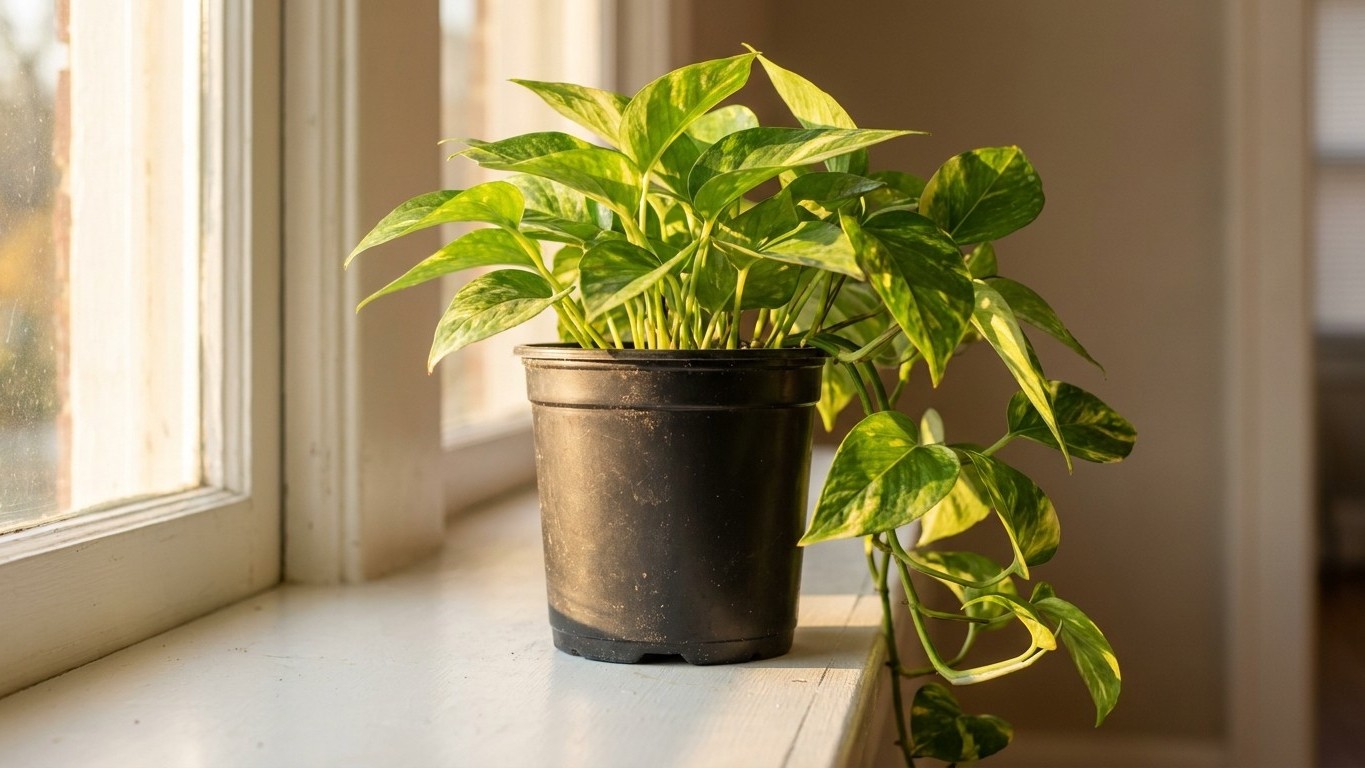
The root ball came out hot. Not warm, hot, like a stone left in the sun. That’s the moment I understood why three of my plants had been quietly failing for weeks while their leaves stayed green and upright, giving no warning at all.
Black plastic nursery pots absorb heat fast on a sunny windowsill. A pot sitting in direct light for several hours can reach temperatures well above the surrounding air, sometimes 20 degrees Fahrenheit higher than the room itself. Roots don’t have the same heat tolerance as leaves. They evolved underground, insulated from temperature swings, and most Houseplant species start suffering root damage once soil temperatures pass the mid-90s Fahrenheit. My windowsill, on a July afternoon, was cooking my plants from the bottom up.
Key takeaways
- A root ball came out scalding hot—the moment everything clicked into place about months of mysterious plant decline
- Leaves stayed green and upright while roots were quietly cooking; the plant was coasting on stored resources with no warning signs
- Black plastic absorbs and retains heat far more efficiently than terracotta or light-colored pots, reaching temperatures 20+ degrees above room air
Why the Leaves Lied to Me
Leaves are the last thing to show trouble because they’re not where the damage starts. Roots absorb water and nutrients, and when heat stresses them, they stop functioning efficiently long before they visibly rot or die. A plant can coast on stored resources in its stems and leaves for weeks, looking perfectly fine, while underground the root system is quietly cooking.
What tipped me off wasn’t wilting. It was watering schedule chaos. One pothos needed water every two days, then suddenly every five, then back to two. That inconsistency is a classic sign of root stress, according to extension horticulture programs at universities like Iowa State, which note that damaged roots lose their ability to regulate water uptake predictably. I’d been blaming humidity, or the season change, anything but the pot itself.
Black plastic is the real culprit here, not sunlight in general. Any dark, non-breathable material absorbs and retains radiant heat far more efficiently than lighter-colored or porous alternatives. Nursery pots are made cheap and black because that’s efficient for growers moving thousands of plants through greenhouses with controlled shade, not for a home windowsill exposed to unfiltered afternoon sun for hours at a stretch.
The Terracotta Test
I ran an informal comparison after that discovery, moving two similar pothos cuttings into identical light conditions, one staying in its black nursery pot, the other transplanted into an unglazed terracotta pot. Using an infrared thermometer (the kind sold for cooking, nothing fancy), I checked surface and near-root temperatures over a week of sunny afternoons.
The terracotta pot ran consistently 10 to 15 degrees cooler at the root zone. Unglazed clay is porous, which means it allows some moisture evaporation through the pot wall itself, and that evaporation carries heat away, similar to how sweating cools skin. Terracotta also reflects more light than it absorbs, since its natural color sits much lighter on the spectrum than flat black plastic.
This isn’t a fringe observation. The North Carolina Cooperative Extension has published growing guidelines noting that container material and color significantly affect root zone temperature, particularly for plants kept in direct sun for extended periods. Growers who keep nursery pots outdoors typically bury them in mulch or shade cloth for exactly this reason, something rarely mentioned on the plant care tag you get at checkout.
What Actually Fixed It
Repotting solved most of the problem, but not because the plants needed more soil. Two of my three plants were barely root-bound; they had plenty of room. The fix was almost entirely about the container material and, secondarily, about getting the pot’s exposed surface out of direct light.
For plants I didn’t want to fully repot yet, I used a simple workaround: slipping the black nursery pot inside a lighter-colored ceramic or terracotta cachepot, leaving an air gap between the two. That gap acts as insulation, similar to double-pane window technology, and it dropped surface temperatures noticeably within days. I tested it with the same infrared thermometer and saw a consistent 8 to 12 degree drop compared to the bare nursery pot sitting alone in the same window.
Moving the plants back from the glass by even six inches helped too. Direct contact with a sun-heated windowsill surface adds a second heat source underneath the pot, on top of the ambient light hitting it from above. A cheap cork trivet or a folded towel under the pot broke that thermal contact and cost nothing.
Signs You’re Already There
Root heat stress doesn’t always announce itself with drama. Watch for a handful of specific behaviors: unpredictable watering needs that shift week to week, slow but steady leaf drop with no yellowing pattern, new growth that emerges small and pale compared to older leaves, and a root ball that feels dry and crumbly at the edges even right after watering. That last one is the tell. Healthy moist soil should feel cool and slightly damp throughout the pot, not baked at the rim and swampy at the core.
I’d add one more, purely from experience: if you find yourself watering more in summer without seeing any corresponding growth spurt, the water may be evaporating faster than the roots can use it, precisely what happens when the root zone runs hot. It’s not thirst. It’s heat stress disguised as thirst, and no amount of extra watering fixes a container problem.
None of this means black nursery pots are useless, they’re fine for shaded spots or short-term transport. The issue is specifically that sunny, west-facing windowsill combo that so many indoor gardening guides recommend without mentioning what happens to the container itself. My fern collection sits two feet back from the glass now, each one nested in a Terracotta sleeve, and for the first time all summer, I haven’t had to guess why a plant looks tired.