
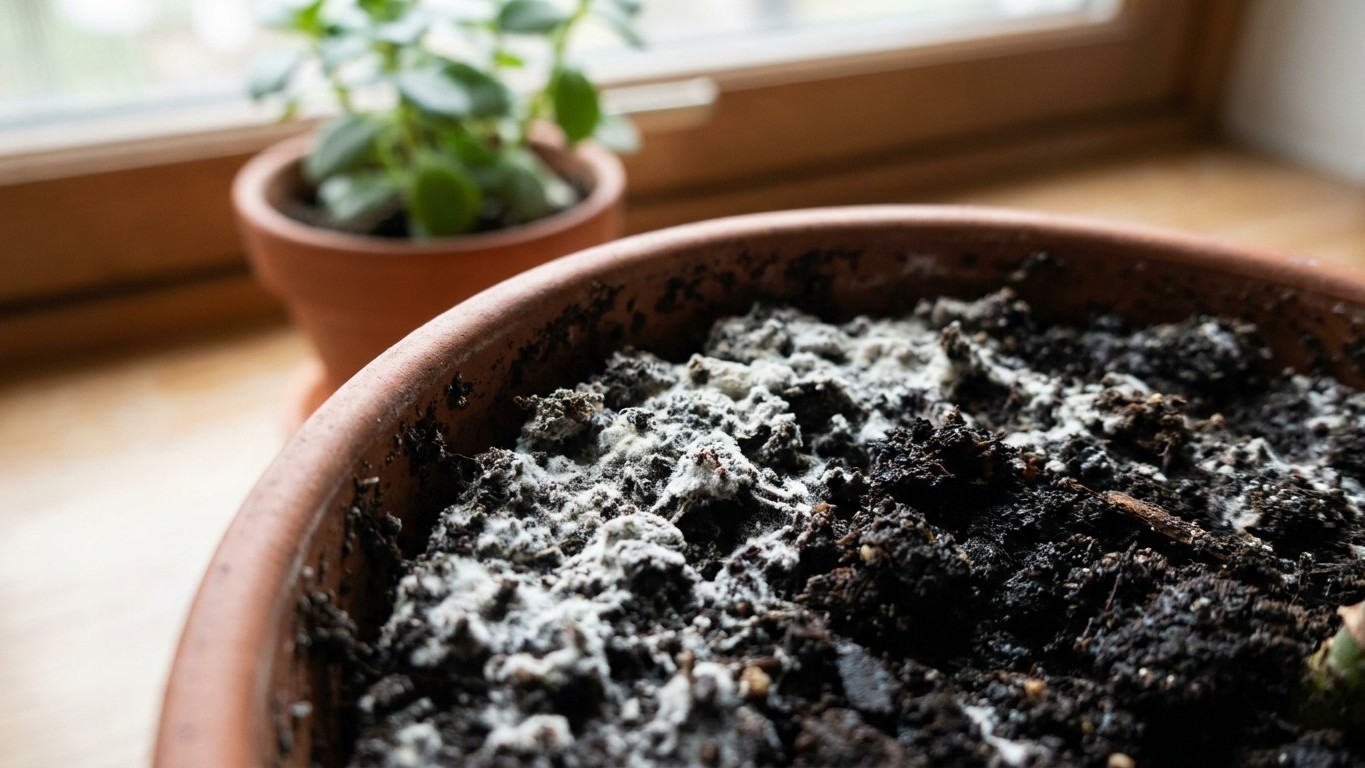
That white, cottony fuzz spreading across your plant’s soil surface isn’t fertilizer working its magic. It’s mold, and in some cases it’s the first sign of a fungus gnat nursery taking shape right under your favorite pothos.
The instinct makes sense. Two out of three Americans brew coffee at home daily, which means a steady stream of used grounds heading straight for the trash can. The next time you pour yourself your morning cup of joe, think twice about sharing the wet remains with your indoor plants. The problem isn’t the grounds themselves. It’s what happens when damp, nitrogen-rich organic matter sits on top of soil that rarely dries out completely between waterings.
Key takeaways
- A harmless-looking white crust on soil harbors multiple types of mold and creates ideal breeding conditions for fungus gnat larvae
- The color of mold matters drastically—green is beneficial, but black, brown, pink, or red means immediate disposal
- Coffee grounds can actually attract more fungus gnats than they repel, with a single female laying up to 200 eggs in 25 days
What’s Actually Growing Under That Crust
Scratch through a month-old layer of coffee grounds and you’ll typically find one of a handful of fungal colonizers, not some mysterious rot. The most common contaminants of used coffee grounds are trichoderma, cobweb mold, and basic pin molds, all of which appear white in their vegetative mycelium stage. Within days that whitish web usually shifts color, and the shade Matters More Than most people realize.
White, feathery mold on coffee grounds is most likely Aspergillus, one of the most common molds affecting coffee grounds, and it won’t harm your garden. Green growth tends to be even better news. The most likely green suspect is Trichoderma, one of the best molds to see on coffee grounds since it’s perfectly safe for plants and even considered beneficial on an agricultural level. Blue-green colonies usually point to Penicillium or a benign Aspergillus strain, and when grounds are stored they tend to develop green or blue-green fungus, with the green Trichoderma being very beneficial to soil and the blue-green being moderately beneficial.
The colors to actually worry about are black, brown, pink, or reddish growth. If mold on coffee grounds appears black or brown, dispose of them immediately and thoroughly scrub anything the grounds touched. Reddish or pinkish fuzz is rarer but more concerning, since the most likely culprit behind it is fusarium, which can infect plants and cause real damage, and any grounds showing these colors should be discarded along with sterilizing the storage area. So before you panic and toss the whole pot, take a close look at the color first. Most of what grows on spent grounds is the same mold family that colonizes bread and grain, completely harmless to touch even if it looks alarming under a grow light.
The Crust Itself Is the Real Problem
Mold color aside, the crust you’re scratching through is doing damage on its own terms. Coffee grounds are far finer than bark chips or shredded leaves, and that texture works against drainage. Coffee grounds are much finer than wood chips, straw, or shredded leaves, and can compact into a dense mat; thick layers may block water and air from entering soil, which stresses roots and encourages fungal growth. One gardening forum thread captured the mechanism plainly: being rich in nutrients is exactly why coffee grounds are beneficial for plants, but that same richness means they attract mold if left damp, and they also dry into a crusty surface that sheds water.
That shedding effect is what trips up so many well-meaning plant owners. You water normally, but the liquid runs straight off the hardened surface layer instead of soaking down to the roots, leaving the plant thirsty even though the pot feels heavy. When water runs off the soil surface, it usually means the grounds have formed a crust; the fix is to break up the layer, mix it with compost or soil, cover with coarse mulch, and avoid applying pure grounds on top again. Underneath that crust, moisture gets trapped rather than evaporating, creating exactly the humid, low-oxygen pocket that fungal mycelium and gnat larvae both favor.
Fungus Gnats: The Uninvited Tenants
This is where the story usually turns from cosmetic annoyance to actual pest problem. When left to linger on the soil’s surface, the moist substance can rot, creating the perfect conditions for a breeding ground of fungus gnats to form around houseplants. The adult flies you spot buzzing near your fiddle leaf fig aren’t the real threat. It’s their offspring. The needle-point-sized flies are an issue not only because they’re a general annoyance, but because once they finish feeding on moldy coffee grounds, they turn to devouring plant roots, and damaged roots result in poor growth, discolored leaves, and leaf drop.
Ironically, some gardeners try coffee grounds specifically as a gnat deterrent, with mixed results at best. Using coffee grounds against fungus gnats has circulated widely across forums and blogs, but a number of gardeners report the practice ending up attracting even more fungus gnats. The larvae life cycle doesn’t help matters either. During its roughly 25-day existence, an average female gnat can lay up to 200 eggs, so a single damp patch under a coffee crust can seed a population that outlasts several rounds of scratching and stirring.
How to Actually Use the Grounds Without the Mess
None of this means coffee grounds belong in the trash. It means the delivery method needs rethinking. The safest route skips the soil surface entirely and turns grounds into a liquid feed instead. Mix used grounds with water at a ratio of about 2 cups to 5 gallons, stir to distribute evenly, let it steep overnight, then strain the liquid through a mesh strainer or cheesecloth before using it to water plants normally. This delivers the nitrogen and trace minerals coffee grounds are genuinely good for, a fantastic source of nitrogen, one of the key ingredients for green, leafy growth, along with potassium and phosphorus that make them a fairly well-rounded organic addition, without ever creating a surface for mold to colonize.
If you’d rather work with the solid grounds, drying them first changes everything. If you still want to use direct grounds indoors, dry them completely, use no more than a pinch or two for a small pot, and mix them into the top layer rather than leaving them on the surface. A tray in a sunny window for a day or two is enough, and once dry, they can no longer be colonized by mold.
Frequency matters just as much as method. If using a liquid extract, apply it weakly and infrequently, since for most houseplants once a month during the growing season is more than enough. Skip the routine entirely during winter dormancy, when roots aren’t actively drawing up nutrients anyway. And if you’re tempted to pour an actual leftover latte into a pot because it seems like the same idea, resist it. Hot coffee, sweetened coffee, milk coffee, or leftover flavored drinks shouldn’t go on plants, since sugar, dairy, syrups, and fats can attract pests, encourage fungus, and create odor. The grounds themselves are the useful part. Everything else in the cup just feeds the wrong kind of houseguest.
Sources : housedigest.com | evergreenseeds.com