
Those tiny black flies hovering around your houseplants are one of the most reliably infuriating sights in any indoor garden. The instinct is immediate: drown them out. Flood the soil, suffocate the larvae, solve the problem. Except that extra water isn’t the solution. It’s precisely what created the infestation in the first place, and pouring more of it onto the problem makes everything measurably worse.
A conversation with an experienced plant grower changes that understanding fast. The moment you actually see what those larvae are doing in the soil, and what your watering habits have set in motion, the whole logic inverts.
Key takeaways
- The adult flies you see are just a distraction—the real destruction happens underground where larvae tunnel into roots and invite deadly pathogens
- Extra water doesn’t solve fungus gnats; it’s what created them in the first place, trapping plant owners in a cycle of wilting, panic watering, and population explosion
- A two-week life cycle means one female gnat can infest an entire plant before you even notice—but letting soil dry stops them cold
The Fly You See Is Not the Problem
Adult fungus gnats don’t damage plants or bite people; their presence is primarily considered a nuisance. That swarm circling your peace lily? Essentially harmless to the plant. The real damage is invisible, happening an inch below the soil surface where you never look. Fungus gnats are often dismissed as a minor nuisance when adults drift around containers, but the real damage occurs below the surface. The larval stage lives in the growing media, where it feeds on fine roots, root hairs, and organic films. This feeding slows growth, reduces nutrient uptake, and creates entry points for root pathogens.
The larvae themselves are surprisingly purposeful. They eat organic mulch, leaf mold, grass clippings, compost, root hairs, and fungi. So for a significant part of their diet, they’re actually processing decaying matter, the kind of organic breakdown that’s a normal part of healthy soil activity. The trouble starts when their population explodes and they run out of dead material to eat. In the absence of a fungal food source, fungus gnats can also feed on healthy plant tissue. Larvae feed on plant roots in addition to fungi and decaying organic matter, sometimes tunneling into the crown and stems of plants. This feeding damage creates wounds that allow soilborne pathogens to enter and potentially kill plants.
There’s a cascade effect worth understanding. Fungus gnat larvae may also carry some soil-borne pathogens such as Pythium, Thielaviopsis, and Fusarium. These are serious fungal diseases. A population of gnats that seems cosmetic can quietly inoculate your root zone with pathogens that finish the job long after the flies are gone.
Why Watering More Makes It Catastrophically Worse
The main trigger of a fungus gnat infestation is overwatering, because fungus gnats thrive in soggy environments. That’s the feedback loop that traps most plant owners: the plant looks wilted (root damage from larvae), so you water more (creating better conditions for larvae), so the population grows (more root damage), so the plant wilts further. Around and around.
A houseplant that is wilting may not indicate a lack of water, but rather root damage by fungus gnat larvae or other causes of unhealthy roots. This is the diagnostic mistake that costs plants their lives. Drooping leaves feel like a cry for water, and watering is the intuitive response. But overwatering is the most common cause of houseplant death. It doesn’t mean you watered too much at once, it means the soil stays wet for too long, suffocating roots and inviting root rot.
The female fungus gnat lays between 100 to 300 eggs in batches of 2 to 30 each in decaying organic matter. Eggs are hardly visible without magnification and hatch within four to six days. Think about what that math means: one female, arriving on a plant you picked up from a garden center, can seed a full infestation before you’ve noticed anything. This life cycle can be completed in as little as 2 weeks at 80°F, or as long as 4 weeks at 55°F. Two weeks from egg to flying adult, ready to lay hundreds more eggs. In a warm apartment, this is practically a sprint.
What the Grower Actually Does
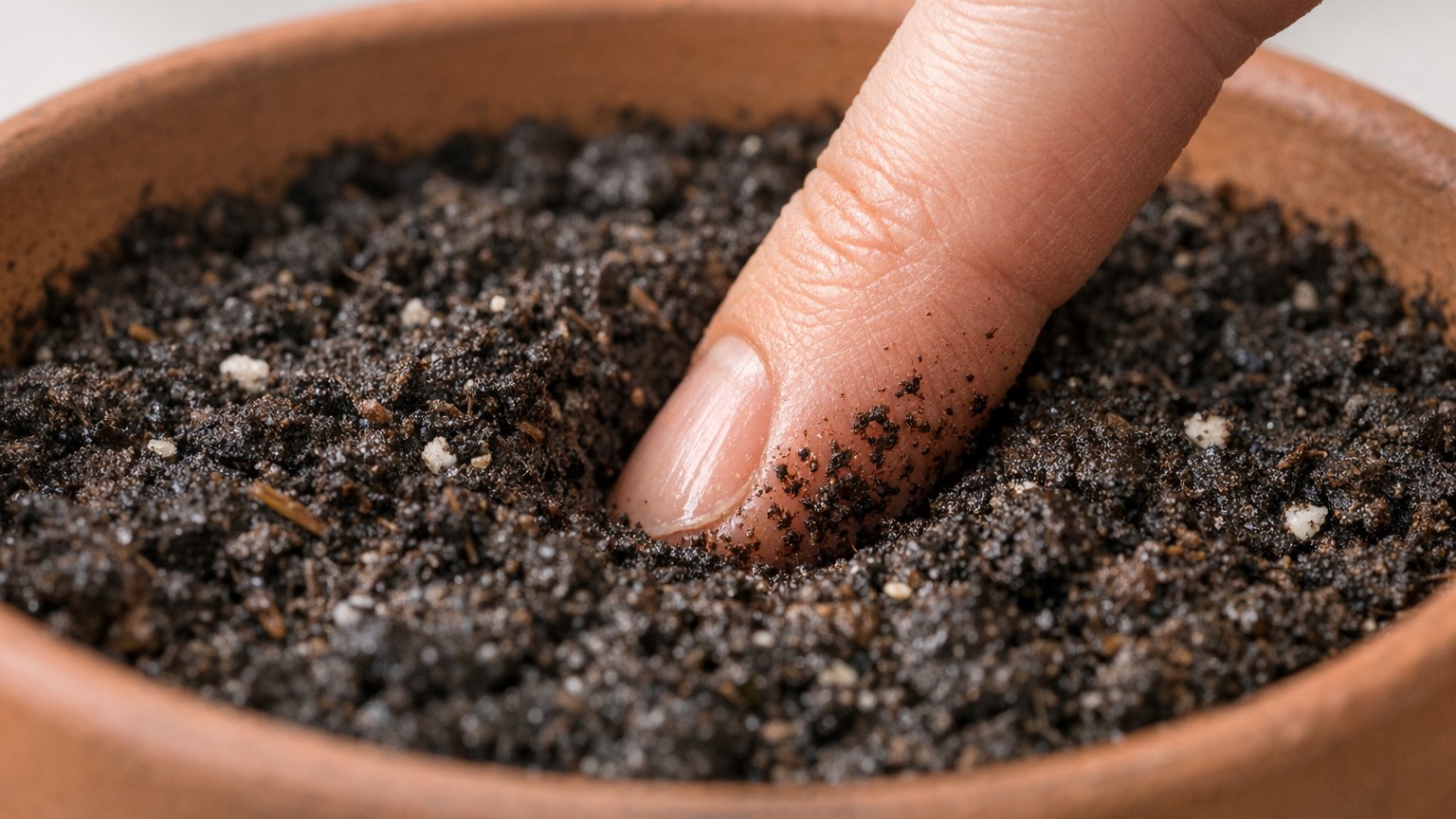
The fix starts with something counterintuitive: withhold water and watch the infestation collapse on its own. Fungus gnats love moisture, so letting the top 1–2 inches of soil dry completely before watering again disrupts their life cycle, as larvae can’t survive in dry soil. No pesticide required for a mild infestation, just patience and a finger pressed into the soil before you reach for the watering can.
Watering from the bottom lets the plant absorb only what it needs, keeping the soil’s surface dry and discouraging gnats. Set the pot in a tray of water for 15 to 30 minutes, then remove any excess water. This approach is elegant: the roots get hydrated, the top inch of soil stays hostile to egg-laying adults, and you stop compulsively flooding the pot out of guilt. It also prevents the constant surface moisture that fungus gnats need for egg laying and larval development.
For a more active intervention, especially when the population has already gotten out of hand, growers reach for a biological weapon that sounds exotic but is widely available. A natural bacterium called Bacillus thuringiensis var. israelensis (BTI), found in mosquito dunks, works against fungus gnat larvae. Add a piece of a dunk to your watering can. BTI is safe for plants and pets and targets only fungus gnat larvae. You’re essentially deploying a pathogen that is lethal to gnat larvae and completely inert to everything else in your home, your cat, your pothos, your kids. Products containing Bacillus thuringiensis subsp. israelensis (Bti) can be used to control fungus gnat larvae in soil, but these treatments do not affect eggs, pupae, or adult fungus gnats. That’s why multiple applications matter — several applications spaced five to seven days apart control newly hatched larvae until the infestation is under control.
Yellow sticky traps handle the adult population simultaneously. You can monitor for fungus gnat adults using yellow sticky traps placed near a plant’s leaves. This two-pronged approach, BTI in the soil, traps in the air, addresses both life stages at once, rather than swatting at flies while the next generation hatches undisturbed below.
The Diagnostic Shift That Changes Everything
The deeper lesson here isn’t about gnats. It’s about misreading symptoms. Plant symptoms may appear as sudden wilting, loss of vigor, poor growth, yellowing, and foliage loss, and every one of those signals could also be a straightforward case of overwatering. The two problems feed each other so seamlessly that they’re almost impossible to untangle once established. Which came first, the soggy soil or the larvae? At a certain point, it stops mattering.
What growers understand that casual plant owners typically don’t: decreased day length and cooler temperatures slow plant growth and water usage. If watering practices are not altered, particularly during fall and winter, the growing medium will remain moist, which improves conditions for fungus gnat development. Your watering schedule from August will drown a plant by November. The soil check, one finger, two inches deep, before every single watering, isn’t a tip for beginners. It’s the foundational practice of every grower who doesn’t lose plants to things they never needed to lose them to.
One last detail worth keeping in mind: serious fungus gnat damage is more common in greenhouses, nurseries, and sod farms. A handful of gnats circling a monstera on your windowsill is not a crisis. The crisis is the response to them, the extra water, the panic, the accelerating spiral. Sometimes the most damaging pest in your living room isn’t flying. It’s the watering can in your hand.
Sources : naturalenemies.com | aol.com