
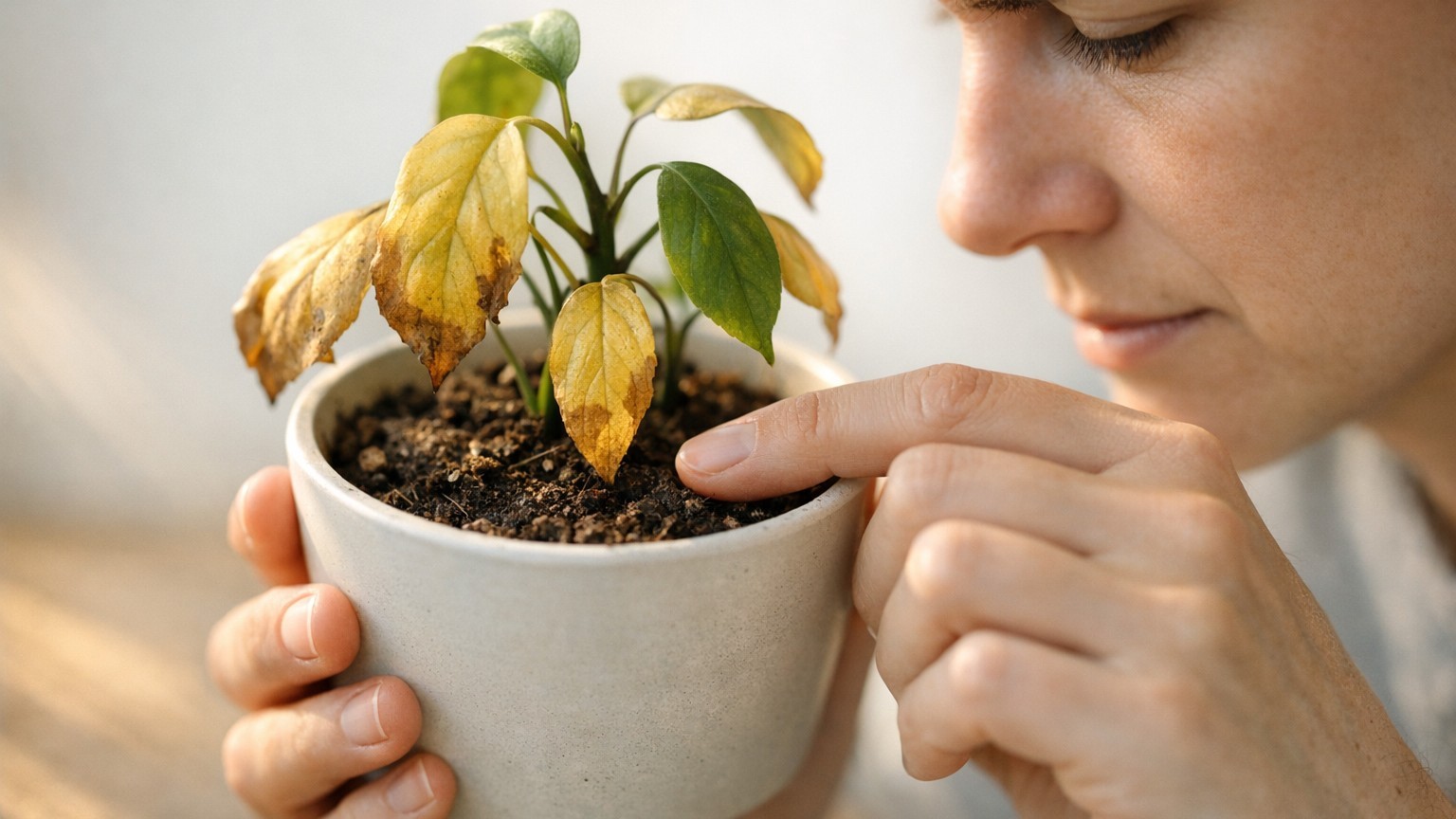
The plant looked healthy enough, some yellowing at the base, a bit of wilting on warmer days, nothing dramatic. Every evening after work, the watering can came out. Consistent, devoted, reliable. The kind of plant care routine that feels virtuous. Then a botanist friend visited, pressed two fingers into the soil, and said four words that changed everything: “This pot is drowning.”
Overwatering is one of the most common reasons houseplants fail. Not neglect. Not pests. Not the wrong window. Plain, well-intentioned excess. The cruel irony is that the symptoms of too much water look almost identical to those of too little, which is precisely why so many people keep making the problem worse.
Key takeaways
- The most common sign of overwatering looks identical to underwatering, trapping plant lovers in a vicious cycle of making problems worse
- Root rot is caused by oxygen deprivation and invasive fungi that can survive in soil for years, even after you change your watering habits
- Evening watering intensifies the problem because water sitting in cool soil overnight has no sunlight to drive evaporation
The Trap Nobody Warns You About
The problem with root rot is that its symptoms look an awful lot like the symptoms of underwatering. Rotten roots are unable to absorb water for the rest of the plant, so while the roots are wet the leaves may be dying of thirst. That wilting plant you’re staring at, convinced it needs more water, it may actually be screaming for less. This phenomenon, known as physiological drought, can manifest as leaf edema and necrosis at the leaf tips and margins, appearing as brown or yellow discoloration.
Environmental factors such as high humidity, low light, and cool temperatures can also contribute to overwatering by reducing the plant’s water uptake and evaporation rates, conditions that are often present in indoor environments, making houseplants particularly susceptible. A fiddle-leaf fig sitting in a dim apartment corner in December is not drinking the way it would in a sun-drenched Brazilian canopy. It barely needs a sip.
The evening watering ritual adds another layer to the problem. The most beneficial time to water indoor plants is in the morning, before they are exposed to the brightest light of the day, morning watering gives any water splashed on the leaves time to evaporate and dry throughout the day, which helps prevent disease. Water sitting in soil overnight, with temperatures dropping and no solar energy to drive evaporation, stays put. Night after night. Week after week.
What’s Actually Happening Below the Surface
Root rot is actually a combination of two things: opportunistic fungi and oxygen deprivation. In a healthy environment, soil is porous, filled with tiny air pockets that allow roots to breathe. When soil becomes waterlogged, these air pockets collapse. Without oxygen, the root cells begin to die and decay. Think of it like this: you’re not just overwatering a plant, you’re slowly suffocating it.
Most houseplant root rot problems are caused by water molds, fungus-like organisms such as Phytophthora and Pythium, as well as a few true fungi, including Rhizoctonia and Fusarium. These organisms thrive in damp conditions and can survive in the soil for many years. That’s the detail that stops most people cold: even if you correct your watering habits, the pathogens are already there, waiting.
By the time symptoms appear above ground, serious damage may already be underway. Healthy roots are firm and white or cream-colored; rotted roots are brown or black, soft, and mushy. Root rot often has a noticeable odor, similar to rotting vegetables. When the botanist friend pulled the pot off the saucer and pressed her thumb against the drainage hole, she could smell it before she even unpotted the plant. That smell is decay, working its way upward.
One source of root rot is prolonged exposure to overwatered conditions that can cause some roots to die back due to a lack of oxygen. As they die, they begin to decay or rot away. The rot can then spread to healthier roots and kill them as well, even if soil conditions are corrected. That last part matters. Stopping the watering is not enough on its own.
How to Pull a Plant Back from the Edge
Many plants can recover from root rot if the problem is caught early. The key is removing damaged roots, replacing soggy soil with fresh well-draining soil, and correcting watering habits before the healthy roots are affected. Caught late, options shrink fast.
The rescue process is hands-on and not particularly pleasant. Gently remove the plant from its container and brush away enough soil to see the root ball. Infected roots will be dark, mushy, and reddish or brown in color. Healthy roots should be firm, pliable, and typically white or tan. Infected roots will appear dark brown or black, feel slimy to the touch, and often give off a distinct, sour odor of decay. Cut away everything compromised with clean, sterilized scissors, leaving even a small amount of rot behind allows the problem to return.
Repotting is one of the most important parts of root rot recovery. The plant needs a cleaner, better-draining environment so new roots can grow. Always use fresh soil after root rot, do not reuse the contaminated potting mix. After trimming damaged roots, do not move the plant into a much larger pot: a large pot holds more soil, which holds more moisture, which can trigger root rot again. Choose a pot that is only slightly larger than the remaining healthy root system.
After repotting, avoid watering immediately. Let the plant sit in its new pot for a few days so the roots can settle and recover. When you begin watering again, do so sparingly, wait until the top 1 to 2 inches of soil feel dry before watering. And skip the fertilizer entirely for now. Root rot and the subsequent trimming and repotting is an incredibly stressful experience for houseplants. For them to return to normal growth, they need time to adjust to their new conditions and recover completely. Fertilizers will interrupt this process rather than help it.
The Better Way to Water
Check for water on a schedule, but don’t water plants on a schedule. Always check soil moisture before watering. If it is wet or damp to the touch, wait to water. If it is dry down an inch or two, then water. This sounds obvious. Almost no one actually does it, instead reaching for the watering can out of habit, the same time every day, the same amount, regardless of what the soil is saying.
Houseplants benefit from the soil being on a cycle where the root ball is thoroughly wetted and then allowed to dry completely before watering again. According to university extension services, most houseplants prefer soil that dries slightly between waterings, even tropical species. Constant moisture is far more damaging than brief dryness.
Soil conditions and containers can contribute to accidental overwatering. Make sure the container is the appropriate size (not too big), has a drainage hole, and is not allowed to sit in saucers or outer pots full of water. If the soil is old, broken down, and compacted, it will hold more water, repot with fresh, well-drained potting soil.
There’s a rough shortcut worth knowing: pick up your plant and check the weight. A dry plant is a lot lighter than a wet plant. Over time, you should be able to develop a good sense of how light your plant should feel when it’s time to water. No gadget required. Just your hands, and a little attention, the thing plants were asking for all along, long before the watering can ever came out.