
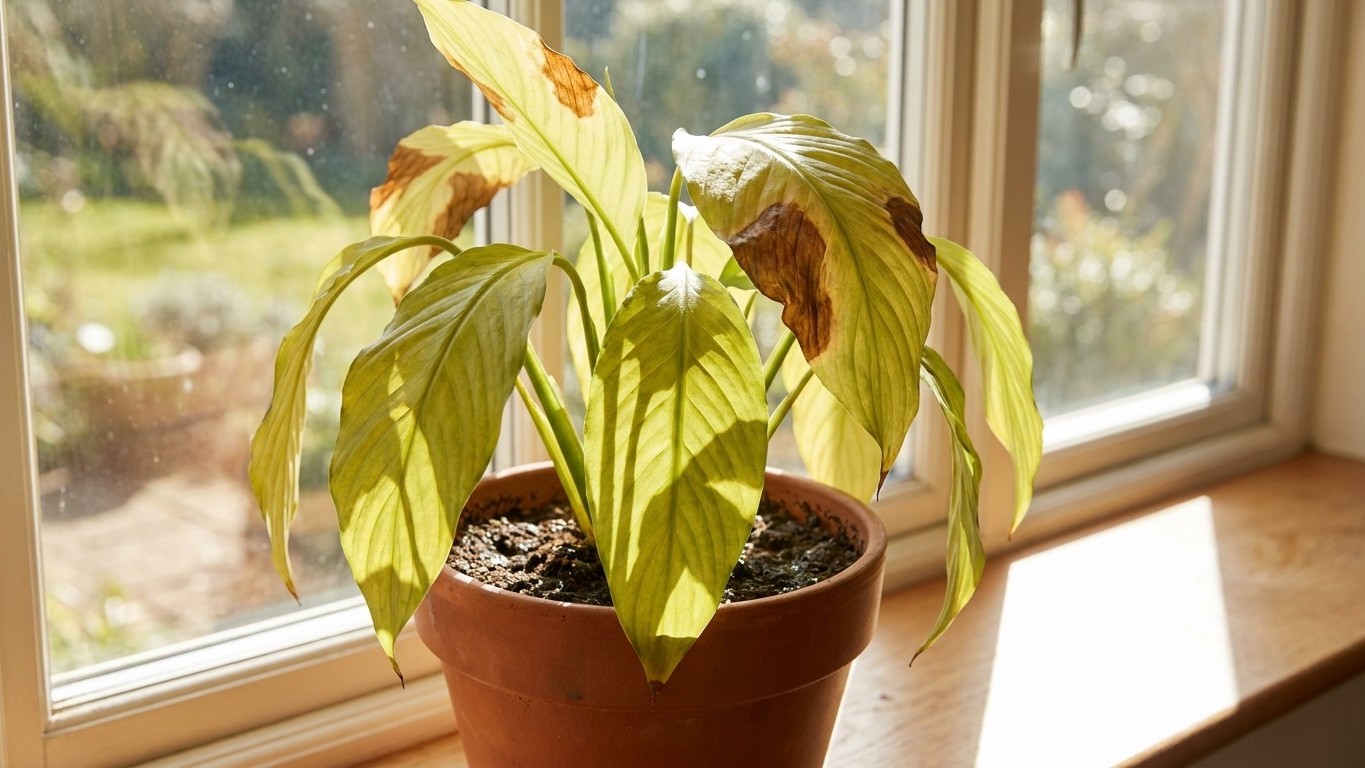
April light is deceptive. After months of flat, gray winter, the sun finally feels generous again, longer days, stronger rays, the urge to push every houseplant closer to the window. For peace lily owners, this seasonal instinct is almost universal. And almost universally, it ends badly.
The peace lily (Spathiphyllum) is one of the most forgiving houseplants on the market, which is exactly why people assume it can handle anything. It tolerates low water, low humidity, low light. What it cannot tolerate, and what April delivers in abundance, is direct sun exposure. The damage doesn’t announce itself dramatically. There’s no overnight collapse. Instead, leaves slowly bleach to a pale yellow-green, then develop brown, papery patches that look like burn scars. By the time most people notice, the plant has been quietly suffering for weeks.
Key takeaways
- April sunlight carries UV intensity that winter light never reaches—and it hits your windowsill suddenly
- Peace lilies evolved under rainforest canopies with zero defense against concentrated sun exposure
- The fix isn’t complicated, but the timing of your recovery strategy matters more than you’d think
Why April Light Is Different From March Light
The problem isn’t that people move their peace lilies to windows. The problem is that April sunlight carries significantly more UV intensity than winter or early spring light. The angle of the sun shifts sharply between March and late April, and a south- or west-facing windowsill that was perfectly safe in February can deliver the equivalent of full outdoor sun by mid-April. A study from the Royal Horticultural Society confirmed that indoor plants near unobstructed south-facing windows in spring can receive light intensities comparable to direct outdoor exposure during peak hours.
Peace lilies evolved on the forest floors of Central America and Southeast Asia, beneath dense canopies that filter out harsh light. Their leaves have adapted to capture low, diffuse light with remarkable efficiency, which means those same leaves have almost no protection against concentrated UV rays. The chlorophyll breaks down faster than the plant can replenish it. What you’re seeing with those yellow patches isn’t disease or drought. It’s photooxidative stress, the botanical equivalent of a sunburn.
The Mistake Hiding Inside Good Intentions
Most peace lily owners move their plant to the window for a legitimate reason: they want it to bloom. Peace lilies flower more reliably with higher light levels, and after a dull winter where the plant sat dormant and flowerless, the instinct to give it more sun makes complete sense. The mistake is confusing more light with direct light. These are not the same thing.
A peace lily placed two to three feet back from a bright window will receive substantially more light than it did in its winter corner, without the concentrated intensity of direct rays. That distance isn’t just a safety buffer, it’s often the sweet spot where peace lilies flower best. Place it right on the sill, and you’ve traded blooms for leaf damage. The plant diverts its energy to cellular repair rather than reproduction.
Curtains complicate this further. Sheer curtains are often recommended as a fix, but their actual filtering capacity varies enormously. A lightweight linen sheer might cut light intensity by 20 to 30 percent. A densely woven voile can cut it by 60 percent. Most people hang curtains for aesthetics, not horticulture, and have no idea which category theirs falls into. If your sheer curtains are thin enough to read through easily from the outside, they are not protecting your peace lily from April sun.
How to Actually Fix This, and What to Watch For
Moving a damaged peace lily back away from the window is the right first step, but there’s a timing element people miss. Plants that have been in high light for two or more weeks have acclimatized their stomata and water uptake rate to match that exposure. Moving them suddenly to dim conditions can cause a secondary stress response, not as severe as the sun damage, but enough to stall recovery. A gradual transition over five to seven days, shifting the plant progressively further from the window, gives it time to readjust.
Existing burned leaves will not recover. Brown patches don’t reverse. The practical decision is whether to trim the damaged leaves or leave them in place while new growth emerges. Trimming keeps the plant looking presentable and redirects energy toward new foliage, but each cut is a minor wound, and doing too many at once, removing more than a third of the foliage in a single session — can genuinely stress the plant. Prioritize the most severely damaged leaves first, and spread the trimming over several weeks.
Watering needs recalibrating after a position change too. A peace lily sitting in bright window light will dry out faster than one in moderate indirect light, so if you’ve already adjusted your watering schedule upward to compensate, dial it back when you move the plant. Overwatering a stressed plant in lower light is one of the fastest ways to introduce root rot on top of sun damage, a combination that’s genuinely difficult to recover from.
One detail worth knowing: peace lilies are mildly toxic to cats and dogs, containing calcium oxalate crystals that cause oral irritation if chewed. The ASPCA lists them as toxic to both species. This doesn’t change how you care for them, but it does affect where in the home you can safely position them, which may already limit your window options more than you realized.
The broader irony of the April window mistake is that peace lilies actually signal their own discomfort clearly, if you know what you’re looking for. A plant receiving too much light will often droop slightly in the afternoon even when the soil is moist, the leaves closing their stomata to reduce water loss under stress. Most people interpret that afternoon droop as a watering cue and reach for the can. They’re solving the wrong problem.