
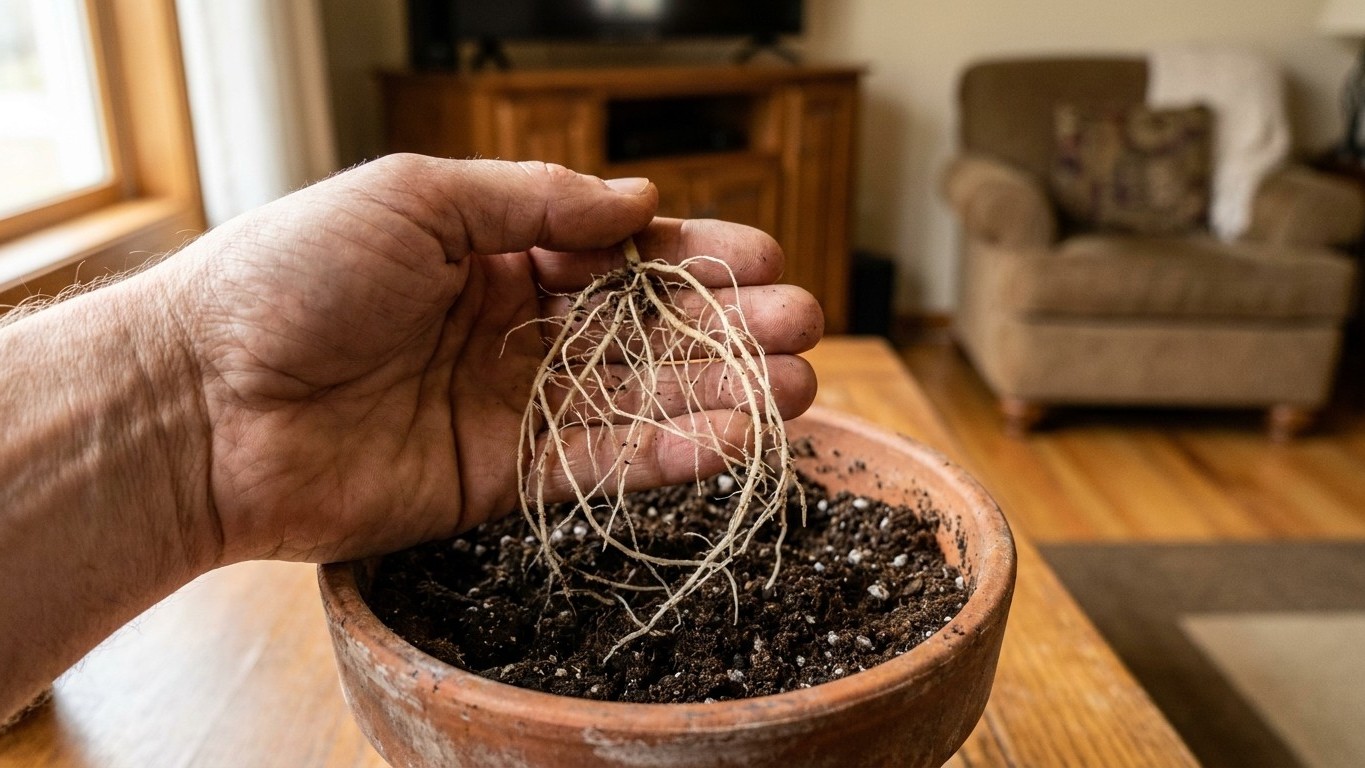
Every morning, same ritual: coffee brewing, shoes by the door, watering can making the rounds. It felt responsible. Nurturing, even. Then a botanist friend pulled a pothos out of its pot in front of me, held up the roots, black, soft, collapsing between her fingers, and said, matter-of-factly: “This is what daily watering looks like underground.” The plant had been drowning in slow motion for months, and it looked perfectly fine from the outside. Until it didn’t.
Overwatering is one of the most common reasons houseplants struggle or die. Even the most well-meaning plant parents often think their plants need more water than they actually do. The daily-watering habit feels logical, we water ourselves every day, after all, but it maps poorly onto how plant roots actually function.
Key takeaways
- Your houseplants are being suffocated by good intentions—roots need oxygen, not constant moisture
- The cruelest trick: overwatered plants show the same wilting symptoms as underwatered ones, making you water more
- Check soil depth, not the calendar—and what works for one plant won’t work for another
What’s Actually Happening Underground
Plant roots need oxygen as well as water, and in saturated soil they can’t “breathe.” Without oxygen, roots weaken, die, and begin to decay. Think of it like a basement with no ventilation: perpetual dampness doesn’t just sit there harmlessly. When your plant’s soil gets too wet, there’s no longer any way for air to circulate around the roots, which gives bacteria and mold the perfect opportunity to start eating them.
Most houseplant root rot problems are caused by water molds, fungus-like organisms such as Phytophthora and Pythium — as well as a few true fungi, including Rhizoctonia and Fusarium. These aren’t exotic invaders. They live in ordinary potting soil, dormant and patient, waiting for the conditions we create when we water on autopilot.
The cruelest part of the whole thing? Overwatering can mimic the symptoms of underwatering. Damaged roots lose their ability to transport moisture effectively, causing leaves to wilt despite the presence of excess water in the soil. So you see a drooping plant, reach for the watering can, and accelerate the very problem you’re trying to fix. The dehydration and nutrient deficiencies are real, but they are caused by damaged roots, not by a lack of moisture in the soil. That’s why watering often doesn’t help, and may even make the problem worse.
The Signs You’re Already Too Late (Or Just in Time)
Root rot attacks roots first. By the time symptoms appear above ground, serious damage may already be underway. That’s what makes it so deceptive. A plant can look green and upright for weeks while its root system silently collapses. Leaves may turn yellow or brown, starting at the tips and progressing toward the center of the leaf, often accompanied by leaf drop. If the leaves develop brown spots or edges encircled by a yellow halo, that’s a bacterial infection due to overwatering.
The only way to know for certain is to look. Healthy roots are firm and white or cream-colored. Rotted roots are brown or black, soft, and mushy. Root rot often has a noticeable odor, similar to rotting vegetables. If you pull your plant from its pot and smell something foul, the diagnosis is already made. Fungus or mold can also grow directly on top of the soil if you’ve overwatered repeatedly. The presence of fungus gnats is another common sign.
Whether you can save an overwatered houseplant depends on how much damage there is to the roots. If there hasn’t been a lot of root death, plants may readily bounce back, especially if moisture management is corrected and the plant has good growing conditions. In more severe cases where there’s significant root death, you may be able to save portions of the plant by taking cuttings. Propagate them as the overwatered plant fades, so you have offspring to continue growing if the main plant succumbs.
How to Actually Water Your Houseplants
Watering on a schedule is not the best method, as this can lead to plants receiving too much or too little water. A calendar can tell you when to check your plants, never when to water them. “Every plant you have does not need to be watered with the same amount of water or on the same day,” explains Lisa Eldred Steinkopf, author of Houseplants for Beginners. “The key is to check the plant first to see if water is needed.”
One reliable way to determine when to water is to test the soil with your finger to a depth of about two inches. If the soil is dry, it probably needs to be watered. This works for most plants, though succulents and cacti need far less water. Just because the top of the soil looks dry doesn’t mean the roots further down are. That two-inch depth check is the whole game.
Seasonal adjustment matters more than most people realize. While it may seem like environmental conditions remain the same indoors from spring through winter, houseplants can actually detect changes in seasonal light levels from the window, causing them to transition through their natural growth cycles. Plants in low light or cooler rooms use less water because their growth slows down. If you water them as often as your brighter, warmer plants, they can easily become overwatered. A snake plant sitting in a dim corner in January needs a fraction of what it needs in June by a south-facing window.
Pot choice plays a role too. “Plants need less water if the plant container is made of unglazed clay; the plant is large but the pot relatively small; or the plant has filled its pot with roots,” according to plant experts. Terracotta breathes. Glazed ceramic and plastic retain moisture much longer, which is fine, as long as you account for it.
Rescuing a Root-Rotted Plant
Speed is everything once rot sets in. Remove the plant from its pot, taking care not to spill contaminated soil onto other plants. Set the pot aside to be washed and sanitized later. Gently shake, brush, or rinse all potting soil from the roots. Using clean, sharp pruners, remove any roots that are dark, mushy, or broken. Leave only firm, white roots.
Repot the plant in a clean, sanitized container with fresh potting soil and excellent drainage. Water sparingly for the next few weeks. Allow the top inch of soil to dry before watering again. You can also help your houseplant recover by ensuring it has lots of light. Brighter light gives the plant more energy to recover than lower light levels.
One detail worth knowing: when repotting, make sure to plant in a container only an inch or two larger than the root ball. Planting in a container that is too large will just increase the odds of root rot developing again, all that extra soil retains moisture the roots can’t yet reach. A pot that fits is a pot that drains properly relative to the plant’s actual demand. That’s the principle the daily-watering habit violates from the start: treating every plant, every day, the same — when the whole point of living things is that they’re never the same twice.
Sources : livingetc.com | almanac.com